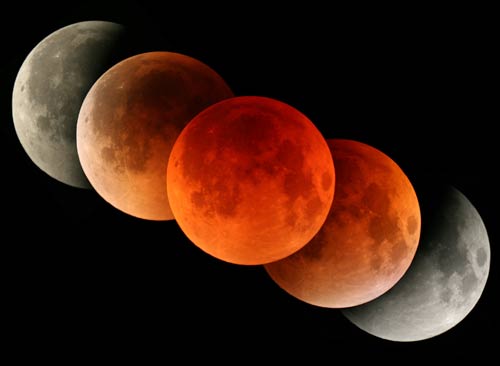
Yesterday, August 28, the Moon went into the darkness of the Earth and this is the second full eclipse of the year, first on March 3, 2007.
The lunar eclipse takes place when the Moon enters the top of the Earth, facing the Sun (when the Sun - Earth - The Moon is aligned or nearly aligned). On all points located in the hemisphere returning to the Moon can see the lunar eclipse. The true moon happens in the full moon nights, when we will see the Moon gradually obscured by the Earth's shadow.
During this eclipse, the time when the Moon was completely obscured by the Earth's shadow lasted 90 minutes. Here are some lunar images from some parts of the world (Photo series from spaceweather.com):
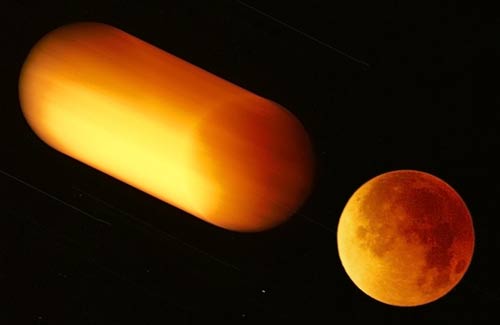
At Kalamalka Lake, Okanagan, British Columbia, Canada
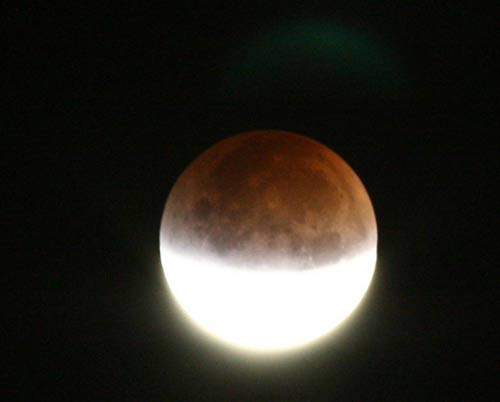
The moon is bright in its lower part, while the upper part is darker, the image is from Ohio, USA.
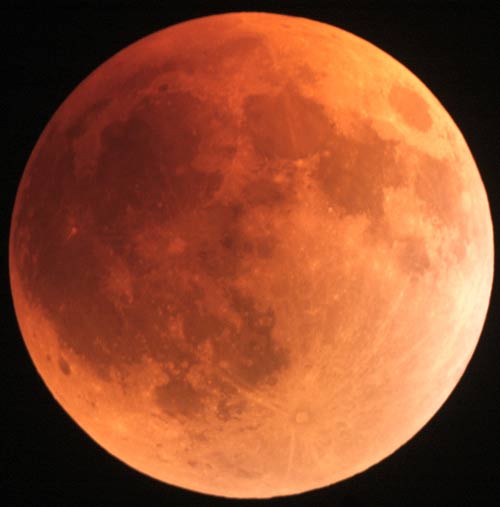
The moon was now dim like a crimson disc. This crimson color comes from the Sun, because sunlight is reflected from the Earth's atmosphere. Because the wavelengths of yellow, blue, indigo, and violet rays are very short, almost all are absorbed by the dust and water vapor in the Earth gas and scattering, leaving only the red and colored rays oranges with long wavelengths can penetrate the Earth's atmosphere reflected on the Moon. Photos taken from California, USA.
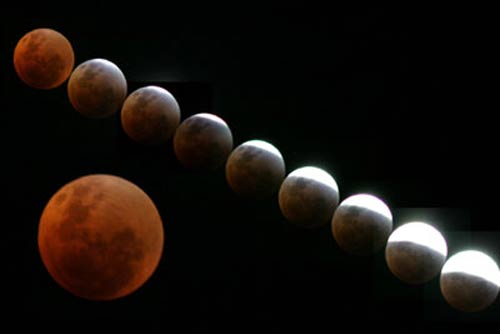
The Moon Journey series goes into the dark areas of Earth, photos taken from New South Wales, Australia.
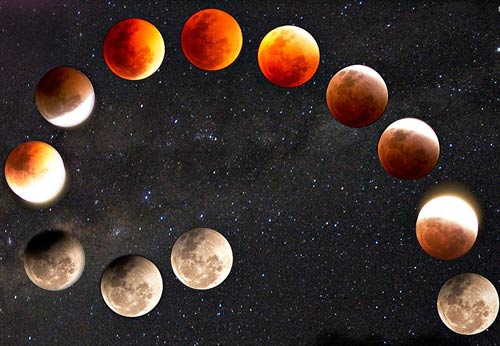
A cycle of eclipse, Photo taken from Meadows, Australia.
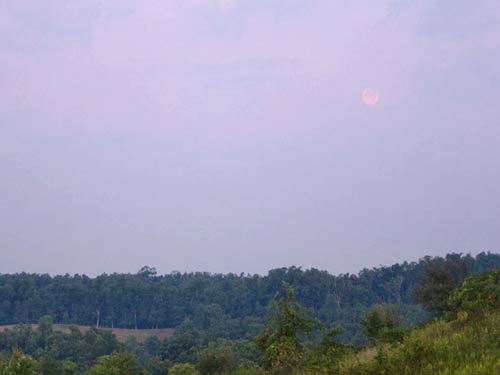
Beautiful view of the Moon like a red disk in the sky, photos taken from Ohio, USA.