Skyscraper pig farms have sprung up across China, where uniformed technicians monitor pigs with high-resolution cameras that look like they're in a NASA command center.
In late September 2022, the first sows arrived at a 26-story skyscraper above a remote village in central China. Dozens of female pigs at a time were herded into industrial elevators to higher floors, where they would live from conception to maturity. This is a pig farm in China , where agricultural land is scarce, food production lags and pork supply is urgent, according to the New York Times .

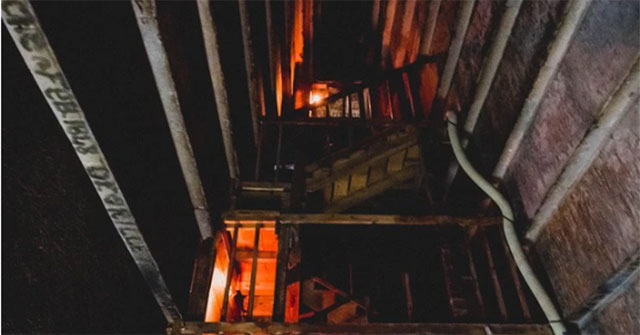
The 26-story pig farm in Ngac Chau. (Photo: New York Times).
Inside the structure, which resembles apartment blocks across China and is as tall as London's Big Ben, uniformed technicians monitor the pigs with high-resolution cameras that look like they belong in a NASA command center. Each floor functions as a standalone farm for different stages of the pig's life cycle, with a gestation area, farrowing room, nursing area, and space to fatten up sows. Feeding is carried out via conveyor belts to the top floor. Housed in giant tanks, more than 1 million pounds of feed is delivered daily to the lower floors via high-tech feeders that automatically feed the pigs based on their stage in life, weight, and health status.
The building, located on the outskirts of Ezhou, a city on the south bank of the Yangtze River, is the world's largest vertical pig farm . A second skyscraper dedicated to raising pigs will open soon. The first farm began operating in October last year. Once both buildings are fully operational this year, the annual pig production is expected to reach 1.2 million.
For decades, many rural Chinese families kept pigs in their backyards. The useful animals provided not only meat but also fertilizer. Pigs were also a symbol of prosperity, as in the past, pork was only eaten on special occasions. Today, no country eats more pork than China, which consumes half of the world's pork.
Dozens of industrialized pork farms have sprung up across China in recent years as the government seeks to curb meat prices. Built by Hubei Zhongxin Kaiwei Modern Animal Management, the Ezhou farm is emblematic of China's ambitions to modernize pork production . 'China's current pig farming industry is still decades behind most developed countries,' said Zhuge Wenda, the company's chairman. 'This gives us the incentive to innovate and catch up.'
The Ngac Chau farm operates like a Foxconn factory for pigs, with the same precision as an iPhone assembly line. Even the pig manure is measured, collected, and reused. About a quarter of it is discharged as dry manure, which can be recycled as methane gas to produce electricity.
As China modernizes, with hundreds of millions of people moving from the countryside to urban centers, small farms are disappearing. The number of pig farms in China that produce fewer than 500 pigs a year fell by 75% between 2007 and 2020, to about 21 million, according to an industry report. The shift to megafarms accelerated in 2018, when African swine fever devastated China's pig industry, wiping out as much as 40% of the country's pig population by some estimates.
Brett Stuart, founder of Global AgriTrends, a market research firm, said skyscrapers and other giant pig farms increase the biggest risk facing China's pig industry: disease. Keeping so many pigs in one facility makes it harder to contain infections. He said U.S. pork producers spread out their farms to reduce biosecurity risks.