If Mars suddenly disappeared, the first thing Elon Musk would probably have to face is a crowd of confused investors .
In the short term, since Mars's gravity is much weaker than Earth's, and the planet's gravity has almost zero effect on Earth, it will have almost no effect on Earth's orbit around the Sun.
However, the sudden disappearance of a planet could cause social unrest. Moreover, Mars has been chosen as a potential planet for human colonization in the future. Therefore, this could create an impetus for the development of space science, speeding up the process of interstellar colonization.
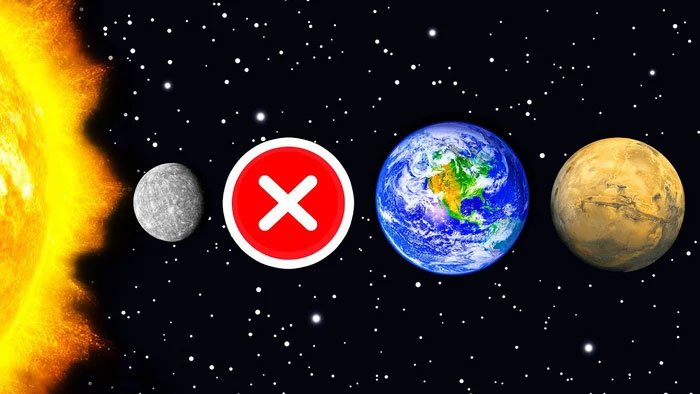
The sudden disappearance of a planet would likely cause social unrest.
If Mars can disappear, then surely people will believe that Earth can also disappear at any time. And the most important effort that humanity is aiming for is to create a unified space exploration program, on a global scale, and establish colonies on other planets as soon as possible. This will ensure that even if Earth disappears, humans can still survive.
In addition, the disappearance of Mars also violates the laws of physics that we know, so scientists will speculate that this is the result of unnatural intervention , perhaps from a civilization more advanced than ours in the universe. Accordingly, this may give birth to new religions or new wars.
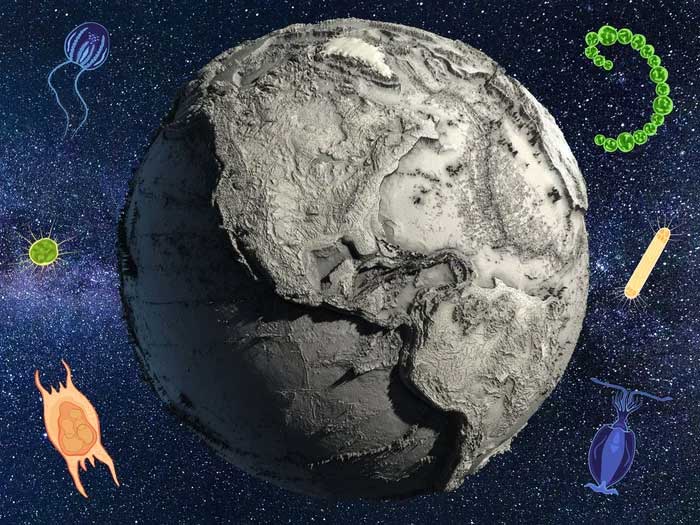
Mars disappears, people will believe that Earth can also disappear at any time.
In the long run, the disappearance of Mars would likely lead to two things:
First , without the gravitational pull of Mars on the outer ring, the diameter of Earth's orbit would become slightly smaller, our planet would move slightly towards the Sun.
Although this small movement is insignificant, it can still affect the fragile ecological environment of our planet to a certain extent.
Second , Earth will also be approached by fewer asteroids and the possibility of collision is also lower. We often say that asteroids hit Earth, but in fact these asteroids have orbits that intersect Earth's orbit. To date, humans have discovered 1,113,527 asteroids, 98.5% of which come from the asteroid belt located between the orbits of Mars and Jupiter.
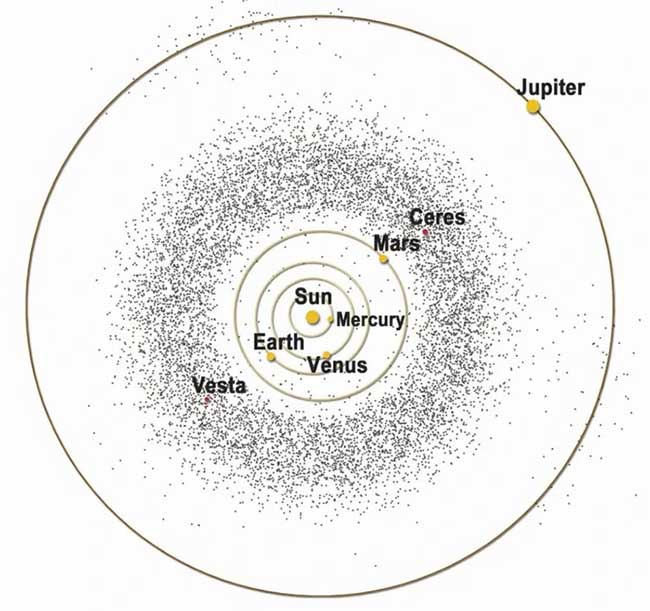
A large number of asteroids in the asteroid belt will be disturbed by the gravitational resonance of Jupiter and Mars for a long time, resulting in a series of empty regions called "Kirkwood gaps". In this area, asteroids will have irregular orbits, lack stability and are easily pushed away due to the impact of the resonance gravitational force. In particular, asteroids in the inner edge of the asteroid belt (the region closer to the Sun) will be easily affected by the gravity of Mars, causing them to deviate from their original orbits and be pushed into unstable orbits.
Therefore, it can be said that Mars is like a gravitational slingshot. The new orbits of these asteroids will be stretched, the eccentricity of the orbit will become larger and more elliptical, some orbits will cross the orbit of Mars and be "thrown" by Mars towards the Earth's orbit.
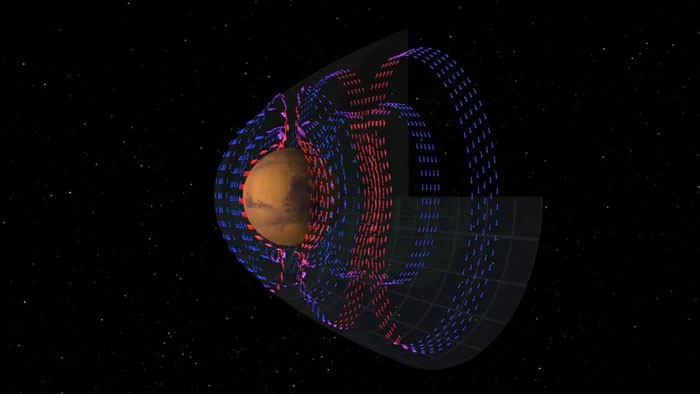
Mars is like a gravitational slingshot.
Therefore, when Mars disappears, the probability of asteroids in the asteroid belt moving inward to pass through Earth's orbit will be smaller, and they will have a higher and easier chance of being "thrown" outward by Jupiter.
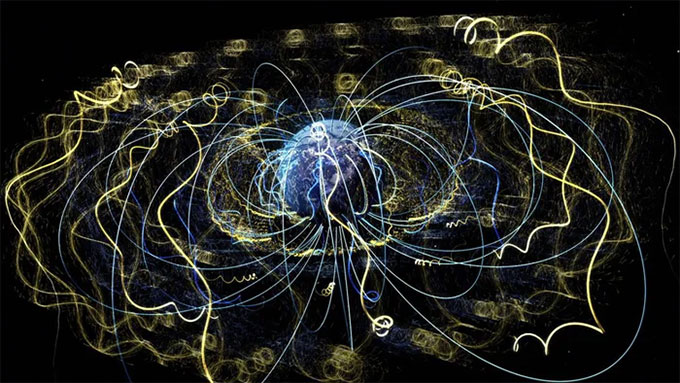
Removing any other planet except Jupiter and Saturn would not change much.
The Sun's mass accounts for 99.86% of the mass of the entire Solar System, Jupiter accounts for more than 70% of the total mass of the remaining planets, and the celestial bodies account for less than 0.2% of the total mass of the entire Solar System. Therefore, removing any other planets except Jupiter and Saturn would not change our planet much in the short term.
However, even small changes in our universe can create large changes over time, like the butterfly effect. Thousands of years after this change, it is difficult to predict how these changes will progress and how they will affect the Earth.
If the Earth suddenly disappeared, then for Venus, its gravitational pull with Jupiter would lack interference factors, so Venus's orbit would become unstable, either falling into the Sun or colliding with Mercury. The importance of the Earth to Venus is much greater than the influence of Mars on the Earth.
For the vast majority of people, the disappearance of Mars would not have much of an impact on life. Nor would our civilization disappear with Mars, unless Earth suddenly disappeared shortly after the disappearance of Mars.