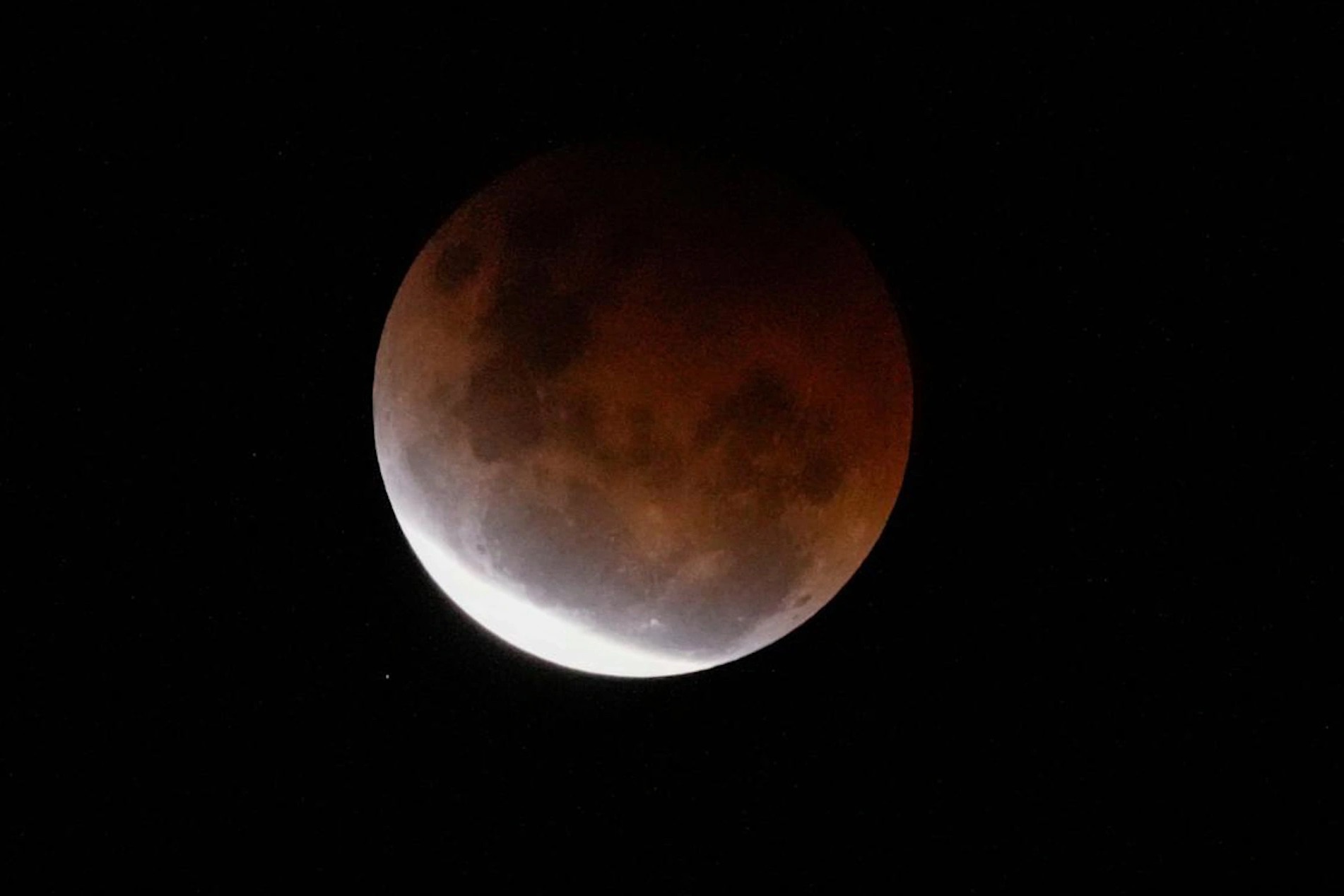
A partial lunar eclipse occurs when the Moon is obscured by the Earth's shadow, turning a dark red.
Yesterday afternoon (November 19) there was a partial lunar eclipse, when the full moon entered the Earth's shadow, turning it blood red for nearly three and a half hours. This was recorded as the longest partial lunar eclipse in 580 years.
Explaining the red color appearing on the Moon (rather than black), scientists say this is called Rayleigh scattering, just as the sky is usually blue, but every dawn and sunsets are usually red.
In the event of a Lunar Eclipse, red light can pass through Earth's atmosphere and be refracted - or bent - towards the Moon, while blue light is filtered out. This causes the Moon to appear a pale red color to the naked eye from Earth.
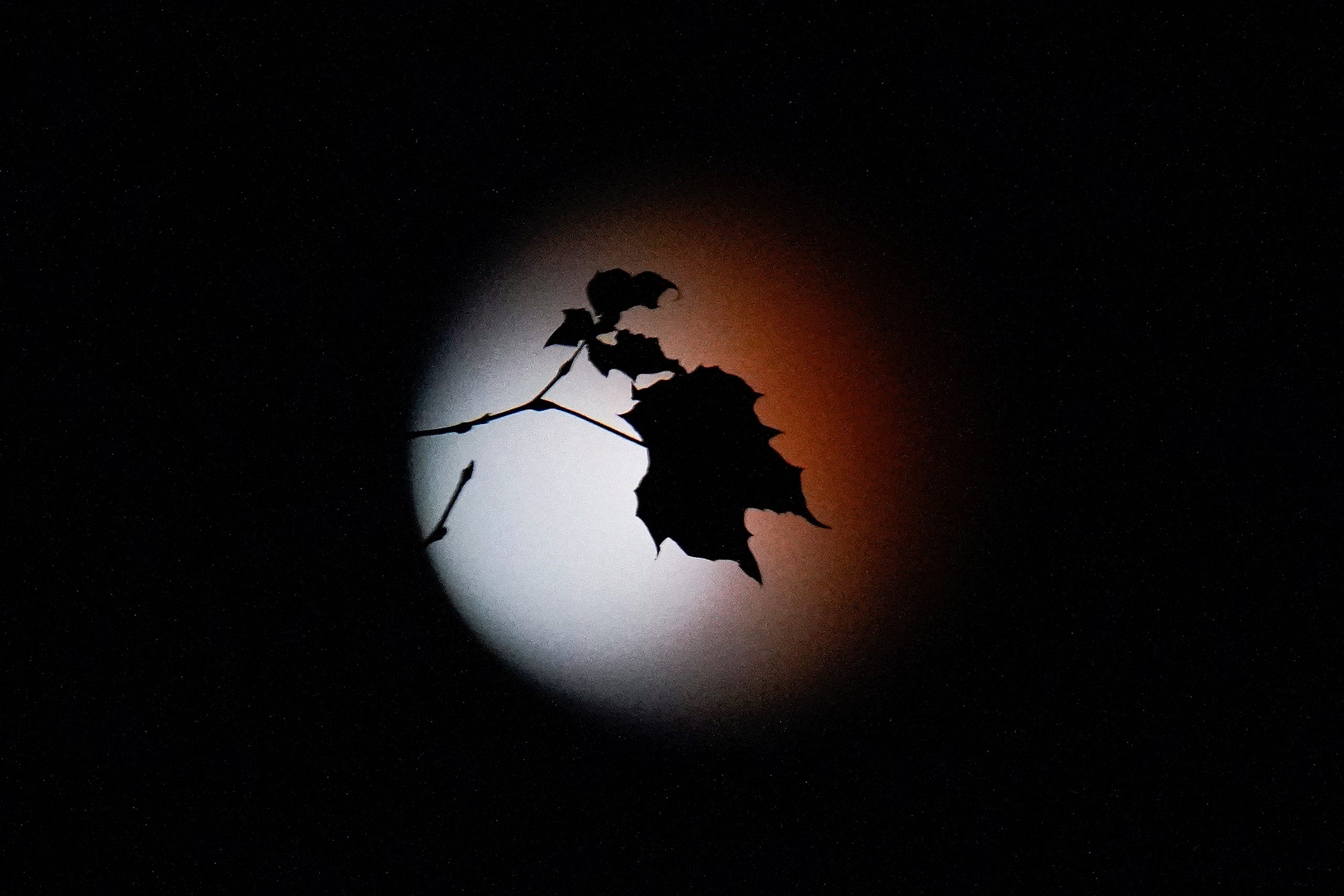
Leaves of a tree photographed with a partial lunar eclipse in the background, in Lutherville-Timonium, Maryland, USA. The event occurs when the Moon is obscured by the Earth's shadow. November 19, 2021 is the longest-lasting partial lunar eclipse in 580 years. (Photo: AP)
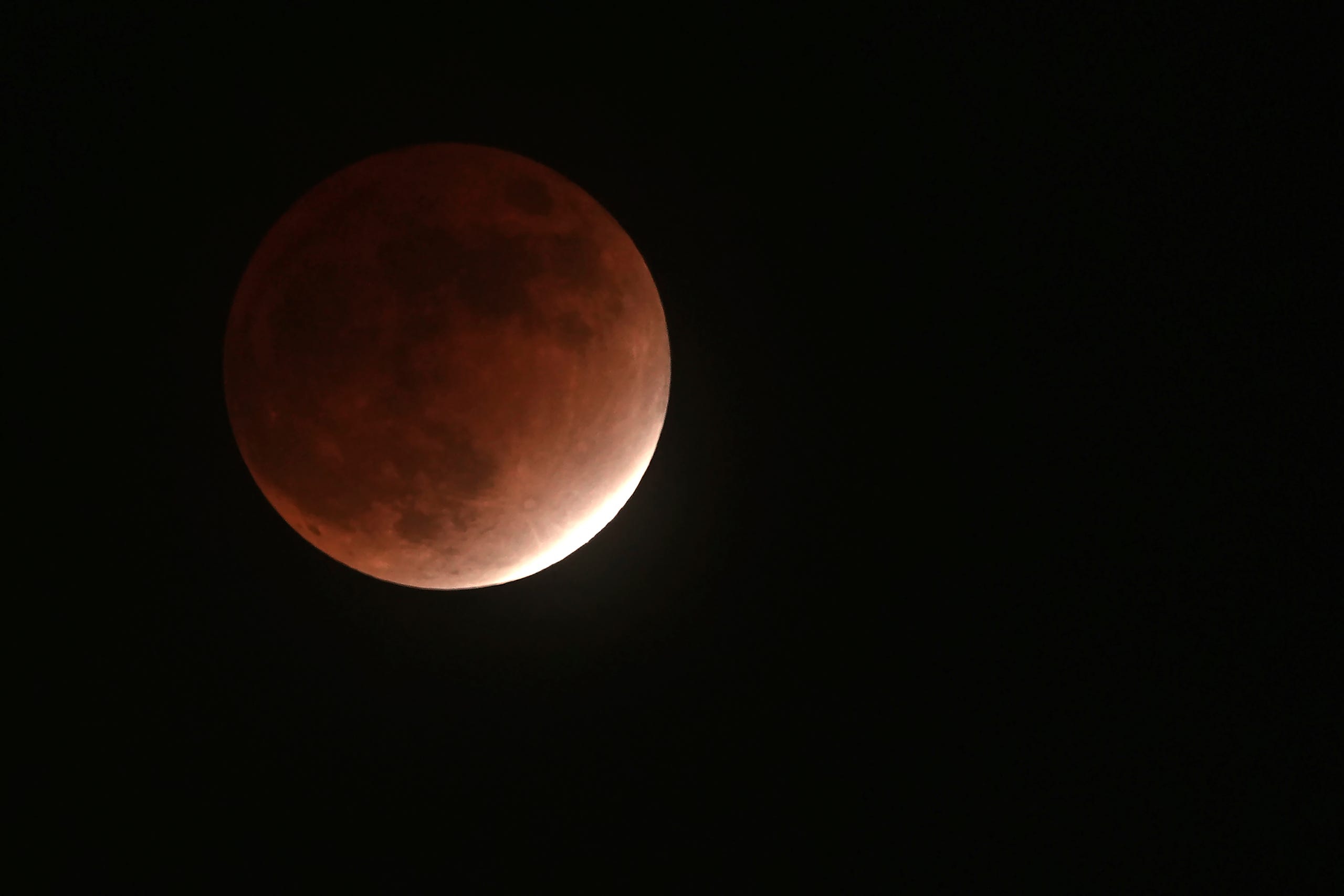
Earth's shadow covers the moon during a partial lunar eclipse in Yokohama, near Tokyo, Japan (Image: AP)
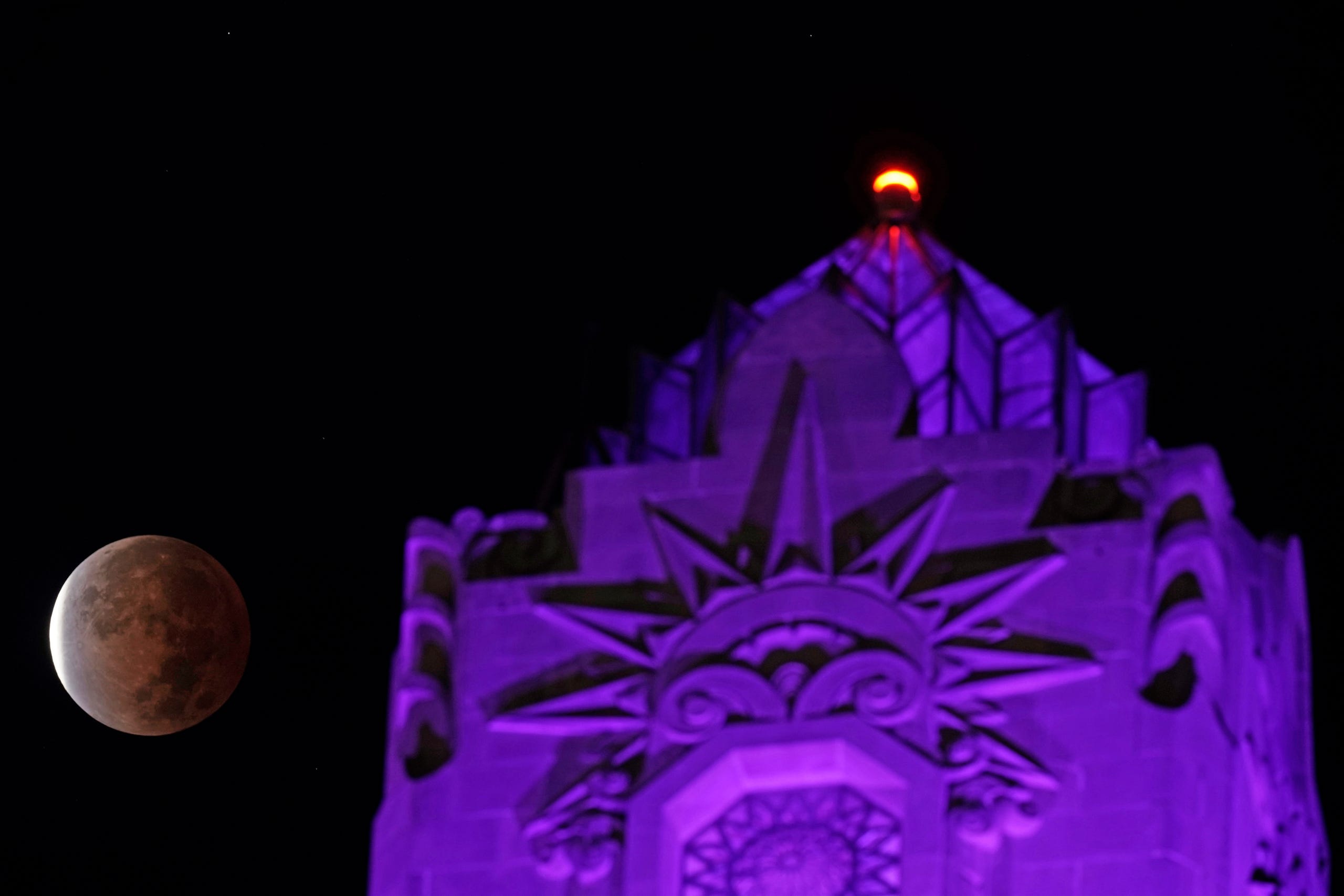
Photo of a lunar eclipse when the Moon peeks out from an apartment building in downtown Kansas City, Missouri, USA. (Photo: AP)
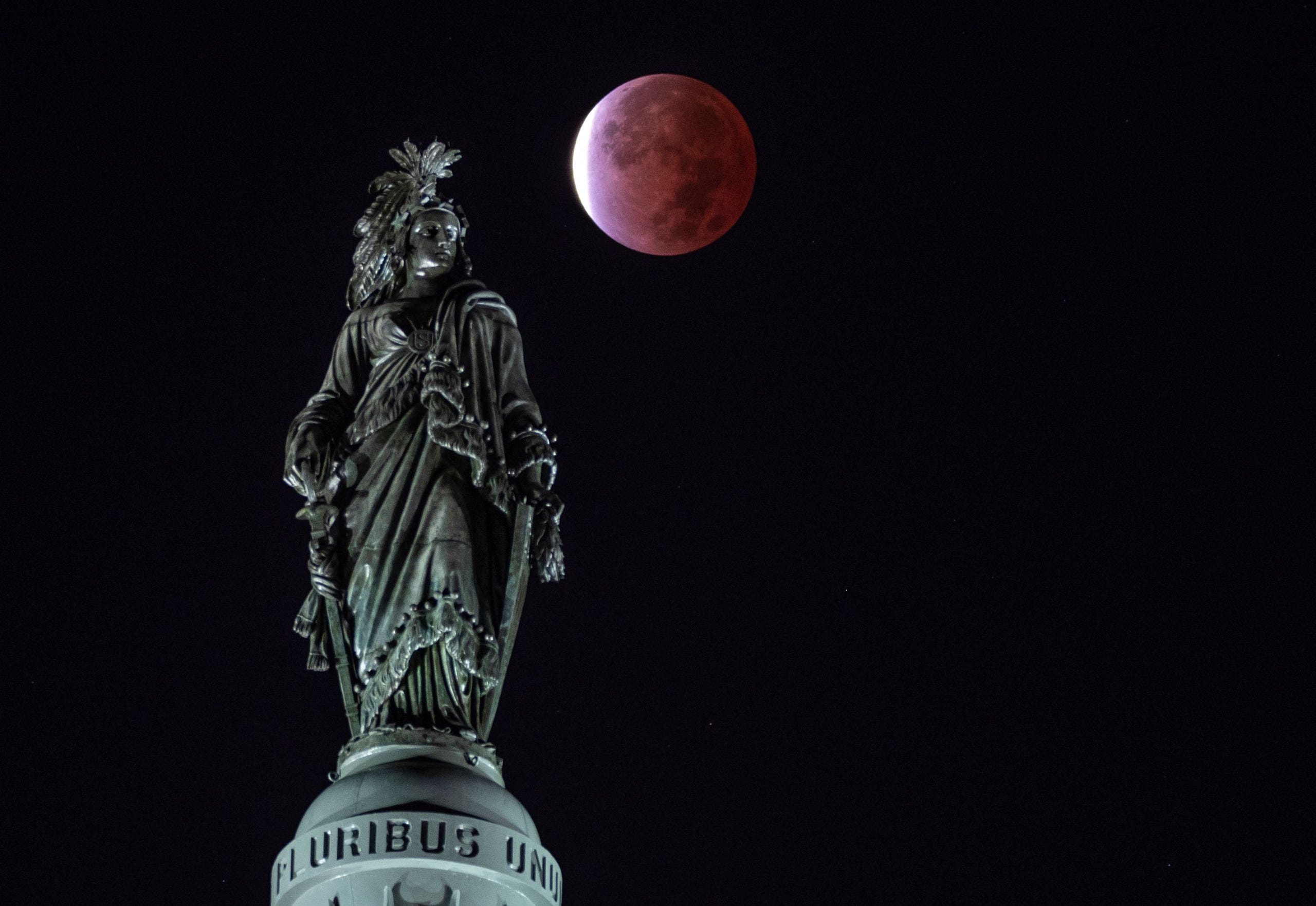
The Moon with a partial lunar eclipse is seen behind the "small" Statue of Liberty, on the dome of Capitol Hill in Washington DC, USA. (Image: Getty Images)
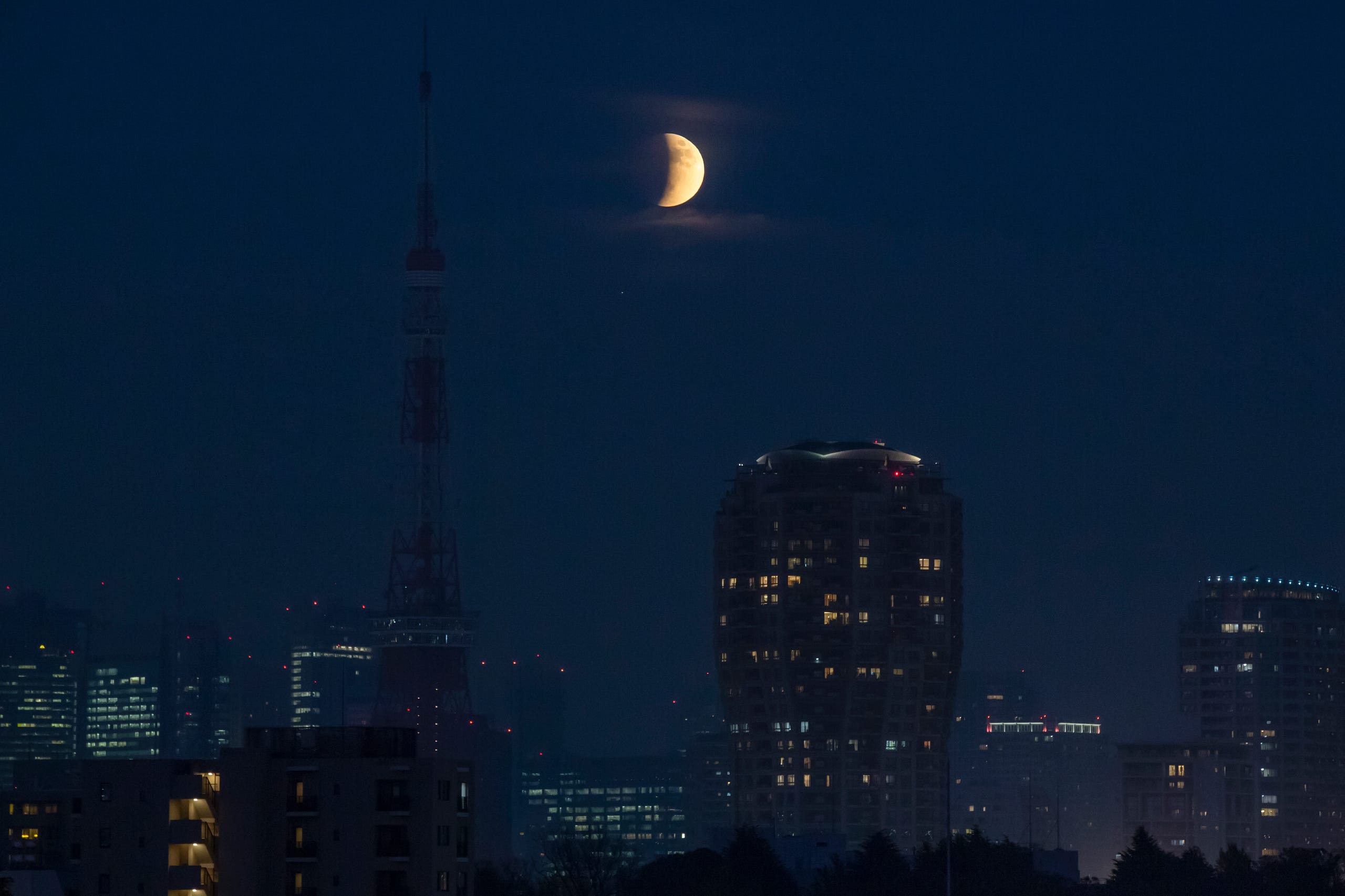
The partial solar eclipse on Tokyo Tower peeks through the clouds in Tokyo, Japan. (Photo: AP)
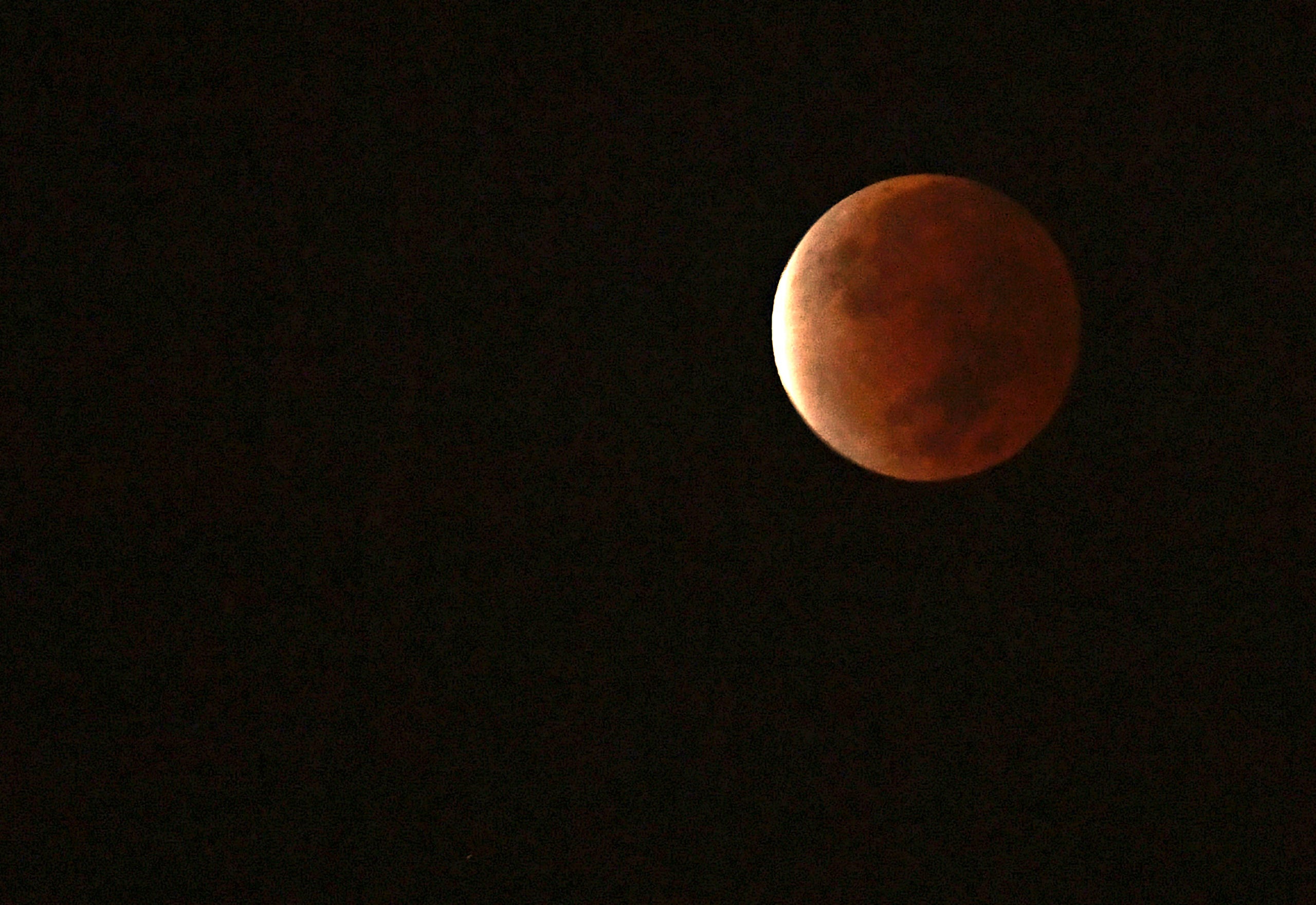
The Moon is obscured by up to 97% by the Earth's shadow recorded in Sarasota County, Florida, USA.
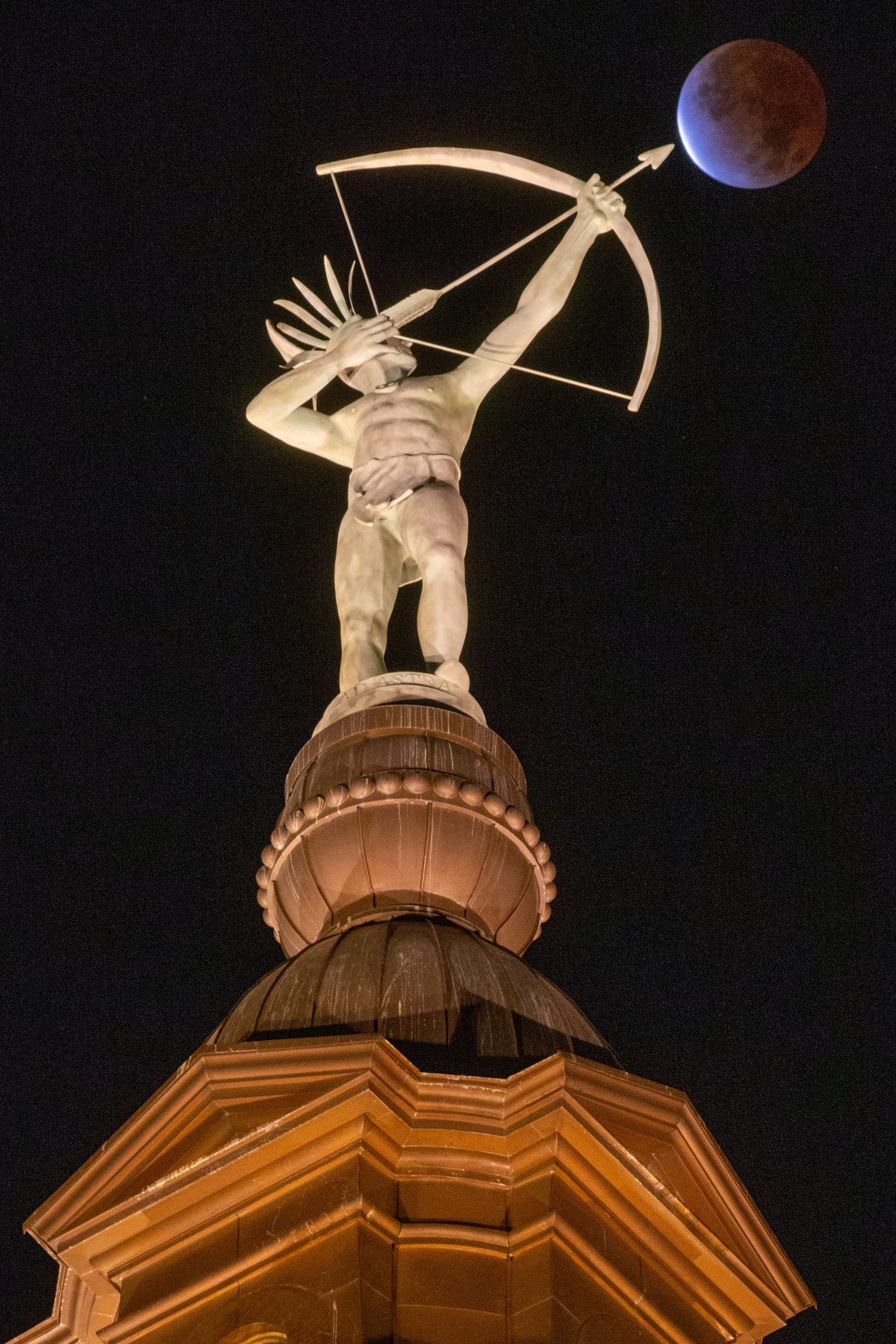
The moon appears at the arrowhead of the "Kansa warrior" statue in the state of Kansas, USA. (Photo: AP)
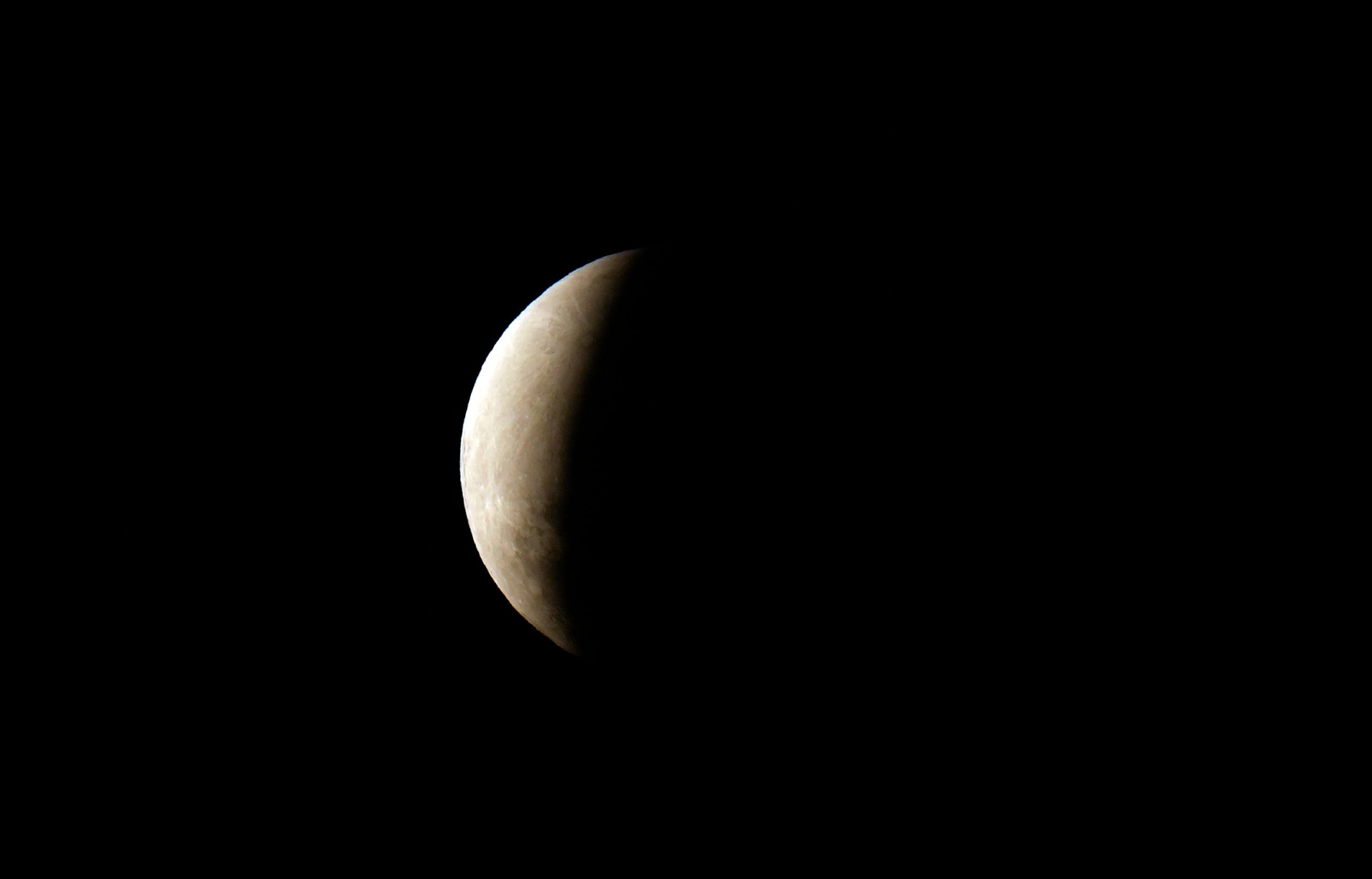
The partially occulted moon is seen from Asuncion, Paraguay. There is no red color, most of the Moon disappears in the mysterious black night. (Photo: AP)
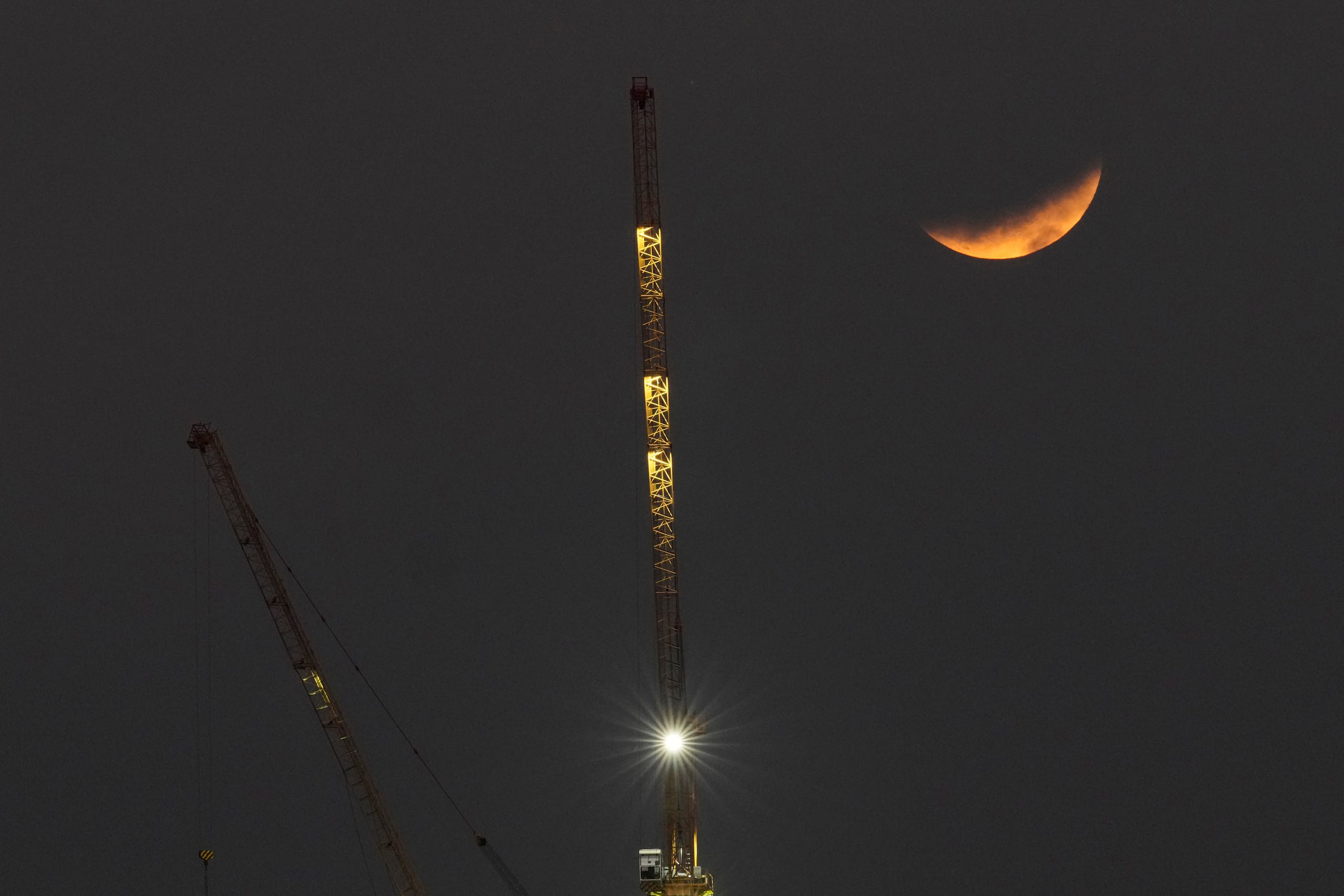
A partial lunar eclipse is seen in Manila, Philippines (Image: AP)
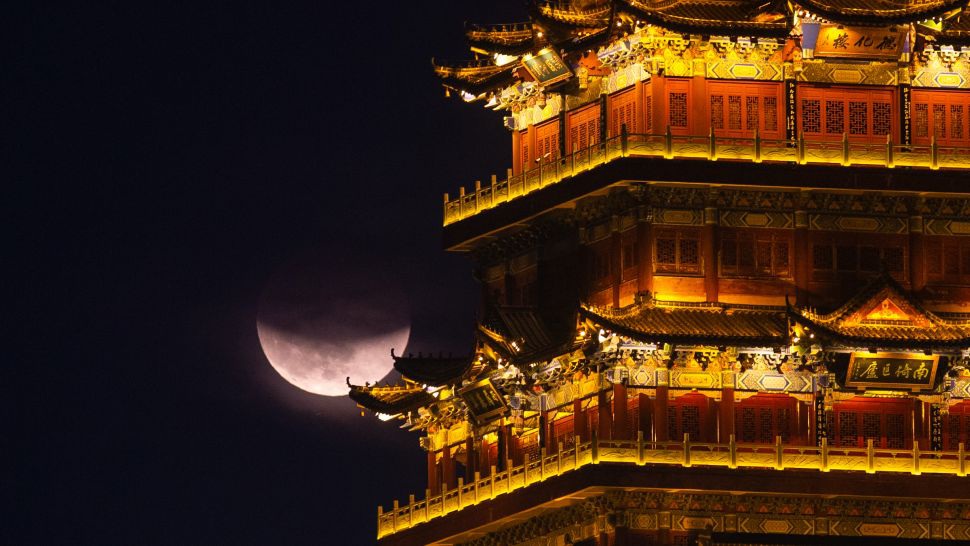
Partial lunar eclipse in Jiujiang city, Jiangxi province, China. (Image: Getty Images)
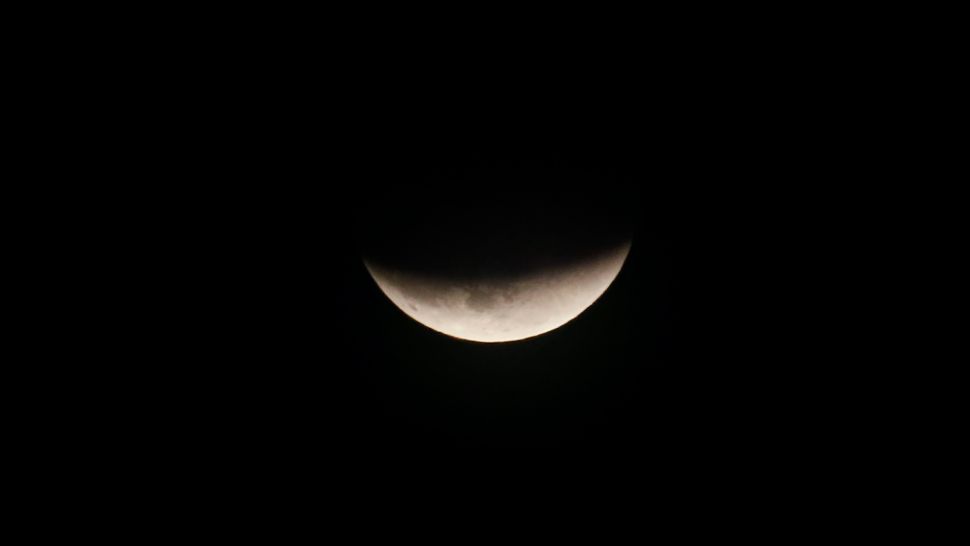
The Earth's shadow covers part of the full moon in Sangju province, south of Seoul, South Korea (Image: Getty Images)
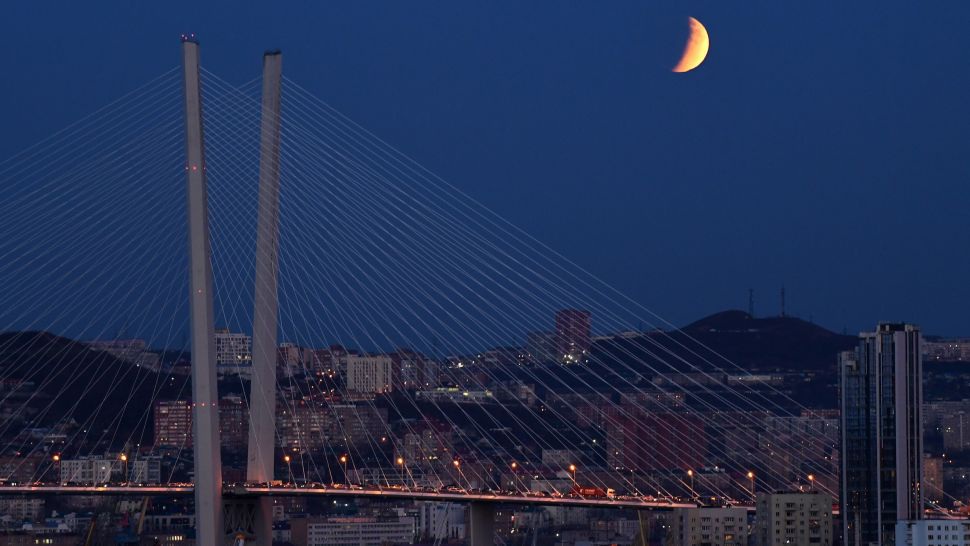
The full moon disappears after the Earth's shadow, recorded at the Golden Horn Bay in Vladivostok, Russia (Image: Getty Images).