Many people may not know that flight crew members use a different seat belt system than passengers.
Accordingly, the pilot's seat is equipped with a five-point seat belt , while the flight attendant uses a four-point seat belt .
Although they can still theoretically wear the same basic two-point lap belts as other passengers during flight, the multi-point harness system helps ensure safety during takeoff, landing and flying through turbulence.
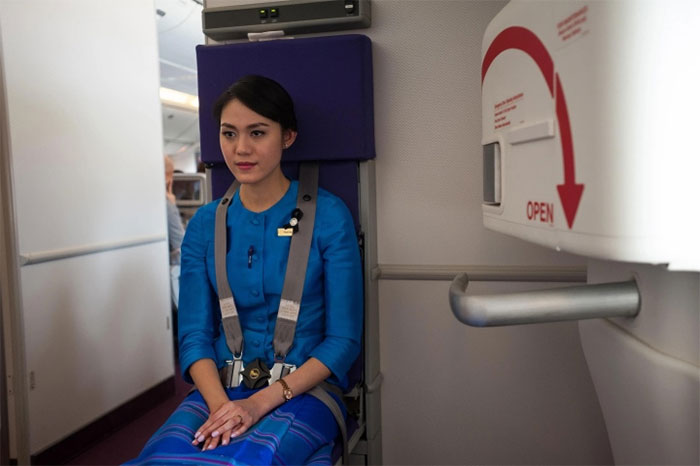
Flight attendant seat belts are always different from passenger seat belts.
Additionally , flight attendants' seats almost always face away from the rest of the cabin and look toward the back of the plane . This means that flight attendants will need more assistance in case of emergencies or bad weather.
Similarly, in the event of severe turbulence, pilots need strong seat belts that keep them securely in their seats to ensure operations from the cockpit can still take place.
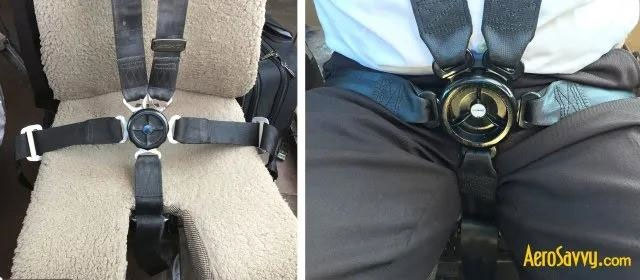
These harnesses are often complex, difficult to use, and more expensive than conventional seat belts.
The five-point harness will go across the shoulders, waist and between the legs to prevent them from sliding out of the seat.
According to Aerosavvy.com, if every passenger seat were equipped with such seat belts, planes would certainly be much heavier and flights would therefore become more expensive.
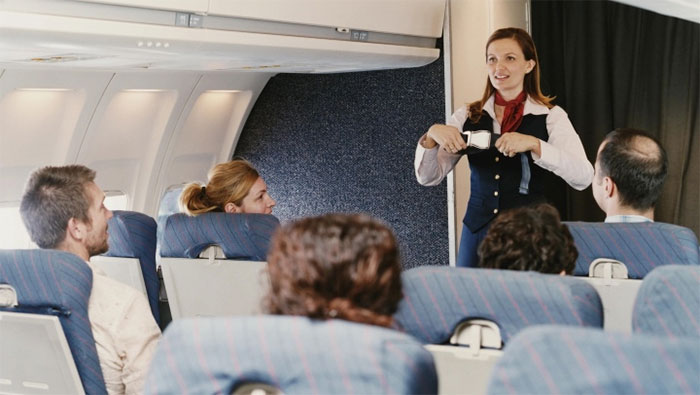
No passenger wants to use a seat belt that is too complicated and uncomfortable when flying for hours.
In addition, the seat belt is too complicated, making it difficult for many passengers to use.
"Flight attendants today already have a hard time reminding passengers to use a basic seat belt," the website says .