This tree is grown as an ornamental plant in many parts of the world because of its striking copper-red bark, rare in woody plants .
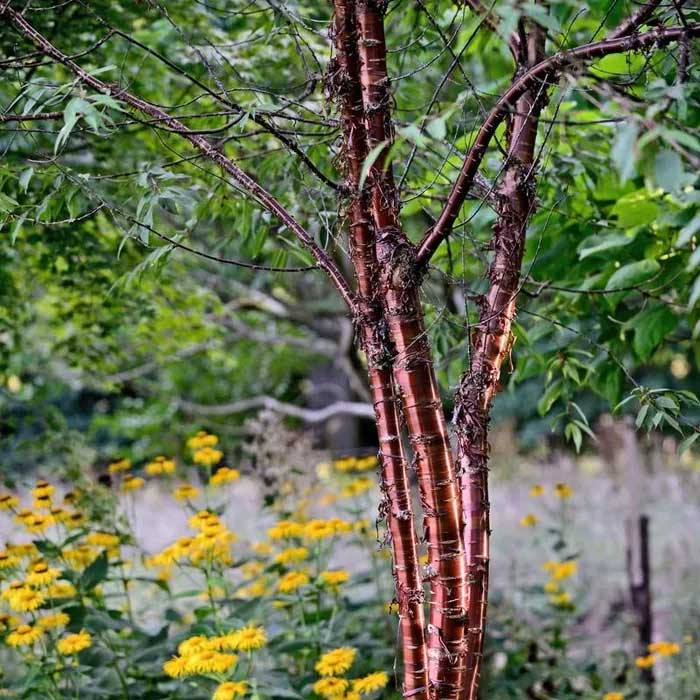 Distributed in the mountainous regions of Western China, mainly Tibet, the Tibetan cherry (Prunus serrula) is a famous tree species thanks to an interesting biological feature. (Photo: The Times).
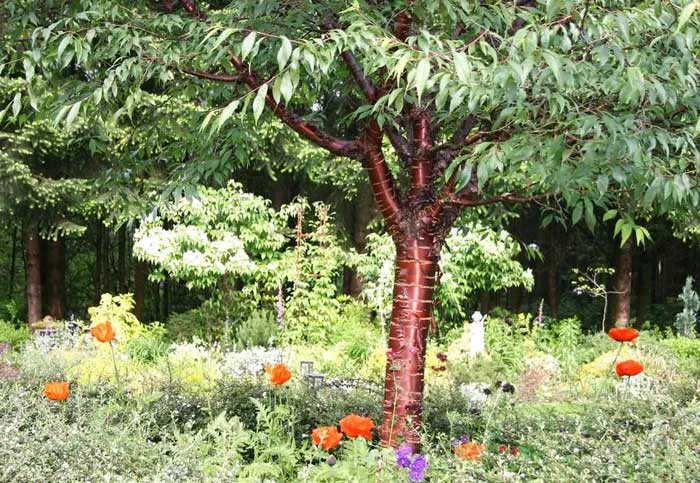
It is a small to medium-sized deciduous tree, reaching a height of 6–9 meters when fully mature. (Photo: The Columbian).
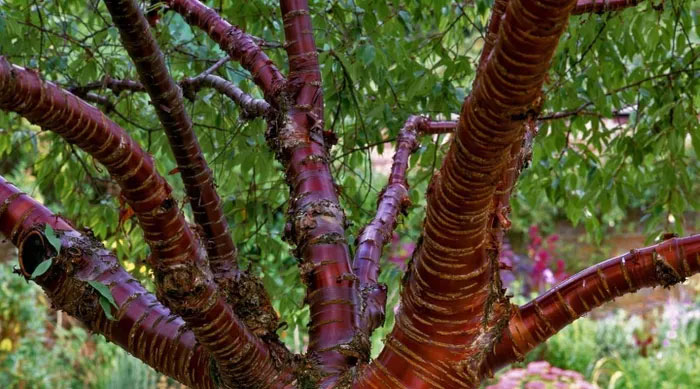
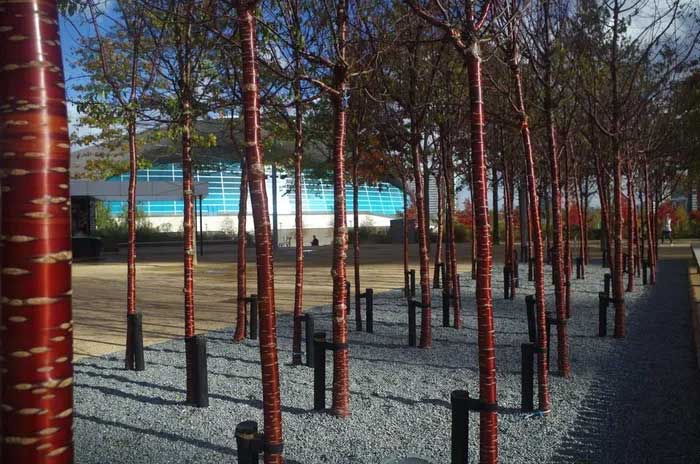
The bark is red and shiny like metal , making the entire trunk look like it was cast in bronze. There are many rough horizontal lines on the trunk and branches. (Photo: Epic Gardening).
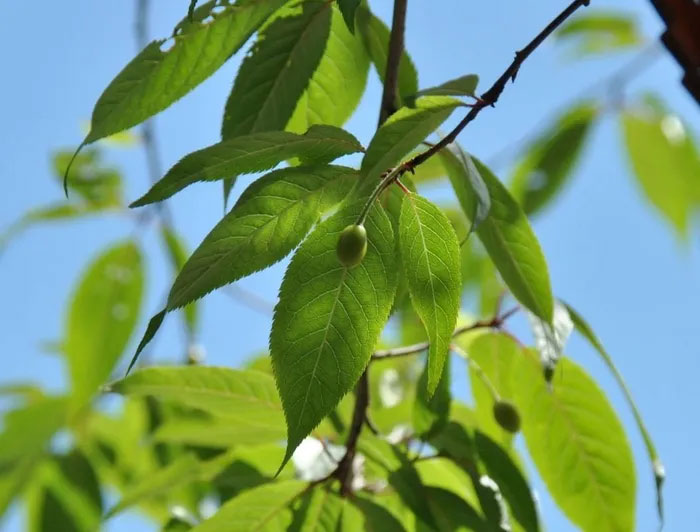
Tibetan cherry tree leaves grow alternately, 5–10 cm long, 1.5–2.0 cm wide, with serrated edges. (Photo: Van den Berk Nurseries).
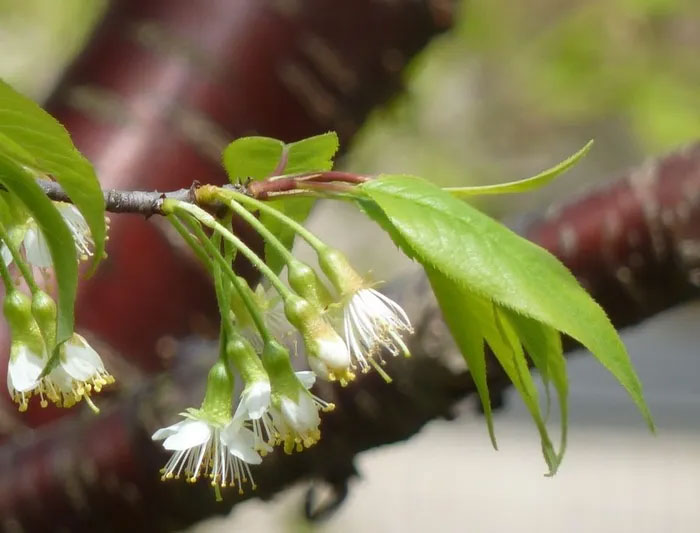
The flowers are white, grow in clusters of one to three flowers, and bloom in late April. (Photo: Vancouver Cherry Blossom Festival).
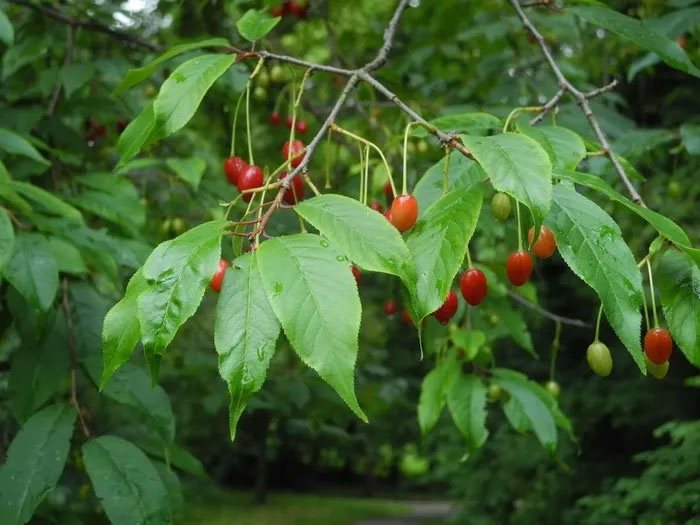
The fruit is a small, oval, bright red drupe. (Photo: Sequoiatrees.com).
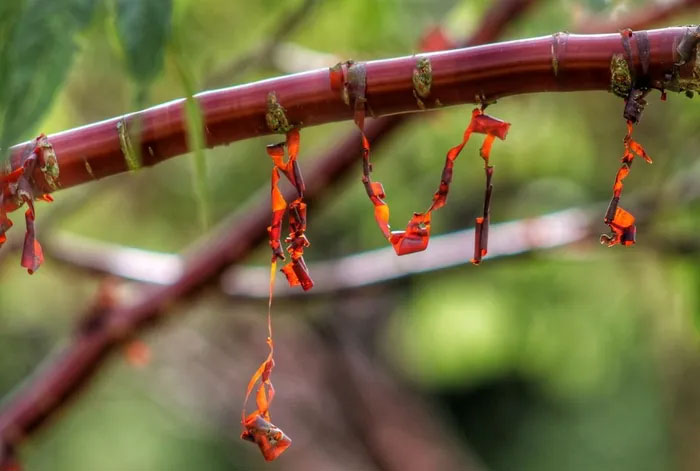
The paper-thin layer of bark often peels off around the trunk and branches of the Tibetan cherry. This shell has a very sturdy structure, with nearly the same durability as mylar - a highly durable polyester film. (Photo: Hillier Trees).

Ecologically, Tibetan cherry is a sun-loving tree that can grow well on many different soil types and withstand cold climates. (Photo: Sue Taylor / Flickr).
Sometimes branches of the Japanese cherry (Prunus serrulata) are grafted onto the trunk of the Tibetan cherry, forming a tree with red bark and bright flowers. (Photo: The Columbian).


According to gardeners, Tibetan cherries require careful care because the trees are susceptible to common diseases and are attacked by pests when grown outside their natural distribution area. (Photo: Mein schöner Garten).