The big blue Turaco bird has the scientific name Corythaeola Cristata. It is the only member in the Musophagidae family.
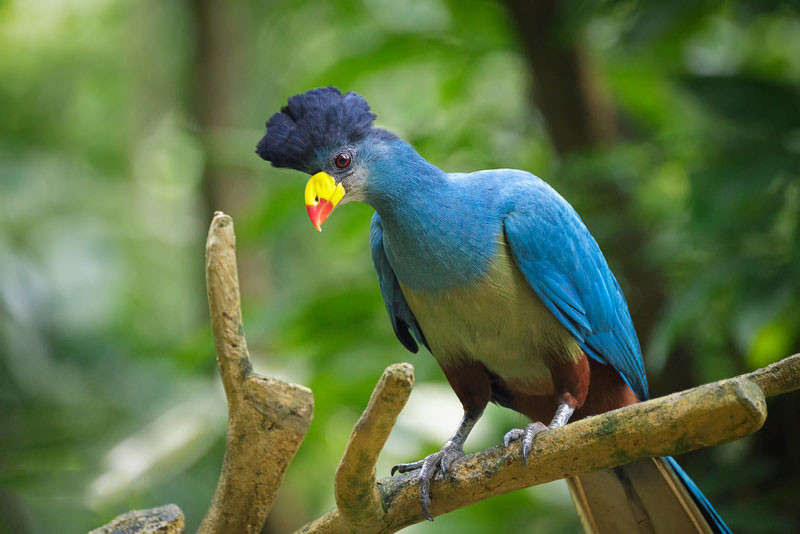
Adult birds have a length of 70-76cm, weighing from 820-1.230g.
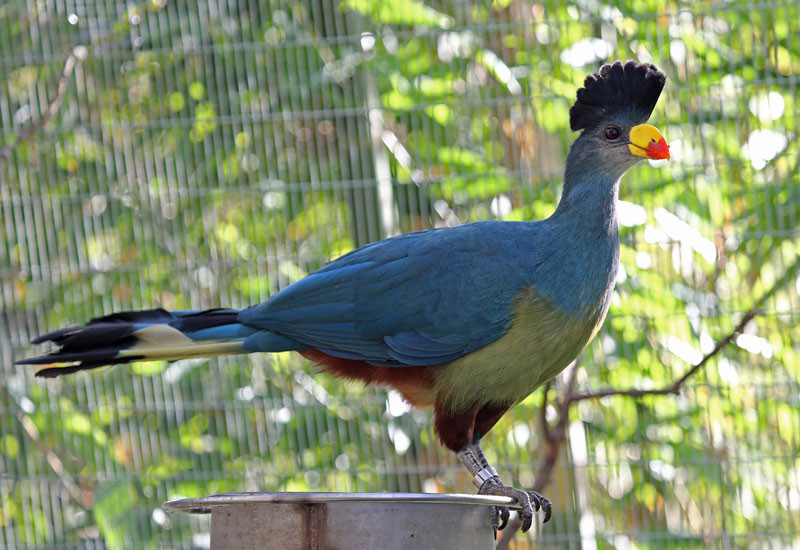
Females are usually more weight than males.
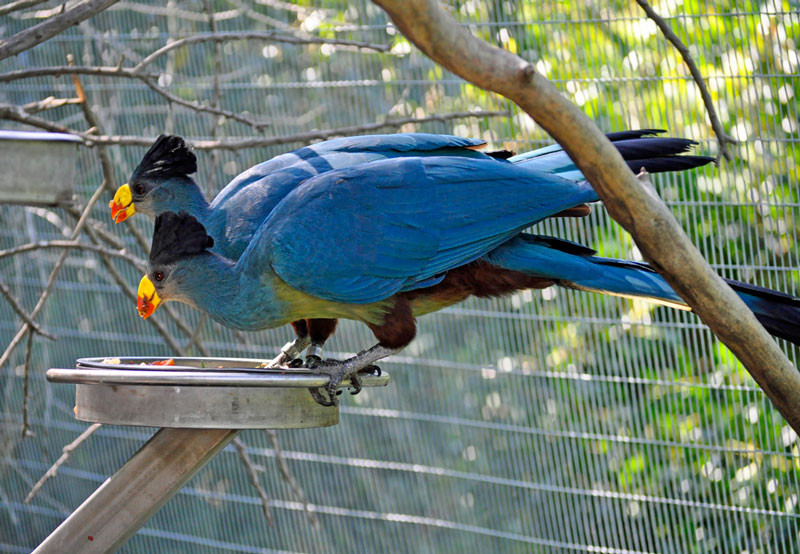
This bird is mainly distributed in the Democratic Republic of Congo, Republic of Kenya and Tanzania.
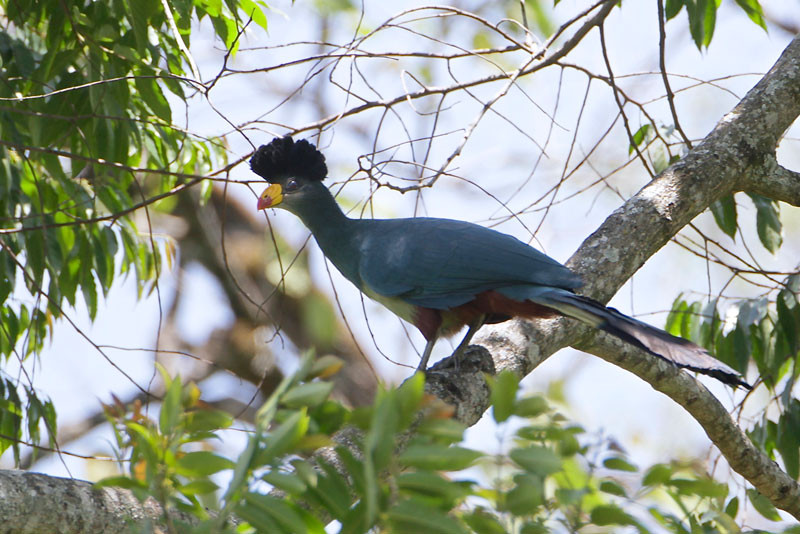
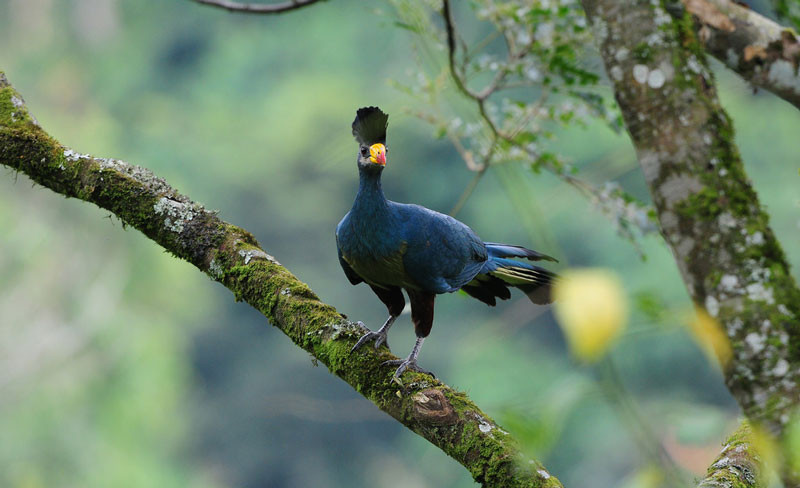
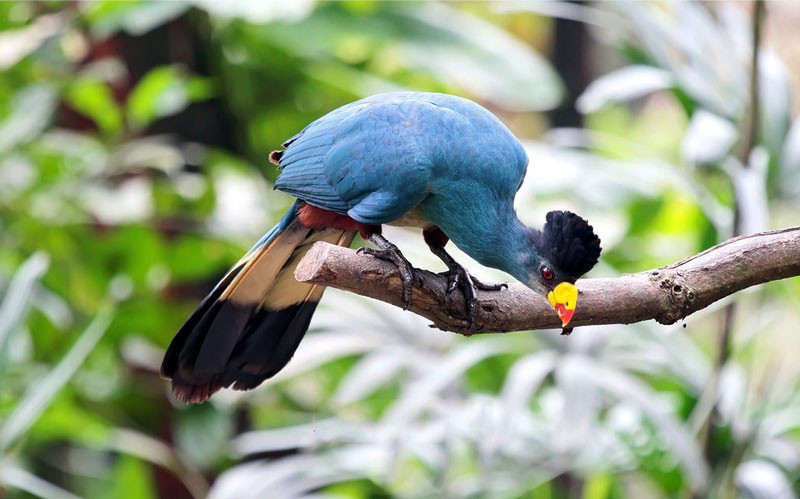
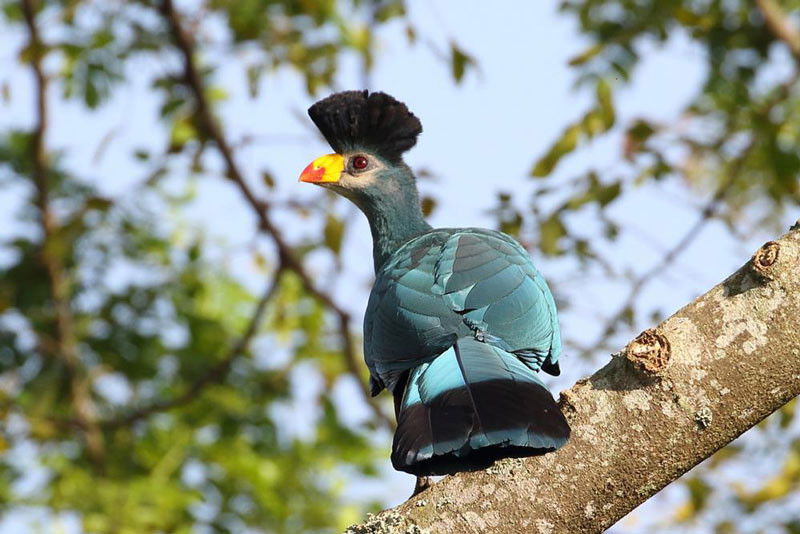
The bird has a blue coat, the tail end and the black hair on the head.The chest around the anal and thigh area is chestnut colored.Under the wings, the hair is brown with cream.
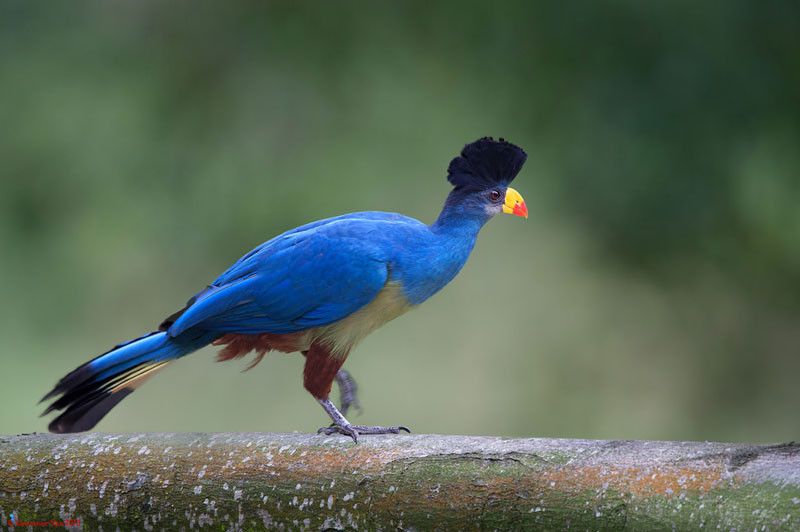
The legs of the large green Turaco bird are colored in lead.
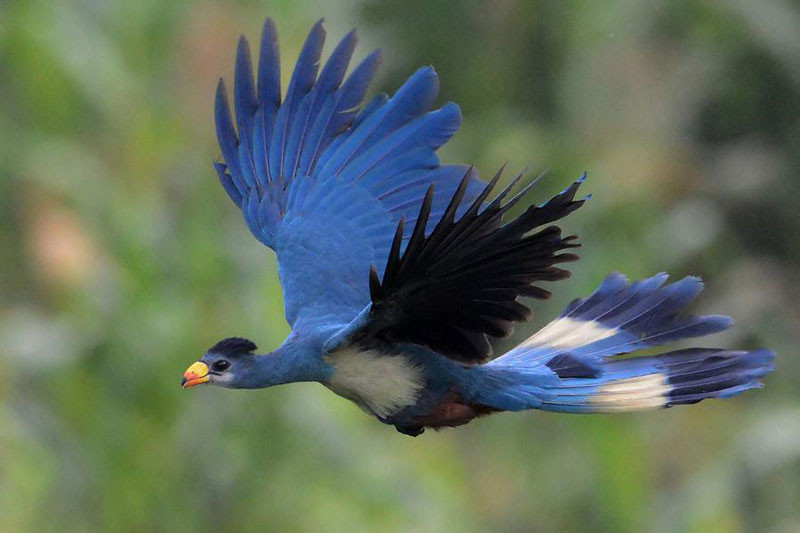
The mine has 2 colors black and red.
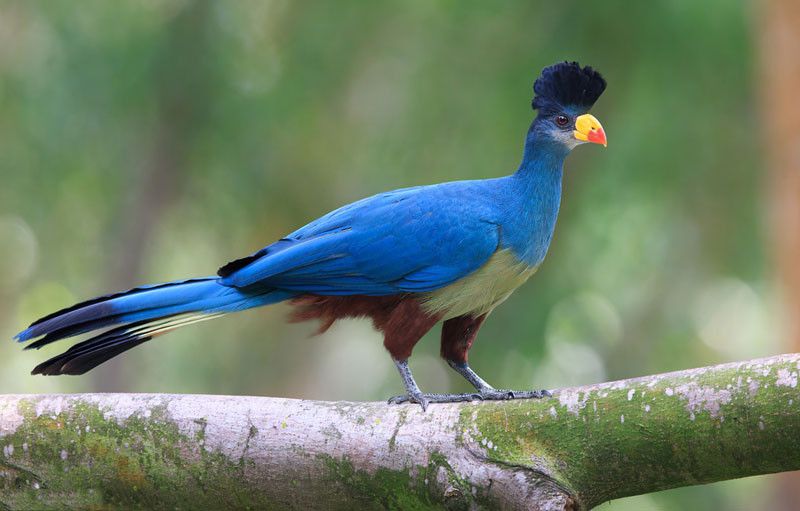
Green Turaco birds often live in low hamlet forests with a height of 2,700m above sea level.
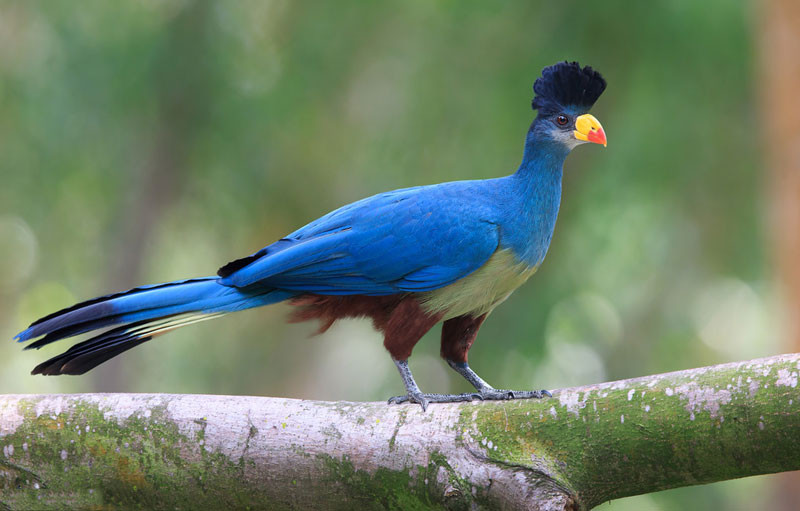
Flying green Turaco is not so good.
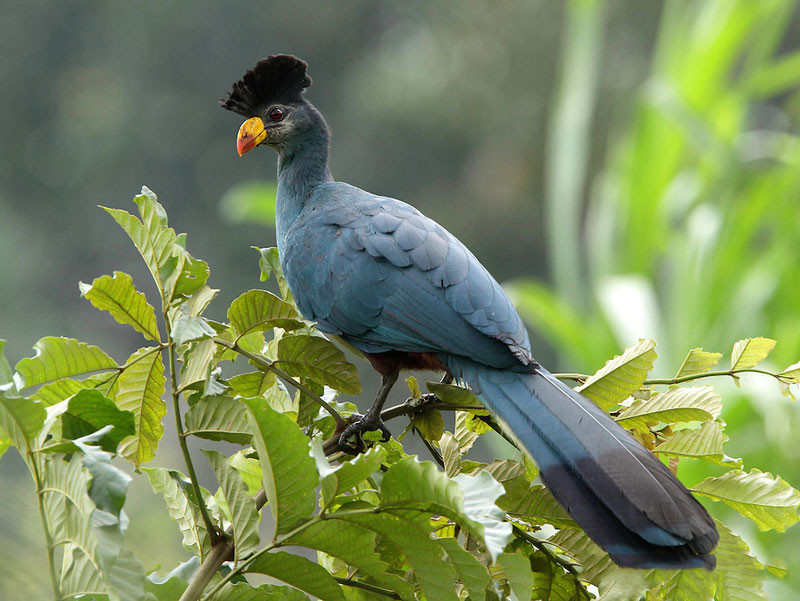
Green Turaco birds mainly eat fruits, buds, flowers and some insects.
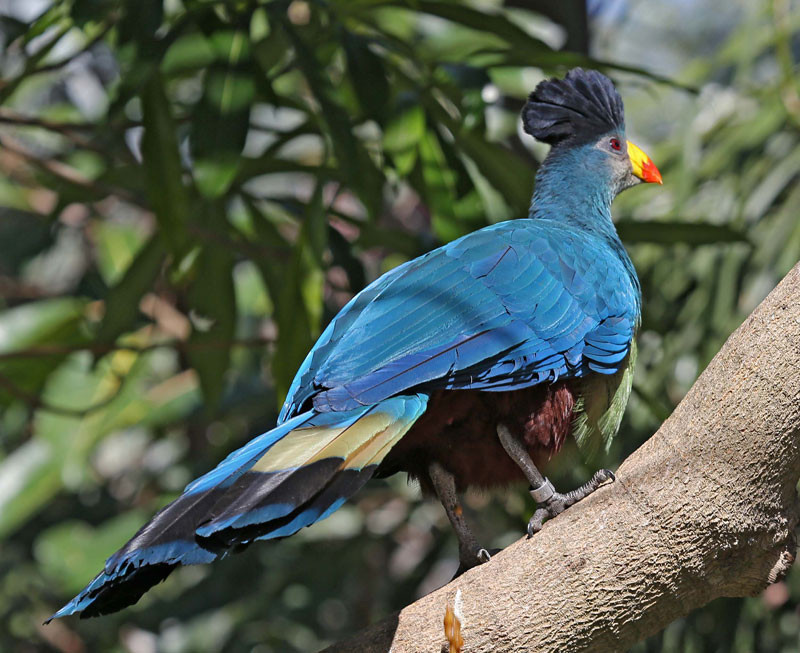
They often eat from early morning to late evening.
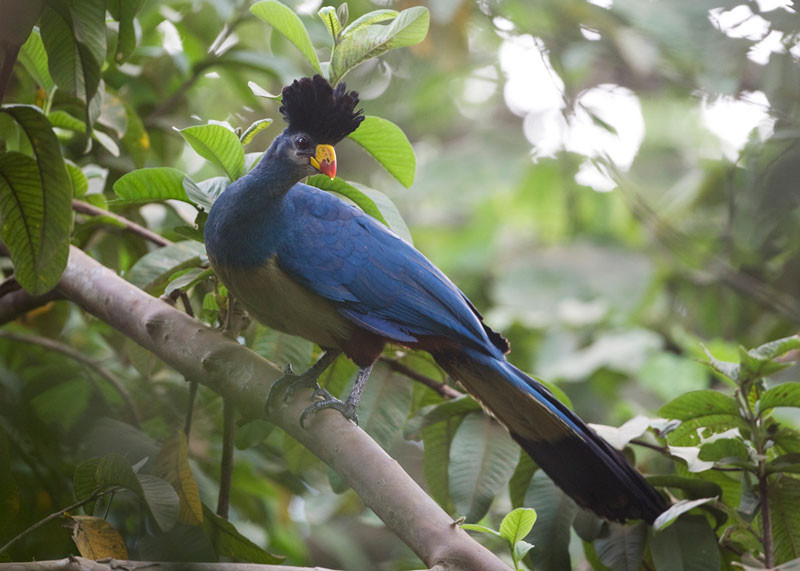
The green Turaco moves mainly on trees, they are very lazy on the ground (except when drinking and bathing).
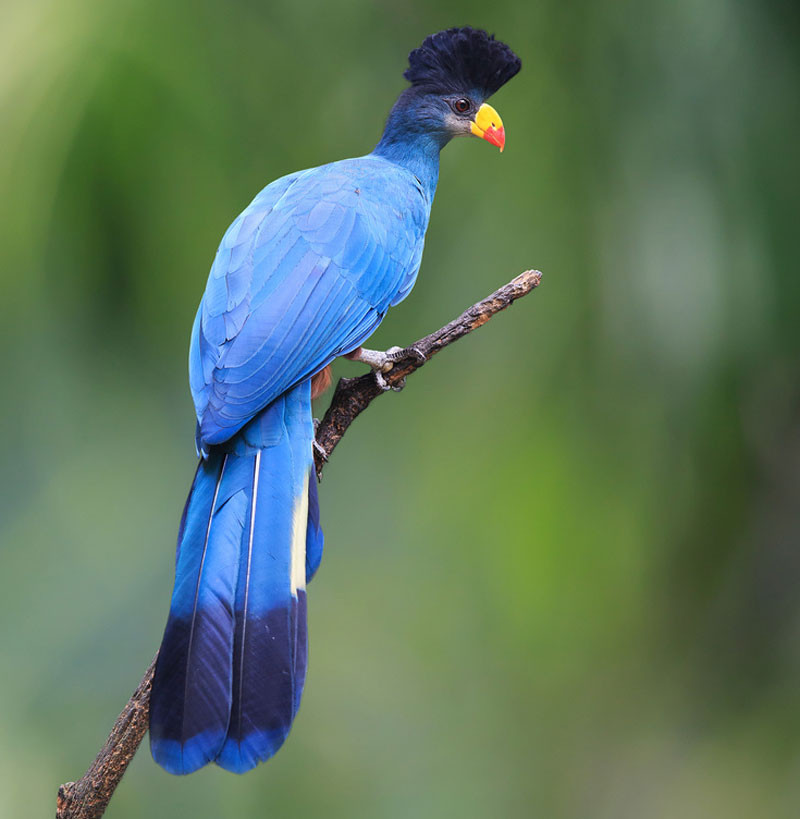
Green Turaco birds often live in groups of 6-20.
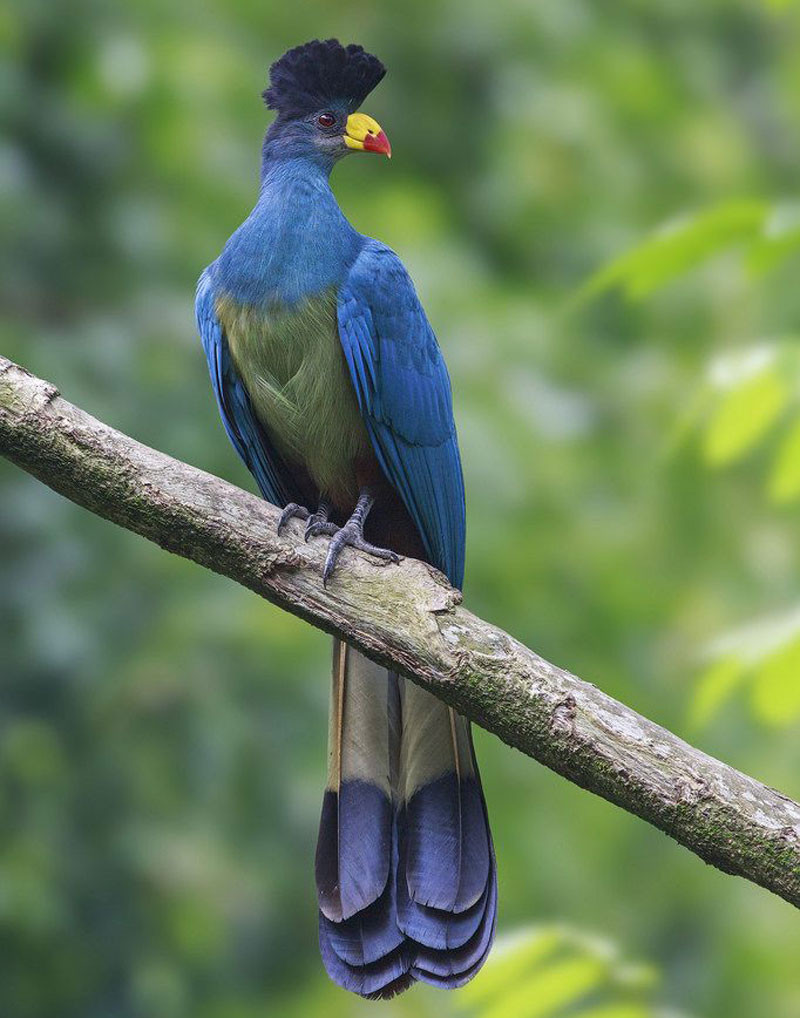
The breeding season for green Turaco is during the rainy season.
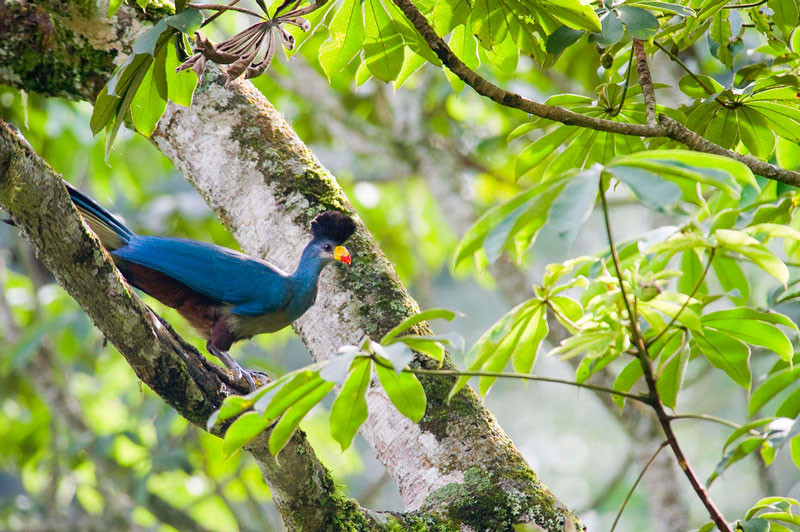
Birds often combine into couples.
They nest on tree canopy from 8-25m above the ground.
Each litter of green Turaco birds usually lays 2 eggs, incubation time is from 29-31 days.
Baby birds stay at the nest for 27-29 days.After 4 weeks of age, they begin to fly around the nest.After 5-6 weeks, the chicks will leave the nest, but stay with their parents for another time before leaving.