Considered the largest snake on the planet, giant blue python (Anaconda) lives mainly in South America. With a body length of up to 9 meters, they can swallow an alligator.

Giant python South America is a snake genus living in the Amazon basin. They include species of blue, yellow, black and white spots and giant Bolivia.

Among these 4 species, blue pythons are the largest. By adulthood, South American green pythons can be 6 to 9 meters long, weigh up to 227 kg, average diameter of about 30 cm.

Giant blue pythons disguise very well in marshes so they often reside in the marshes. They live alone and shy, so people rarely see them.

For the most part, giant blue pythons swim along rivers to find food.

But they also know how to climb on trees to take prey.
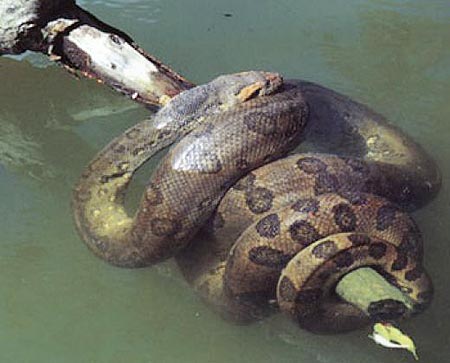
They hide themselves under water and kill their prey by wrapping their bodies tightly around the target, tightening until they choke, break their organs or bleed inside. After the prey dies, the giant snake will swallow it into the abdomen.
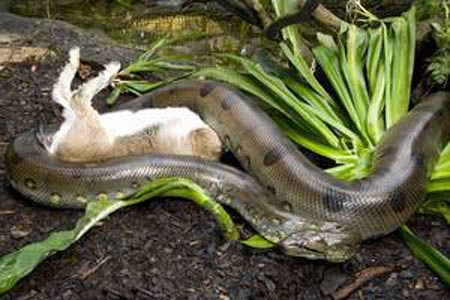
Although living in the country, giant blue pythons don't eat seafood. Their favorite food is birds, wild pigs, reptile animals, deer, deer, goats and even newspapers.
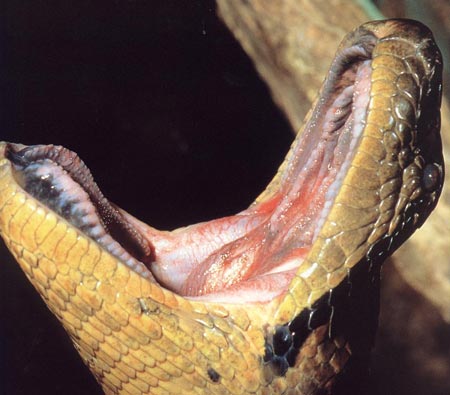
Like other giant snakes, blue pythons also have teeth, but they do not use teeth to chew or kill prey.
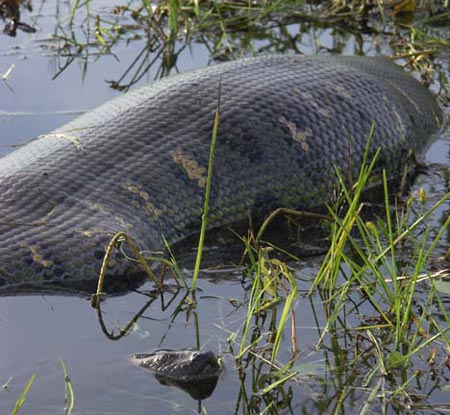
They can swallow an alligator.

Blue pythons move slowly so they rely on camouflage and unexpected attacks to catch prey.

After swallowing a large prey, green pythons have to wait for weeks to digest the food. Sometimes their waiting time is up to months.