In the animal world, vision is often the first line of defense against predators, as well as an important sense for capturing prey. As a result, many animals use complex visual systems to help them survive in specific habitats.
To survive in the darkest places on Earth or navigate the skies, creatures have evolved special and strange ways to help them perceive the world around them.
Reflective eyes
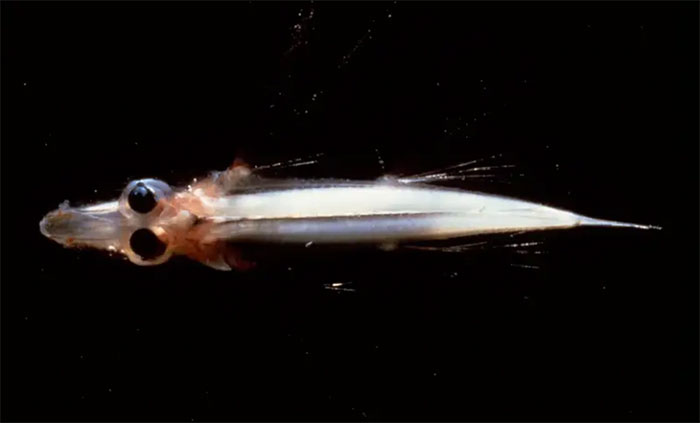
Spookfish eyes possess a unique reflection mechanism similar to a lens (Photo: Getty).
Spookfish live deep in the ocean where sunlight rarely reaches.
As a result, this creature must use a visual structure that resembles a mirror and a lens to see everything around it. This is the only known vertebrate with this feature.
Among them, the lens mirrors in their eyes are made of guanine crystals, which can focus to amplify the light emitted by plankton and other bioluminescent marine life.
What's even more bizarre is that the fish's eyes are divided into two connected parts, with one part facing up, and the other looking down.
That way, they can track prey with a wider angle, as well as easily detect hidden predators.
Super vision
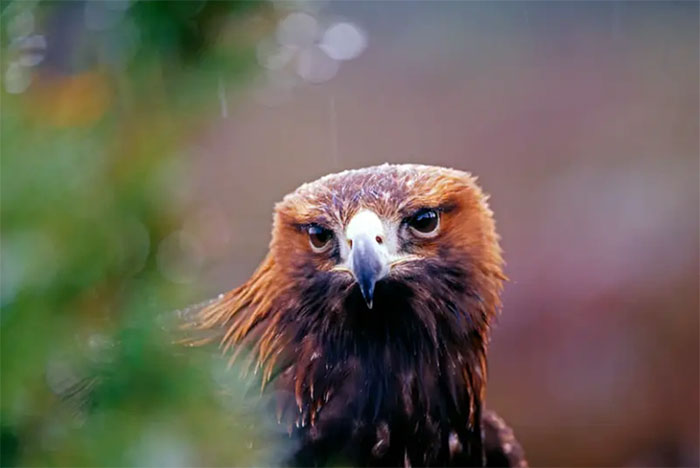
Birds of prey have excellent eyesight, allowing them to spot prey thousands of meters high in the sky. (Photo: Getty).
In North America, Europe and some parts of Asia, golden eagles soar high in the sky with a wingspan of 2.1 meters. However, they can easily spot prey from several kilometers away.
To do this, they possess extremely high densities of visual cells called rods and cones located inside the retina.
Rod cells are responsible for recording the overall shape of an object, while cone cells detect color and detail.
According to studies, the density of rod and cone cells in the eyes of birds of prey is at least five times higher than in human eyes.
The bird with the best vision is the falcon. They can accurately see a field mouse or a rabbit running on the ground from a height of 2-3 thousand meters.
The biggest eyes

The eyes of a giant squid at the Te Papa Museum in New Zealand. (Photo: Getty).
Possessing the largest eyes in the animal kingdom is the giant squid. The largest specimens of this species can grow to 12 meters long, and their eyes can be up to 25cm in diameter.
This species uses its large eyes to capture as much light as possible from the dark undersea world to hunt for fish and shrimp.
Their vision also allows them to detect a moving sperm whale at a distance of 122 meters.
It is one of the main predators of the giant squid, which typically roams deep ocean waters with little or no sunlight.
Ultraviolet detection
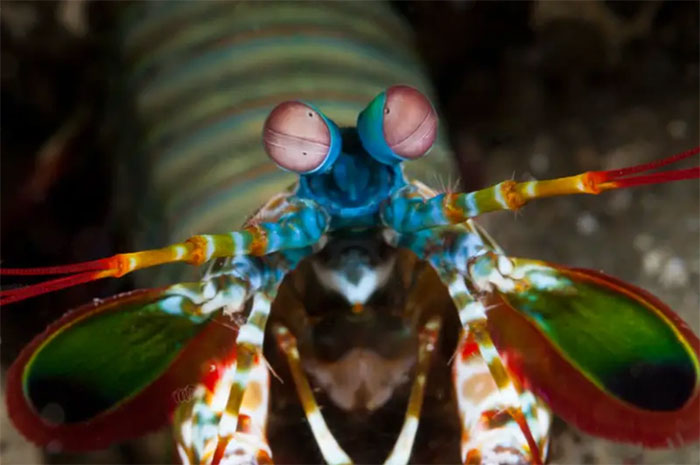
Mantis shrimp in Indonesia. (Photo: Getty).
Mantis shrimp are known for their incredible strength and agile claws, which can break a snail's shell with a single strike.
They also boast a unique visual system, with eyes that can process 12 color channels, as well as detect ultraviolet (UV) light, polarized light, whose waves oscillate in the same direction.
In comparison, humans can only process three color channels: blue, green, and red. Additionally, the human eye cannot see polarized light or ultraviolet light at all.
Color Changing Eyes
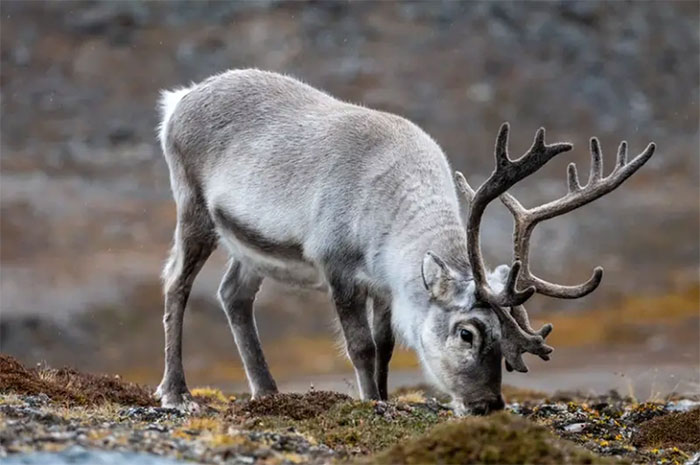
An Arctic reindeer grazes on the tundra in Svalbard. (Photo: Getty).
The Arctic reindeer (tapetum lucidum) is a rare vertebrate that changes eye color with the seasons.
Specifically, their eyes change from yellow in the summer to blue in the winter. This is to compensate for the drastic changes in sunlight in the Arctic.
Their blue eyes enhance their ability to detect shorter wavelengths of light than most ungulates during the winter, when they have only a few short hours each day to detect sunlight.
Conversely, in the summer, their eyes no longer need to absorb as much light in a short period of time and turn back to yellow.