Humans have always been curious, seeking to explore the origins and end of life. Do we have souls? What is a soul? Where does the soul go after death?
These questions have troubled countless philosophers, religious leaders, and scientists. In the field of science, there is a renowned mathematician-physicist who not only made significant contributions to black hole theory but also put forward a "revolutionary" view: the human soul is a quantum entity capable of returning to the universe after death . He is Roger Penrose , the 2020 Nobel Prize winner in Physics.
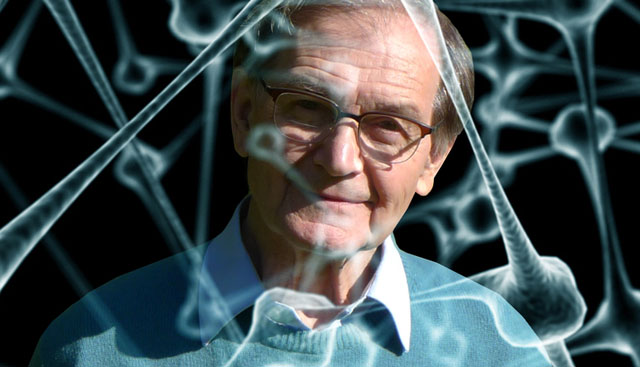
Physicist Roger Penrose.
Many people might ponder this question: what happens to human consciousness when a person's life ends? Does the end of life mean the end of everything? Do humans have souls? These questions are not easy to answer because they touch upon the boundary between science and metaphysics . Science is based on facts and evidence, while metaphysics is based on belief and emotion. But sometimes, there is some overlap and conflict between science and metaphysics, such as the study of the soul.
Speaking of the soul, we must address a question: what is life? In the 13.7 billion years since the universe was born, many things have come into existence, among which the most complex and mysterious is life. So what is life? Different disciplines have different definitions, but from a biological perspective, life refers to a biological function capable of completing its own processes of growth, reproduction, metabolism, and other biological functions by exchanging matter and energy with the external world and adapting to changes in the external environment.
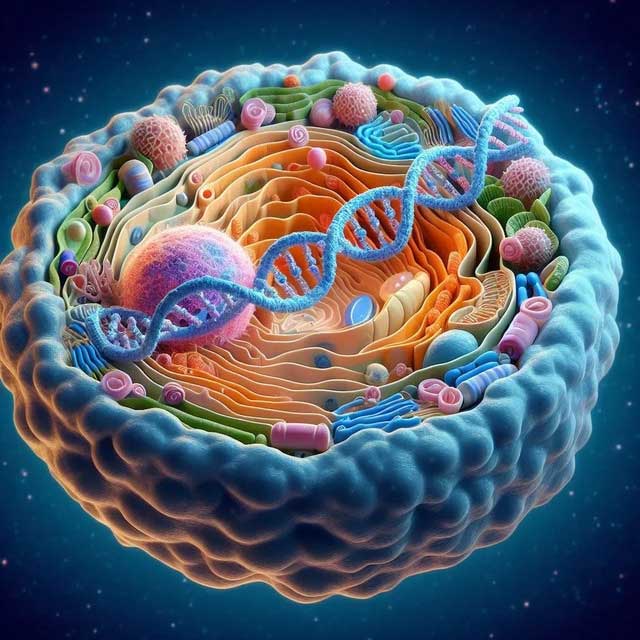
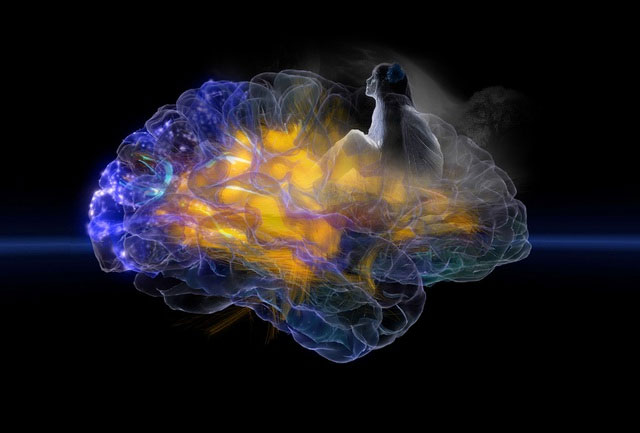
This world is made up of matter, and everything, including life, is made up of many different kinds of matter . In the eyes of many people, life consists of tiny cells, DNA, etc. But in reality, this perception is not entirely correct, because the core of life is actually consciousness. (Illustrative image).
Like dark matter, it is a mysterious substance that we cannot currently see or touch. Every living organism possesses a certain degree of consciousness, whether animal or plant, whether simple life forms like bacteria and viruses or advanced life forms like humans; they all have consciousness, but the strength of consciousness varies.
The consciousness of living organisms such as plants and bacteria is very weak, while the consciousness of complex animals is relatively strong, and the consciousness of advanced intelligent life forms like humans is even more mysterious and complex. As the only intelligent life form on Earth, humans have the strongest consciousness, and at the same time, human consciousness holds many more secrets that we do not yet know.
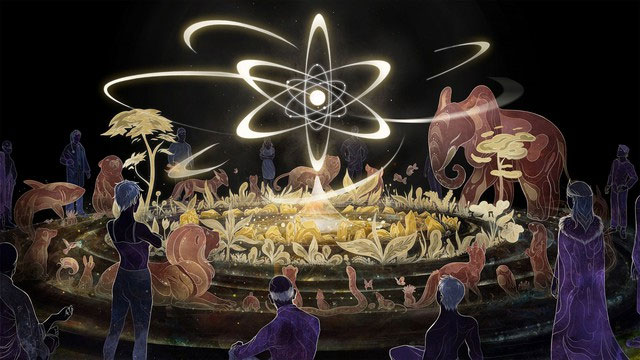
Living organisms can be described as a combination of tangible matter and intangible, mystical consciousness. (Illustrative image)
Living organisms can be described as a combination of tangible matter and intangible, mystical consciousness. For example, humans are intelligent beings composed of a visible body and intangible, mystical consciousness. No life form can escape the fundamental law of birth, aging, illness, and death. Even advanced, intelligent life forms like humans are gradually aging from the moment they are born.
So what happens to consciousness when the human body ceases to function? Does it die with the body or continue to exist in another form? This leads to a scientific hypothesis about the soul, namely Penrose's quantum soul theory .
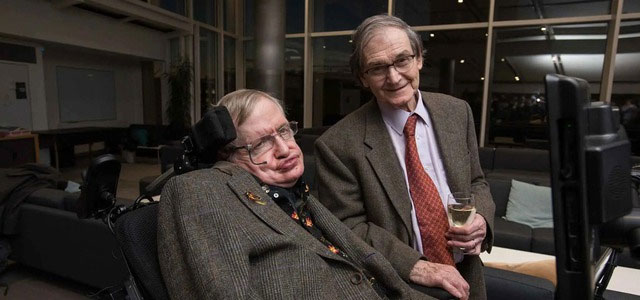
Physicists Roger Penrose and Steve Hawking.
Roger Penrose, a British mathematical physicist, held a PhD from Cambridge University and was Professor Emeritus at Oxford University. A close friend of Hawking, Penrose proposed a concept called the "singularity ," a point with infinitely small volume and infinite density.
Calculations led to the conclusion that a singularity is formed when a massive star collapses, namely a black hole . Based on this, Hawking proposed that perhaps our universe originated from such a singularity. This theory is known as the "Penrose theorem ." It was for this discovery that Penrose won the 2020 Nobel Prize in Physics. Later, he even raised a "taboo" topic in science, believing that the human soul continues to exist in quantum form, and after death, the soul leaves the human body and returns to the universe.
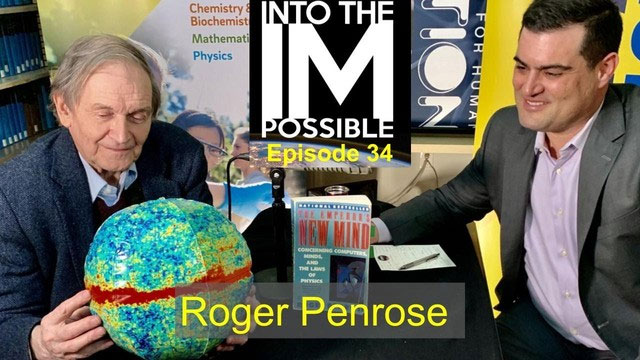
Penrose argues that no matter how advanced AI becomes today, there is one thing it will never be able to match: the abilities of a normal human being.
In 1989, Penrose wrote the book 'The Emperor's New Mind ,' in which he proposed that no matter how advanced artificial intelligence becomes, there is one thing that will never be able to match that of ordinary humans: intuition, which can also be understood as the soul, or consciousness . According to Penrose, artificial intelligence is all logical activity and will never escape its mechanized nature; however, things like consciousness can only exist in quantum systems.
So how did humans develop consciousness? Penrose's answer is that the human brain has many electrons in a state of quantum entanglement . Every time these electrons collapse, humans have different thoughts and ideas. These electrons continue to collapse and become entangled, and that is what is called the soul or consciousness.
While this seems quite scientific, the theory he proposed next and his explanation of the soul are steeped in metaphysical flavor. He argued that after a being dies, the soul doesn't disappear; the quantum information within it isn't destroyed but leaves the body and returns to the universe. This explanation closely resembles the mythological concept of the soul.
To put it more simply, the soul will continue to exist in the universe. This statement, however, unexpectedly raises many uncertainties about our universe. If the soul is immortal, where does it go?
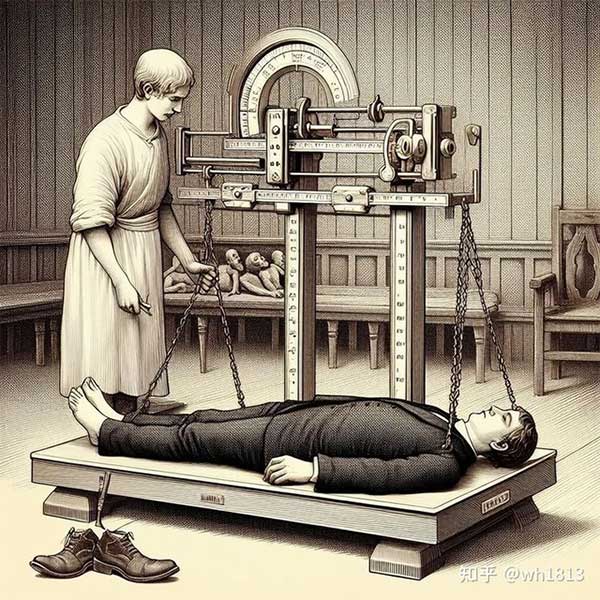
The experiment of weighing souls.
The earliest scientific study of the soul was the soul weighing experiment. In 1901, a surgeon named Duncan MacDougall conducted an experiment to weigh the soul, because it had been previously believed that the soul had weight and would leave the body after death. Therefore, by measuring the change in weight between life and death, the weight of the soul could be measured.
Based on this hypothesis, Duncan used his position as a surgeon to recruit several volunteer patients for the experiment. Near the end of their lives, they would be placed on a special hospital bed with a special measuring device attached to the underside. After the experiment began, he discovered a surprising phenomenon: the weight of some participants suddenly decreased by 21 grams at the time of death. He believed this was the weight of the soul.
He then measured the weight of the dogs in the same way and was surprised to find that their weight did not change at all after death, so he concluded that only humans have souls, while animals do not.
Only humans have souls; animals do not. (Illustrative image)
In 1907, the New York Times published the contents of McDougall's experiment, which caused a stir and was criticized by many scholars because the experiment had several illogical aspects, particularly flaws in the experimental data. When a person dies, their body temperature suddenly rises, and the amount of sweat produced is accompanied by a sudden change in weight. Dogs do not show this change because they cannot secrete sweat.
Then, perhaps out of necessity, McDougall came up with another audacious idea: he abandoned the soul-weighing experiment and planned to use special lighting to film out-of-body scenes. If a person died, the soul would actually leave the body, and thus it would be possible to photograph the soul in a unique way.
He then attempted to use X-rays to capture the soul leaving the body, but unfortunately, he was unsuccessful until after his death.

The study of the soul remains a topic of research related to death, so some scientists have proposed 'near-death experiences'. (Illustrative image).
What is a near-death experience? The period of coma from when a severely injured person is brought to the hospital until they are successfully rescued is called the near-death experience . Through interviews with a large number of dying patients, scientists have discovered that during this time, many amazing and similar experiences occur; these are near-death experiences.
For example, they might feel their consciousness leaving their body, reliving their lives, and some might even see deceased relatives. Strangely, almost all of them have had out-of-body experiences. This raises a question: Why do patients from all over the world have similar experiences? How do these experiences occur? This is a major problem in near-death experience research.
So how did Penrose explain that? Penrose proposed that the human near-death experience is equivalent to a quantum computer program in the brain , a program that persists in the universe even after death. In other words, he believed that the soul is a kind of quantum matter that, after leaving the human body, returns to the universe. It sounds a bit confusing, but we have to start with quantum mechanics.
In quantum mechanics, there is a concept called superposition , which refers to the superposition of an extremely small quantum particle that can exist in multiple states simultaneously. This quantum state is very similar to our consciousness or soul; could it also be this type of quantum state?
In 1994, Harvard University in the United States published the results of a study in which they discovered that the human brain contains a structure called "microtubules ," which are widely distributed in brain neurons like wires, and this structure has properties similar to quantum superposition. Penrose later participated in this research and, along with Stuart Hameroff, director of the Center for Consciousness Research at the University of Arizona and professor in the Department of Psychology and Anesthesia, proposed the 'adjustment-collapse' model to explain the quantum phenomenon of consciousness.
Penrose's theory is an attempt to explain the existence of the soul scientifically. (Illustrative image).
The basic idea of the 'adjustment-collapse' model is that human consciousness is created by microtubules in the brain. Quantum states within these microtubules continuously adjust and collapse. Each collapse creates a moment of consciousness, and these moments of consciousness constitute our thoughts and emotions. When the human body dies, the quantum states within the microtubules do not disappear but enter the quantum field of the universe, which is the immortality of the soul. Penrose and Stuart Hameroff believe that this theory can explain some phenomena in near-death experiences, such as out-of-body experiences, recollections of life, and encounters with the dead, as these are predictions of consciousness created when quantum states collapse.
Penrose's quantum soul theory is a theory that attempts to explain the existence of the soul scientifically, based on knowledge of quantum mechanics and neuroscience, but also influenced by metaphysics.
While this theory has some scientific basis, it remains highly controversial , particularly regarding how to verify and prove its validity. Currently, scientific research on the soul is still in its exploratory phase, with no definitive answers yet. Perhaps the nature of the soul lies beyond the realm of science and can only be understood through faith and emotion.
- Are ghosts real?
- Some scientific theories shed more light on the spiritual world.
- Divers share true stories about water ghosts.