Recently, Jeff Barton, a scientist from Texas (USA), has given the world a colorful world under the meteorite surface of the meteorite - stones coming from space.
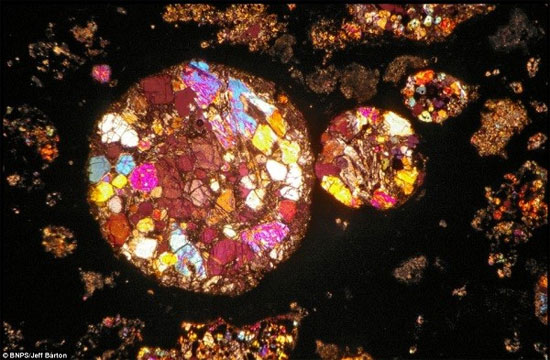
Jeff took advantage of the polarization of light transmitted through a microscope to produce vibrant colors.
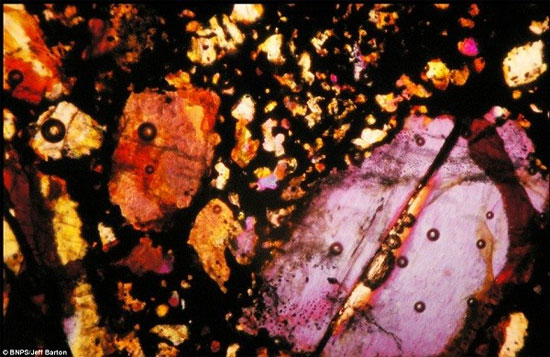
By using microscopes, spectral filters, standard digital SLR cameras, computer software . Jeff Barton has captured the image of the iridescent world inside 4.5 billion meteorites. year old.
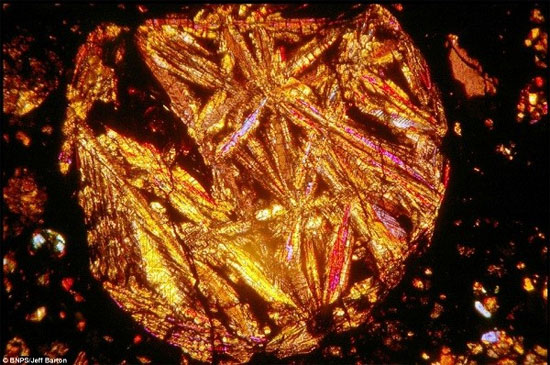
By using standard digital cameras attached to microscopes, scientist Jeff Barton has produced colorful works.
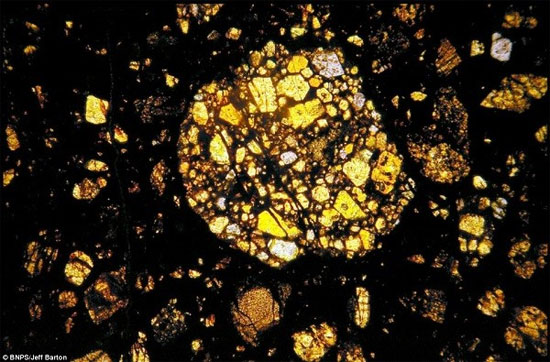
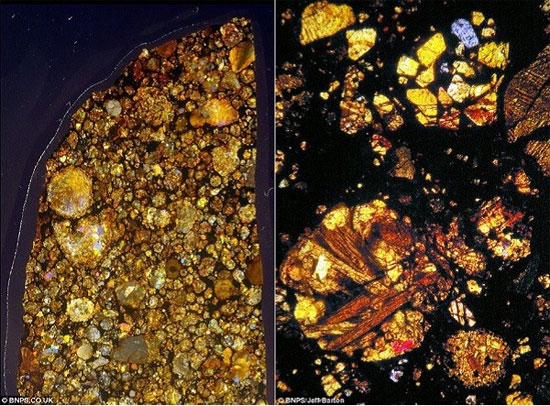
In order to produce these works, he bought small pieces of meteorites, plying, cutting, grinding, polishing them, thinning them until they were thin enough to be used. According to him, most meteorites are fragments, the result of collisions between asteroids in the universe.
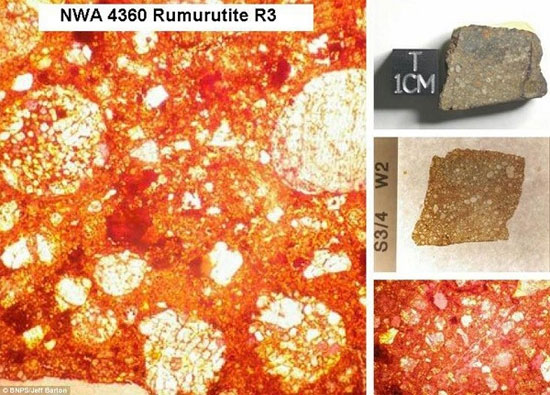
Most meteorites are the result of collisions between asteroids in the universe.
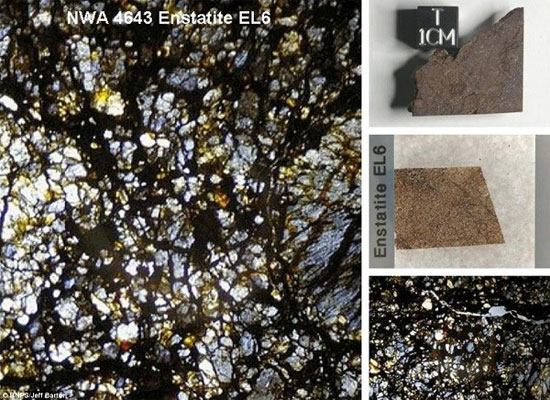
So far, the largest meteorite ever found on Earth is the Hoba meteorite, weighing over 60 tons, discovered in the Otjozondjupa area of Namibia in Africa in 1920. The Hoba meteorite consists of 84% iron and 16% nickel.
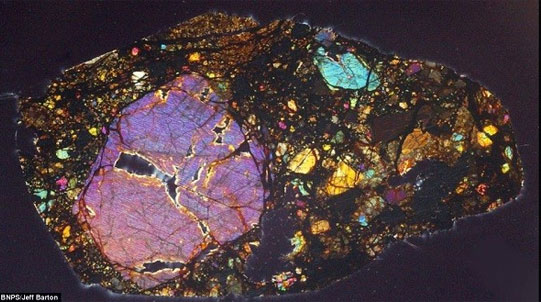
The image shows the meteorite's "inner world" falling at Vaca Muerta.
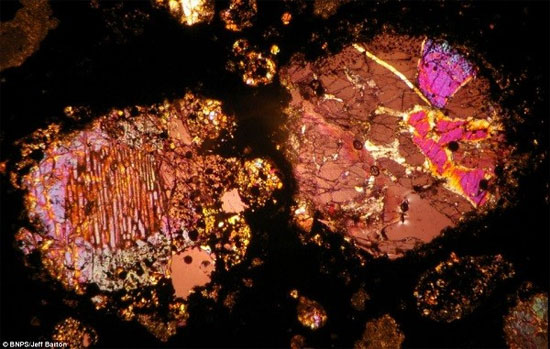
The meteorite Allende fell to Pueblito de Allende, Mexico in 1969.
Through the study of the Allende meteorite, scientists have also discovered a completely new mineral called panguite . Panguite is thought to be one of the oldest minerals in the solar system, dating back about 4.5 billion years.
This Allende meteorite is the largest carbon chondrite group found on Earth, the rare primitive meteorite left over from the first planetary formation. According to the researchers, it is possible that this meteorite originated from a small planet in the middle of Mars and Jupiter orbit.