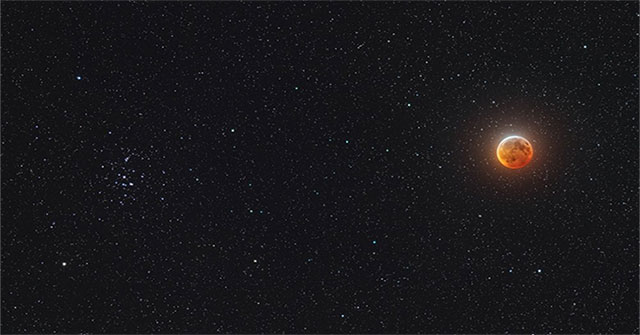
The July full moon is obscured when the Earth passes between the Moon and the Sun, causing a partial eclipse.
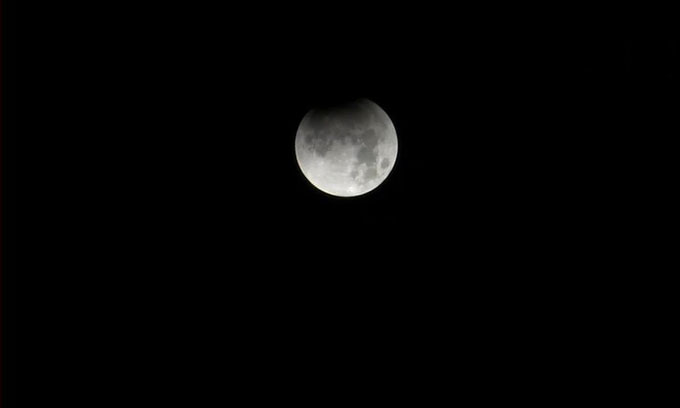
The last eclipse of the year takes place this morning in anticipation of astronomers all over the world.In the picture, the Moon is partially obscured in the sky of Delhi, India.(Photo: ANI).
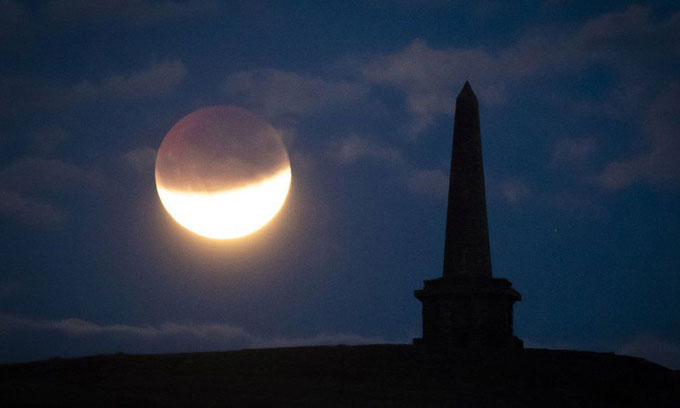
Cloudy sky helps people easily observe the lunar eclipse at Stoodley Pike, West Yorkshire, England.(Photo: PA Media).
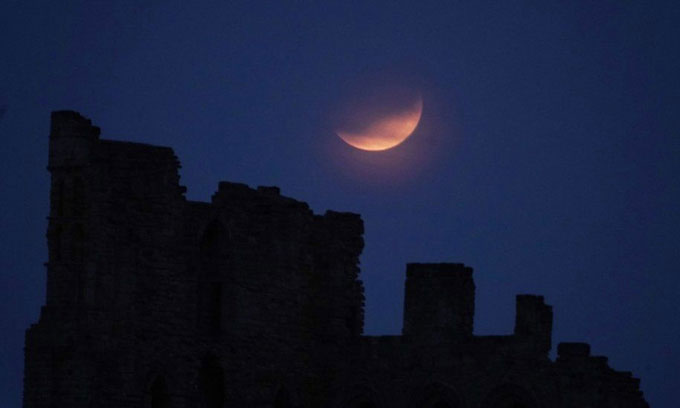
The true moon occurs when the Earth enters between the Sun and the Moon, casting a shadow on a part of the Moon.This phenomenon does not happen every time the full moon because the Moon's orbit is slightly different from Earth's orbit.The moon faded in the night sky at Tynemouth monastery, north of England.(Photo: PA Media).
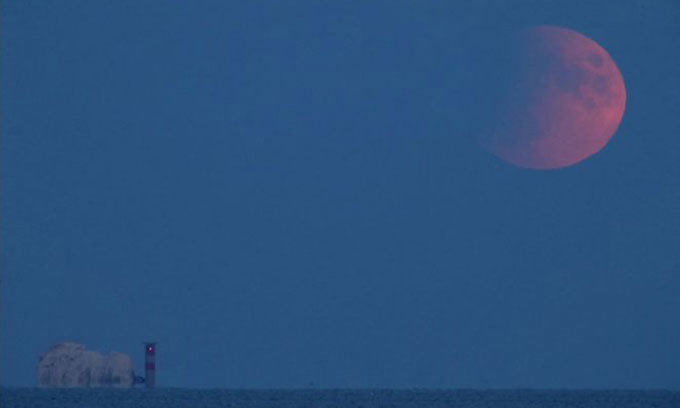
People in South America, Europe, Africa and Asia can observe eclipses smoothly.However, the North American region was not observed because it was daytime, the Moon was under the horizon.The moon stands out among the vast spaces of the beach Avon, Dorset, England.This is the last eclipse in 2019. The next eclipse will take place at the end of May 2021.(Photo: PA Media).
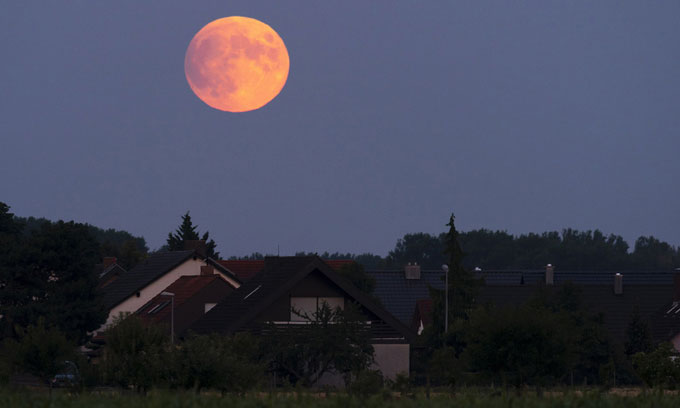
The full moon glows in Speyer, the state of Rhineland-Palatinate, Germany, before the lunar eclipse.(Photo: EPA / Ronald Wittek).
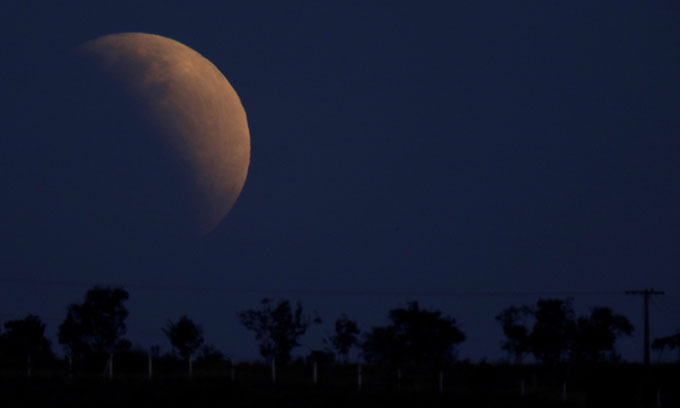
The big moon is completely obscured in a partial eclipse in Brasilia, Brazil.(Photo: Reuters / Ueslei Marcelino).
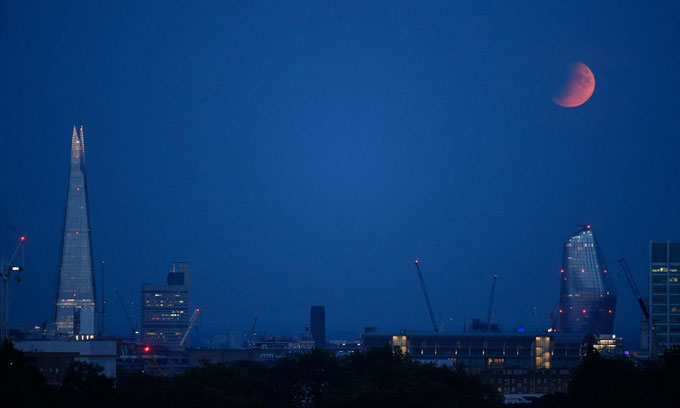
The moon turned red in the sky of London, England.(Photo: BBC).
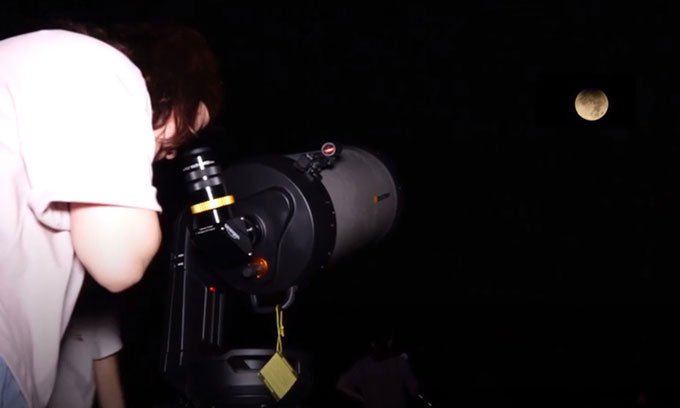
In Vietnam, the half-moon eclipse starts at 1:43, a part begins at 3:00 am and reaches its peak at 4:30.The moon sets at 5:28, this phenomenon ends.More than 100 young people love astronomy to watch the lunar eclipse and discover astronomy knowledge at the Hoa Lac Observatory in Hanoi.(Photo: Nguyen Bac).
- Astronomical Events: Waiting for a partial eclipse on July 17
- Hoa Lac Observatory tomorrow organizes observation of Nguyet real