Crab sticks are a popular food and are loved by many people. You may know that crab sticks are not made from real crab meat but from fish. But have you ever wondered why this dish is called crab sticks even though it is made from fish? And why did people create this dish?
Why did people create crab sticks?
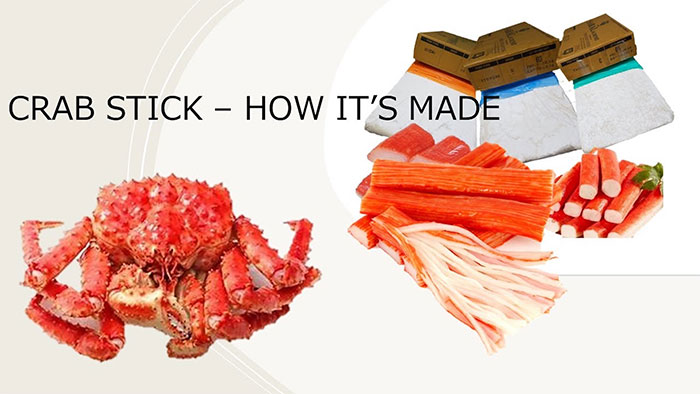
Crab sticks are made from fish, not crab.
Real crab meat has a fresh and delicious taste that no one can resist. Unfortunately, in the past, transporting it quickly from the sea to the mainland was a very expensive and time-consuming process. That is why a few decades ago, food manufacturers and chefs came together to find a less expensive alternative to meet the strong demand of diners. On the other hand, imitation crab meat is not only more affordable but also a useful substitute in sushi rolls, salads and sauces.
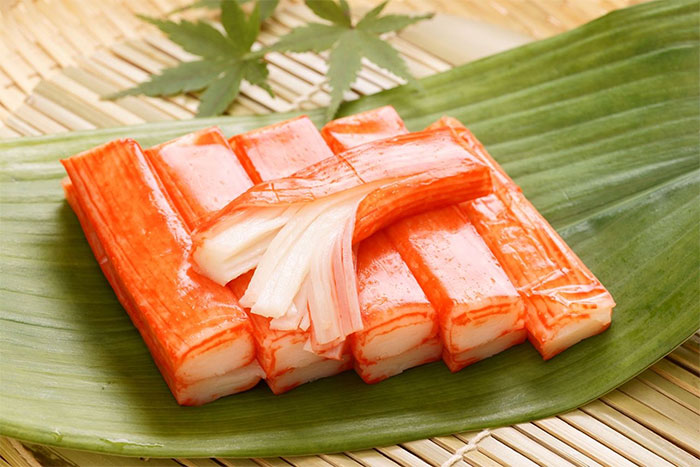
Crab sticks we often see.
So in the 1970s, the Japanese introduced imitation crab. The processed product that tastes and looks like real crab is called surimi . The important thing here is that surimi is made from white fish , usually Alaska pollock or Pacific cod.
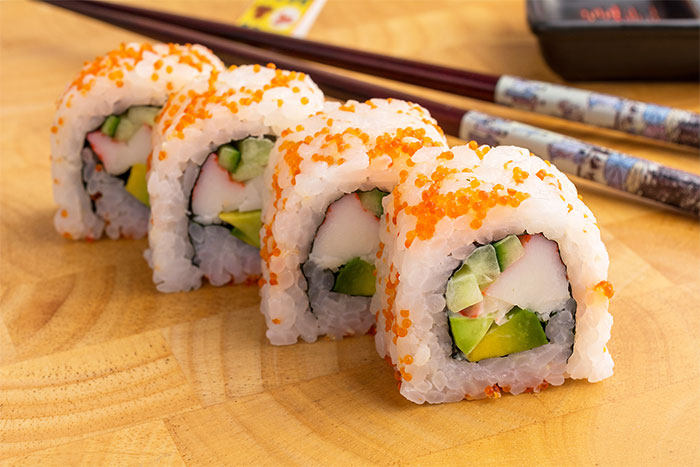
The processed product that tastes and looks like real crab is called surimi.
Surimi's popularity comes from its ability to recreate the flavor of other seafood at a much cheaper price. Fooducate estimates that surimi costs about 70-100 cents per 100 grams. Lobster meat, meanwhile, costs $11 per 100 grams.
What is crab stick - surimi actually?
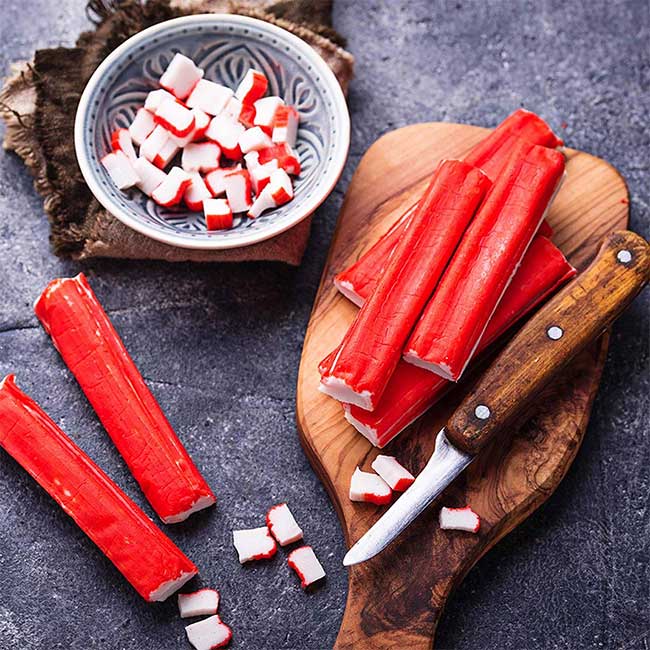
Surimi is actually made from real fish meat.
Although it is called fake seafood , surimi is actually made from real fish meat with a long history. It is an excellent source of protein, low in calories, easy to digest, and very easy to prepare and suitable for many dishes . Surimi is essentially a seafood paste made from fish meat with artificial flavors, along with starch, sugar and sodium. Basically, crab sticks are made from white fish meat. After the fish meat is shredded, washed repeatedly in water, it will be minced and pressed into an odorless and tasteless mixture, called 'surimi base'. It will be frozen at -20 to -30°C, then sold to food companies. They will add water, elastic texture and flavor, . to produce a product with the desired flavor.
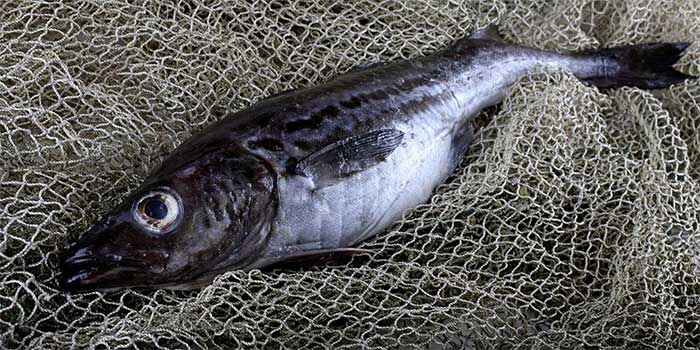
Basically, crab sticks are made from white fish meat.
Depending on the type of fish used, surimi will contain different nutritional components. From the surimi base, people can process it into other products such as: shrimp meat, scallops, crab, crab, sausage. However, real crab meat still has a much higher nutritional content, with a protein content nearly 3 times higher than fake crab meat. In addition, artificial crab has a lot of sodium and sugar.
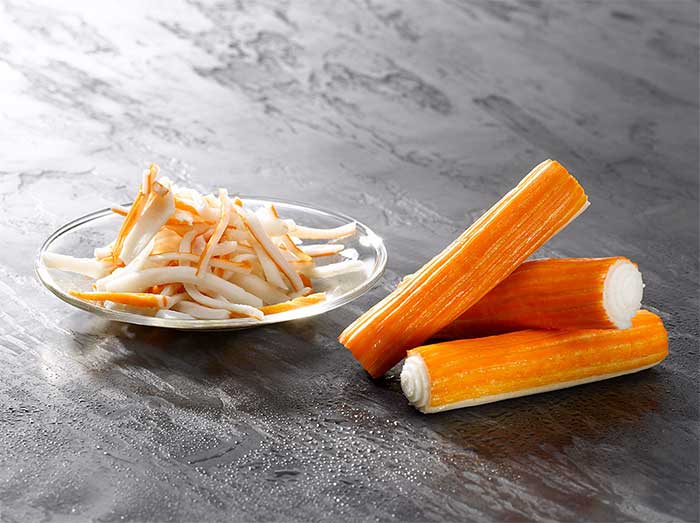
It's the look and the marketing that take this dish in a whole new direction.
In fact, the practice of making surimi has been around in parts of East Asia since the 12th century as a way to preserve fish. Japanese chefs would use up any leftover fish by salting and grinding it into a paste. But surimi didn't become a big deal or a phenomenon in Japan. It wasn't until the 1960s, when Japanese chemists discovered a way to preserve surimi with sugar to extend its shelf life, that the entire surimi industry, now worth $1 billion, really kicked off. The way it looked and the way it was marketed, took it in a whole new direction.
Surimi is introduced to the world
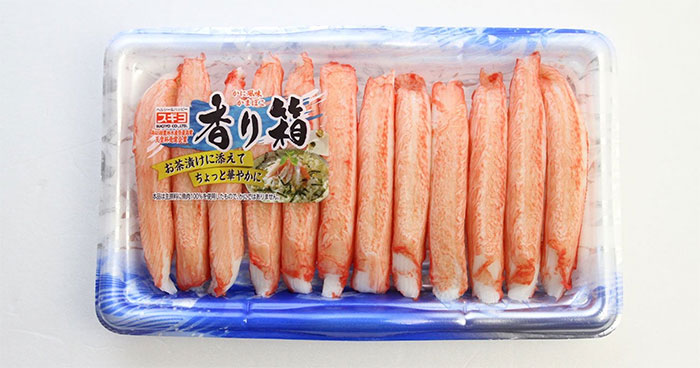
Today, surimi in stick form is the most popular type in the world.
It was the Japanese company Sugiyo that first introduced and patented the imitation crab meat product in 1974. At that time, surimi was called Kanikama. In 1977, the Berelson company in San Francisco, California, USA, cooperated with Sugiyo to introduce this product to the international market under the names Krab Sticks, Ocean Sticks, Sea Legs and Fake Crab Sticks. Today , surimi in stick form is the most popular type in the world , accounting for about 25% of surimi production. However, some countries have now banned manufacturers from using the name 'crab sticks' because they do not contain crab meat at all.
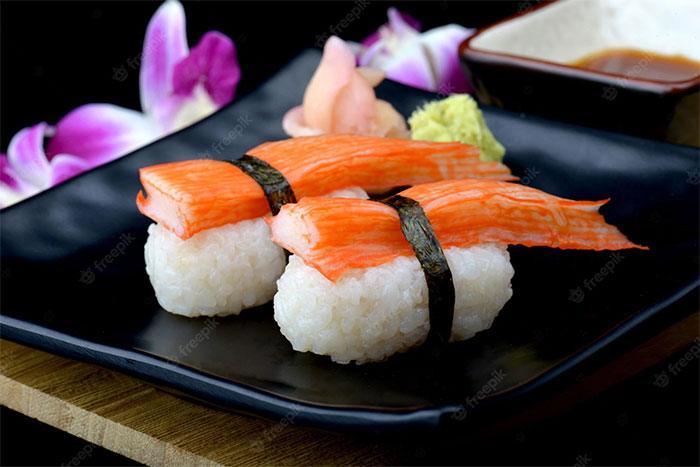
The United States and Japan are the two largest surimi producing countries in the world.
Over the years, crab sticks have become popular in restaurants and grocery stores in many countries around the world. The United States and Japan are the two largest surimi producers in the world, while Thailand is the largest importer.
The popularity of crab sticks
Seafood surimi is present in more dishes than you think, even famous food brands like Subway use crab sticks as one of the main ingredients to create seafood flavor for dishes. Not only appearing in sushi, surimi is consumed as a main food in many countries. In Thailand, people make surimi into a spicy dish with onions. In Spain, surimi with many types of dipping sauces is very popular. It is estimated that about 600,000 tons of surimi are consumed each year in Korea and Japan, and in the US it is 3,000 tons.
Red crab sticks and orange crab sticks
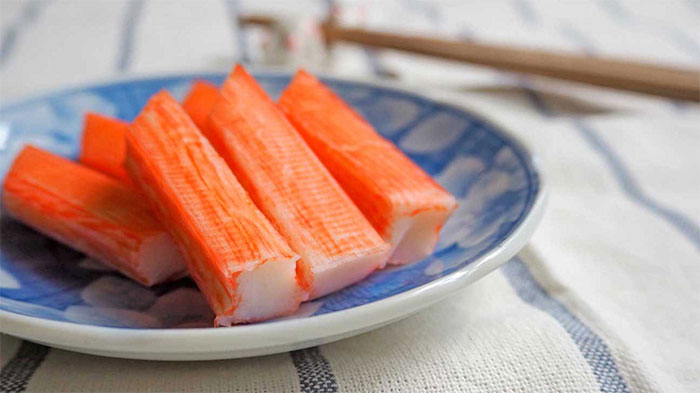
Orange crab stick.
Color is just one way to identify it, because in France, Belgium, and Italy, crab sticks are orange because they taste like crab. Otherwise, crab sticks are usually pink or red with the flavor of clams or lobster.
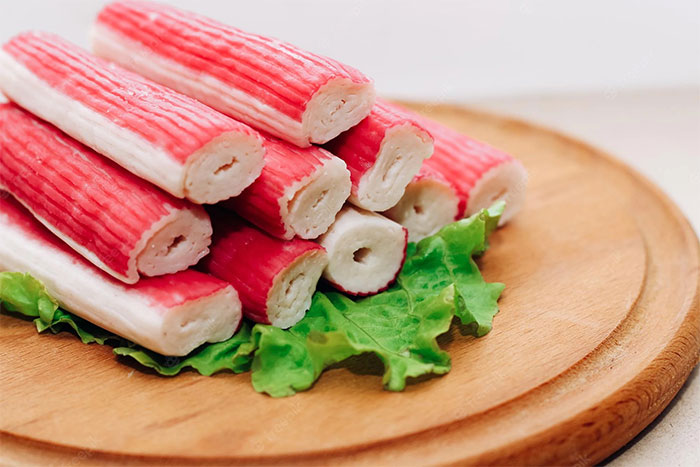
Red crab stick.
In Japan, there are many different types of surimi. What makes the difference is how they are prepared, some are steamed, others are oven-cooked, boiled or fried, giving them different textures.