Recently, aerial photographer Jason Hawkes has carried out a project in Libya, using the Mi-8 helicopter. He flew along the Mediterranean coast, photographed Tripoli and some Roman works from above, including Sabratha and Leptis Magna.
The result that Jason Hawkes obtained is quite impressive, the photos show that the works are more than 2,000 years old located on the North African coast. These photos can be inspiring for you to learn more and the history of Libya and North Africa in general.
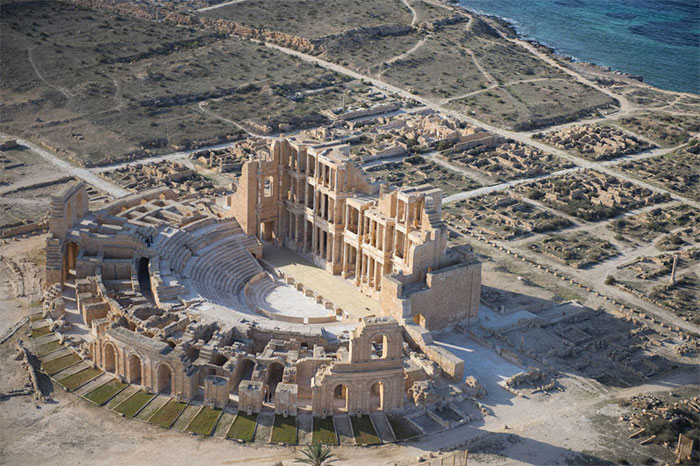
Photo taken from the highly intact ancient Sabratha theater in Sabratha, Libya, on the Mediterranean coast. The area was originally a Phoenician trading point (Phenicia), but later became part of the Roman Empire, and the buildings in the area were built around the century 2 - 3 AD. View on Google Maps.
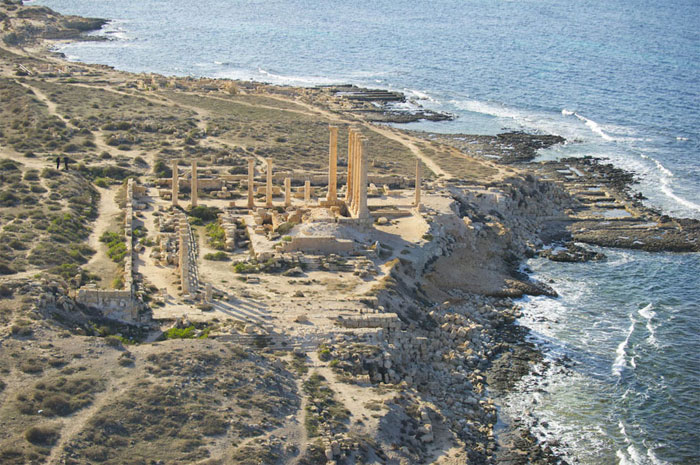
Ruins of the Isis temple in Sabratha, located near the coast.
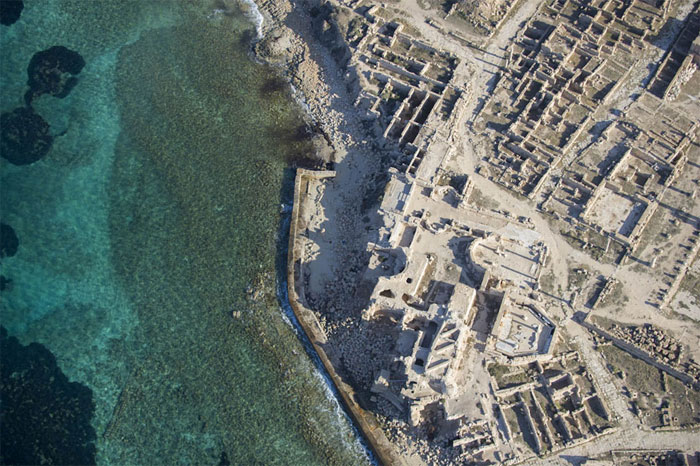
Ruins in Sabratha look from above.
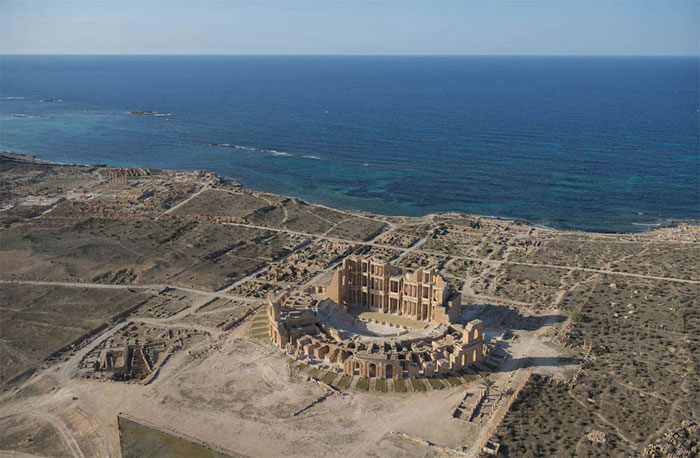
A wider view on the Sabratha theater and the far Mediterranean coast.
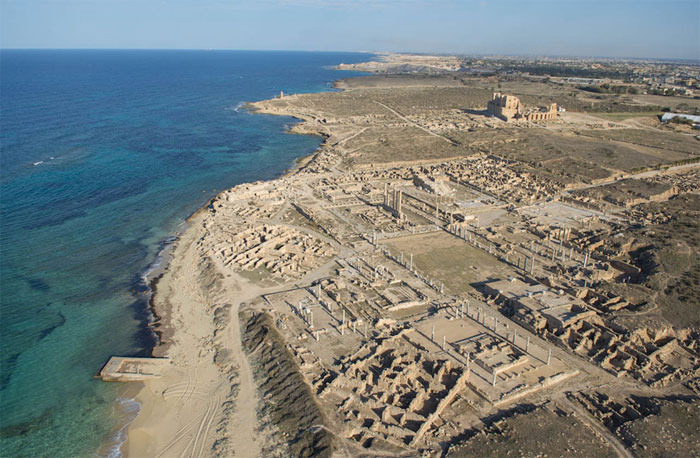
The ancient city of Sabratha, along with a number of modern Sabratha houses in the right corner of the photo.
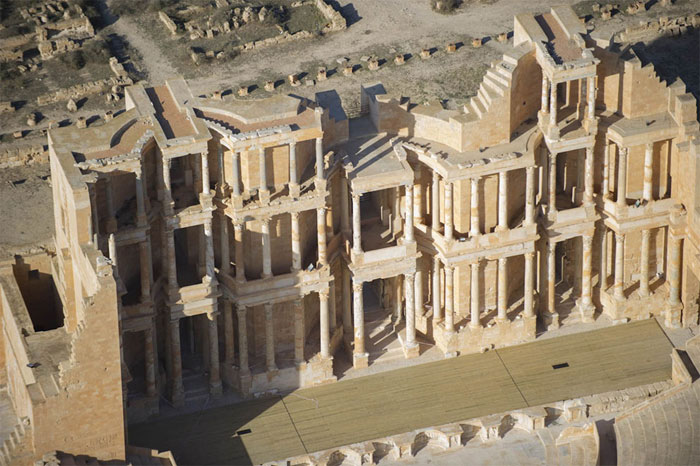
Close-up of 3-storey building behind the stage of ancient Sabratha theater.

A section of the coast in Tripoli.
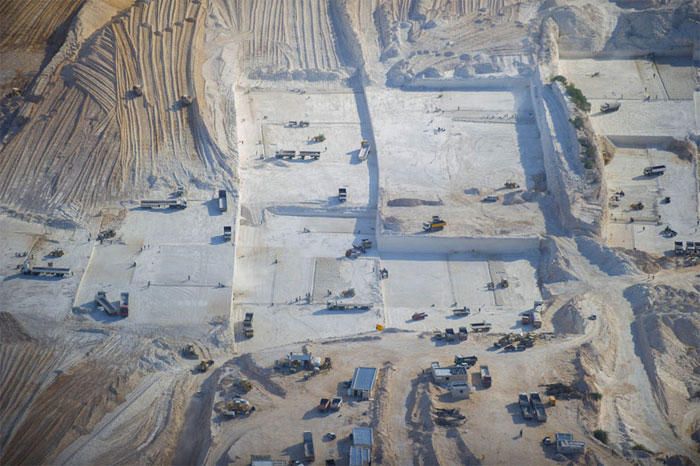
A quarry lies on the Mediterranean coast between Sabratha and Tripoli, Libya.
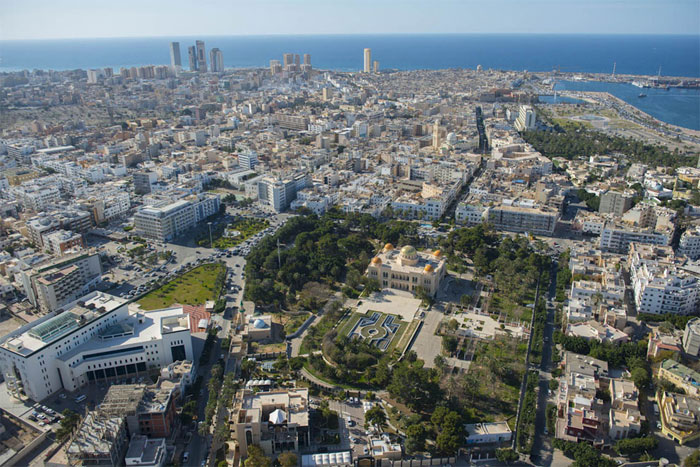
The photo is from high above the royal palace of Tripoli, the former residence of the Libyan monarch, and now it is a public library.
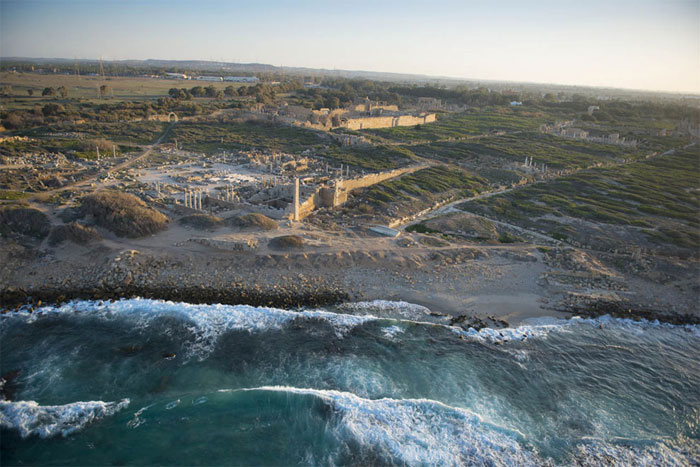
Photo taken from high seaside ruins in Khoms, Libya.

The ruins of Leptis Magna, a bustling city during the Roman Empire, near the current city of Khoms.

Works of the city of Leptis Magna, behind is the Mediterranean. Founded about 2,000 years ago, and acting as the port of Lpgy in Phoenician, it was annexed into the Roman Empire in 46 BC, and quickly developed into an important city afterwards.
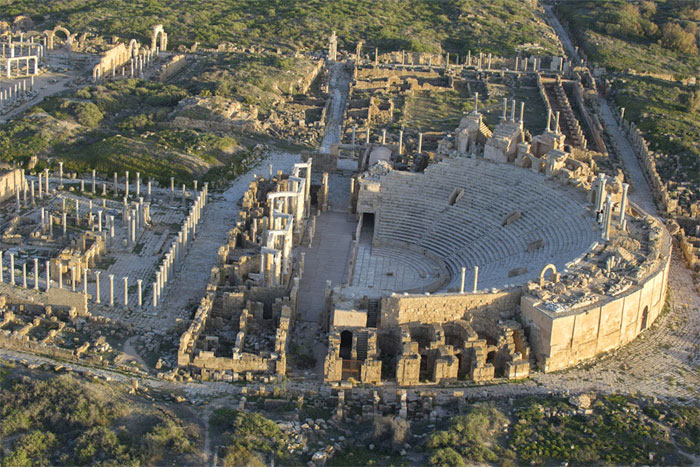
Ruins of theaters in the city of Leptis Magna.

Ruins of a breakwater and Byzantine wall of the city of Leptis Magna.
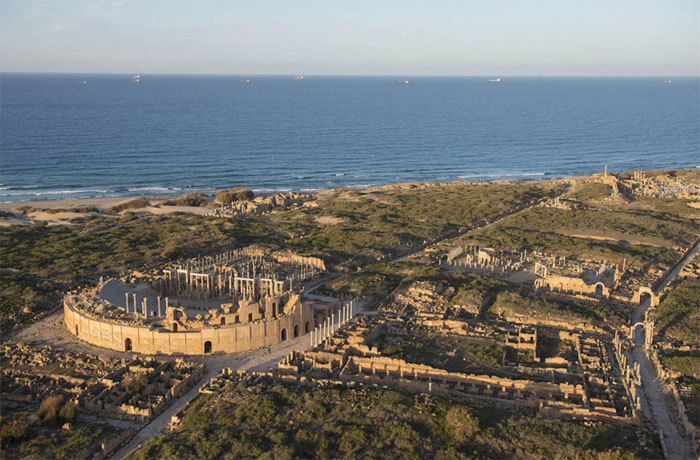
Ancient city ruins of Leptis Magna.
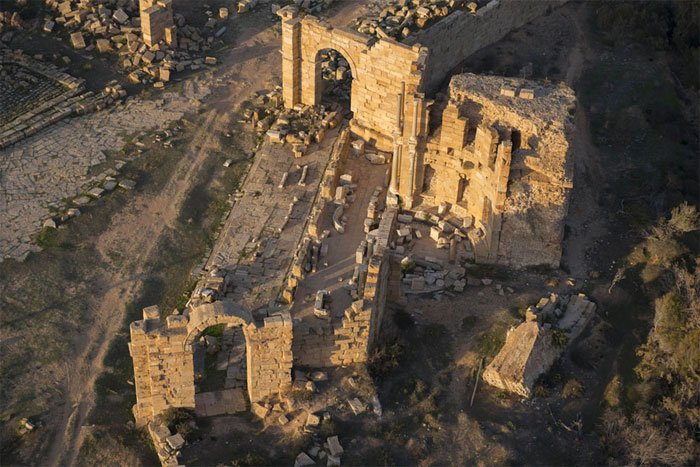
A close-up view of the old town of Leptis Magna.
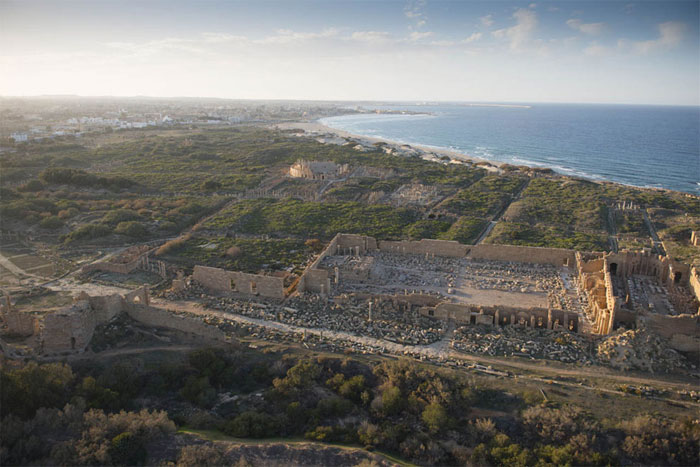
Ruins of Severan Forum Basilica in Leptis Magna. Roman emperor Septimius Severus was born in Leptis Magna in 145 AD, and was responsible for building this meeting place.
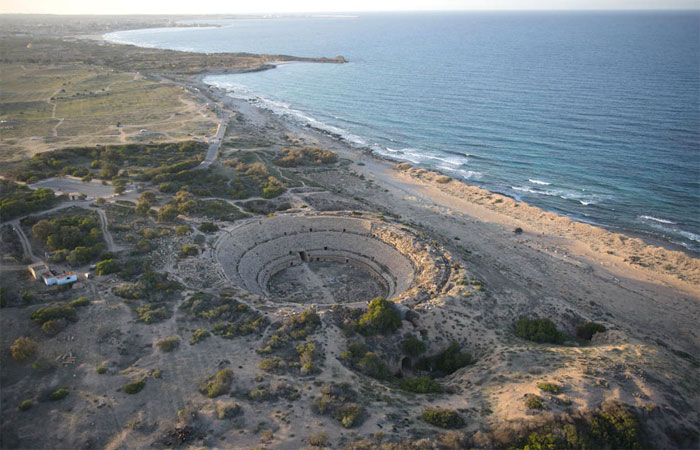
The Amphitheater of Leptis Magna, an old quarry, is transformed into an arena.

Another view of Leptis Magna's circular theater, on the coast of Libya.