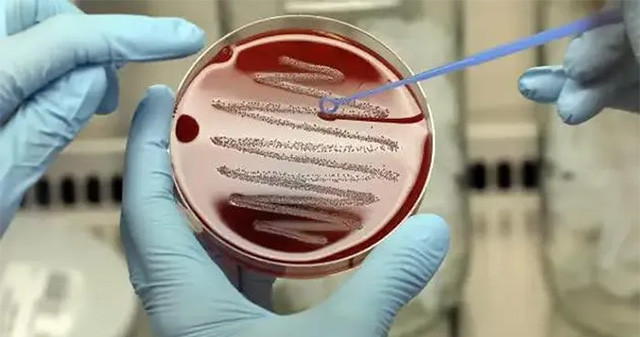
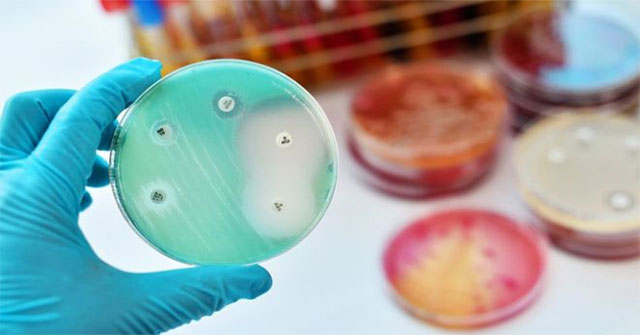
Antibiotic resistance is one of the major problems threatening human health. Therefore, many studies have been conducted on this issue, and many scientists worldwide are constantly developing research to end this problem, especially as the world is continuously threatened by epidemics.
Scientists from Rockefeller University have synthesized a new antibiotic using bacterial gene products . These bacterial genes were developed to kill bacteria resistant to other antibiotics. The molecule, called cilagicin, has been tested on mice and is used as a novel mechanism to block antibiotic resistance and several other deadly pathogens.
For more context, see Discovery of new antibiotics with strong ability to kill drug-resistant bacteria.
According to Sean F. Brady, the study's author: "This is not only a fantastic new molecule capable of killing other bacteria, but it's also confirmation of a new approach to discovering a new drug treatment."
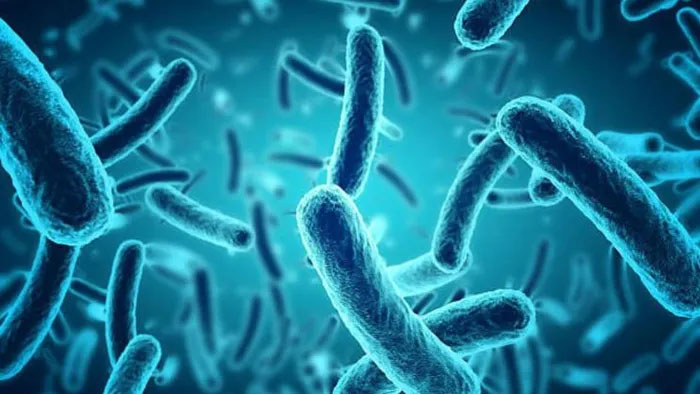
It's no surprise that most antibiotics are based on bacteria.
Because bacterial development often involves the spontaneous creation of mechanisms to destroy each other, it's no surprise that most antibiotics are bacterial-based. However, the increasing resistance to antibiotics, as bacteria continuously evolve and combine to create new antibodies, necessitates scientists developing new mechanisms to counteract this trend.
One challenge is that many antibiotics can be hidden within the genomes of bacteria that are difficult or impossible to test in a laboratory. Brady said, "Many antibiotics come from bacteria, but most of these bacteria can't be cultured in a lab. It's possible we're missing out on most antibiotics."
For the past 15 years, Brady's lab has employed an alternative approach, which includes searching for antimicrobial resistance genes in soil and culturing them alongside other bacteria in the lab. But this approach also has its limitations. While the genetic sequence is found in biosynthetic gene clusters—groups of genes that work together to create certain proteins—most antibiotics are the source of genetic material. However, with current technology, those gene clusters are often inaccessible, making it difficult to create an antibiotic formula to combat antibiotic-resistant bacteria.
Unable to unlock many bacterial gene clusters, Brady and his colleagues turned to using algorithms on the genomes themselves. Modern algorithms can predict the structure of antibiotic-like compounds that bacteria with these sequences will produce by separating the genetic instructions in the DNA sequence. Organic chemists can then use this data and synthesize the predicted structure in the lab.
Zonggiang Wang and Bimal Koirala, postdoctoral colleagues from the Brady Lab, began working on a massive gene sequence database with the goal of finding potentially important bacterial genes that could kill other bacteria and had not been previously investigated. The researchers fed relevant sequences of a gene cluster called "cil" into an algorithm that suggested a few compounds that "cil" could produce. One compound, aptly named cilagicin, proved to be an effective antibiotic.
It turns out that cilagicin works by binding to two molecules, C55-P and C55-PP, both of which support the bacterial cell wall. Bacteria frequently develop resistance to existing antibiotics by binding their cell walls to this component. The research team suggests that cilagicin's ability to 'shut down' both molecules could actually be an insurmountable barrier to drug resistance.
Although cilagicin has not yet undergone human trials, Brady Laboratories will conduct further synthesis to improve the compound in subsequent studies and test it on animal models. The promising results in combating inflammation and infection are also a positive sign for medical research.
The results of the study were published in the journal Science.
- Witness the breathtaking sight of an airplane "piercing" the supermoon from Hanoi.
- Video: Antlions dig "death pits" to trap prey in the desert.
- Shocking discovery about Earth: diamonds from "the afterlife"