Vietnam's waters are a place of a fish-like, transparent, bone-free creature that acts as ghosts .
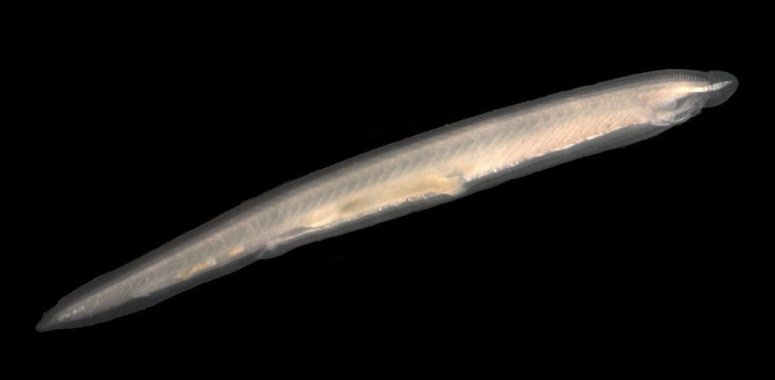
It is a bivalve or branchiostoma lanceolatum , an animal that is considered a fossil living in the natural world.
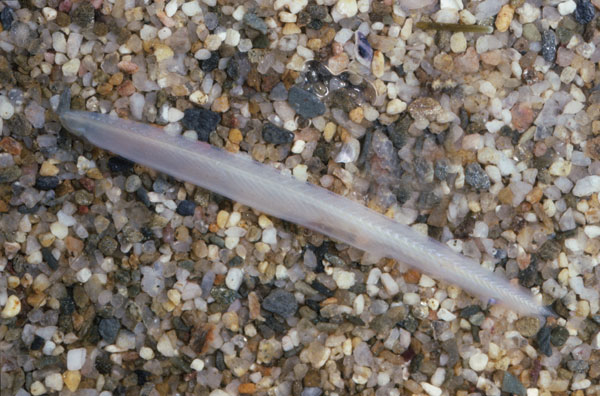
This animal lives in the water, belongs to the first living subsector, now only has about 30 species living in the sea.
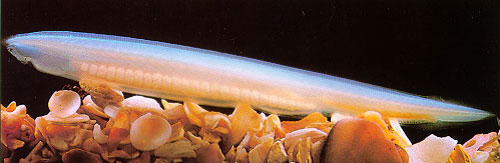
They appear on Earth 500 million years ago, the ancestors of fish and vertebrate animals.
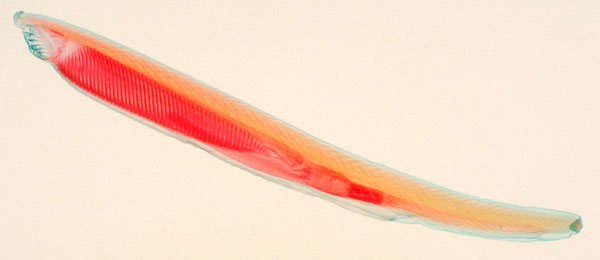
Their characteristic is that there is no spine and skull, only one spine running from the first tip to the end of the tail. The front part of the spinal cord bulges, corresponding to the original brain.
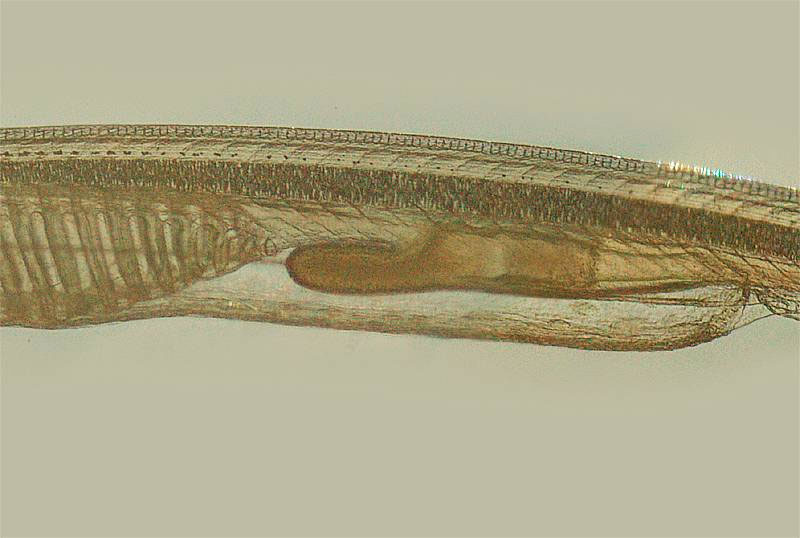
The injection also has 'eyes', a very primitive structure, each consisting of only two cells capable of sensing light. Their eyes are not on their heads but scattered on the neural tube, sensing light through the transparency of the body.
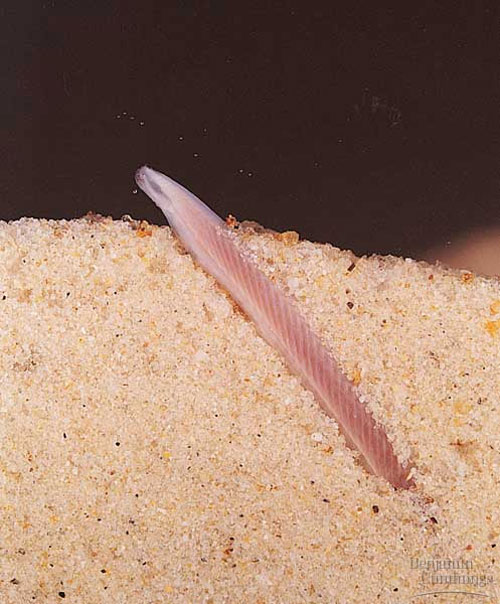
The musculoskeletal system of the parenteral system is less differentiated, so they only move in the water environment with simple bending movements. When not moving, they often bury themselves in the sand.
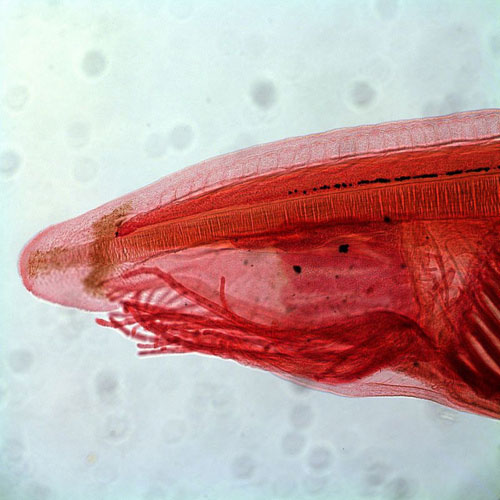
The method of respiration of bivalve is similar to that of fish. They vibrate with the capillary (mouth tendrils) to bring water from the throat to the gill. The wall of the gills has many blood vessels, where gas exchange occurs.
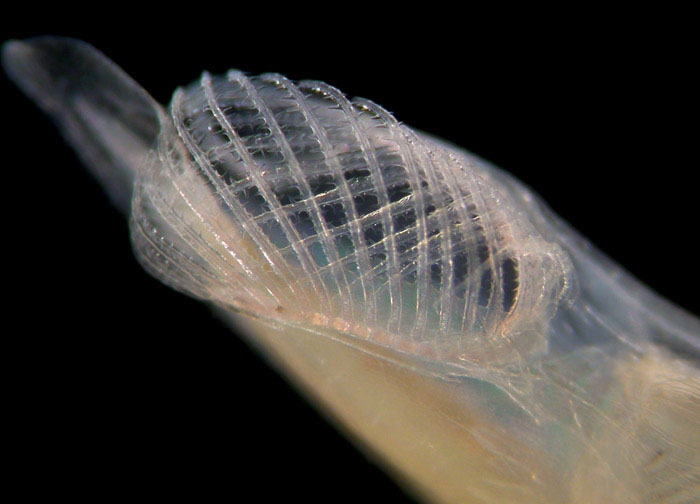
They also use cilia to bring food containing water (microalgae) through virtually. Food is filtered and taken down to the digestive organs.
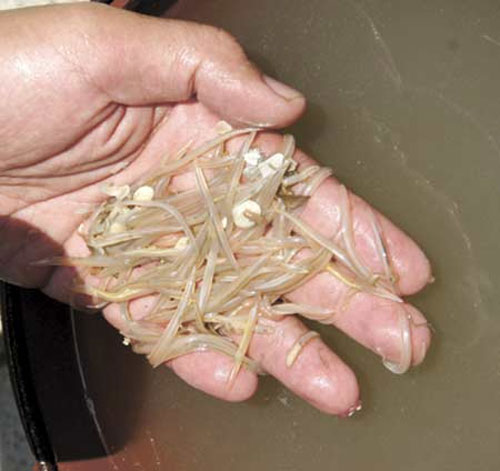
The injections appear much in the shallow waters of southern Asia. In Vietnam, they are often encountered in large numbers in Bach Long Vi Island.