Finding the star 150 times brighter than the Sun, the Soyuz TMA-20 spacecraft safely returns three astronauts to Earth, testing fire in the universe, . the most impressive cosmic images. in this week.
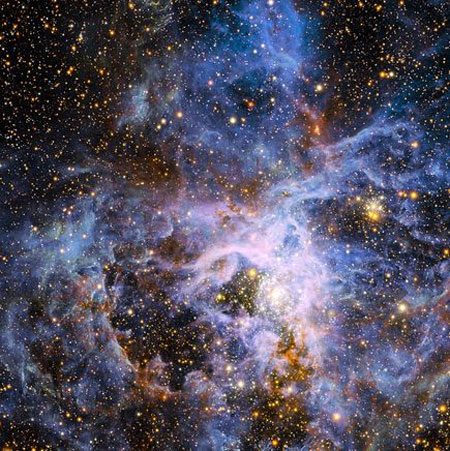
Latest studies on Tarantula nebulae, through images due
the European Southern Observatory telescope shows that,
in this nebula, a star is 150 times brighter than our Sun.
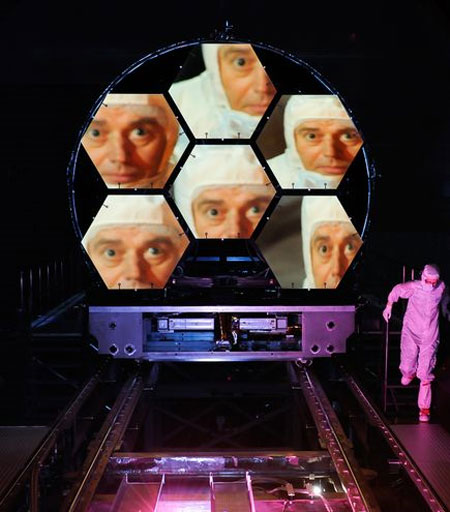
The image of Professor Mark Clampin's reflection on the James Webb space telescope is placed at the Marshall Space Center in Alabama. This 6.5m wide diameter telescope was built to replace the Hubble telescope. As expected, James Webb space telescope will officially operate in 2014.
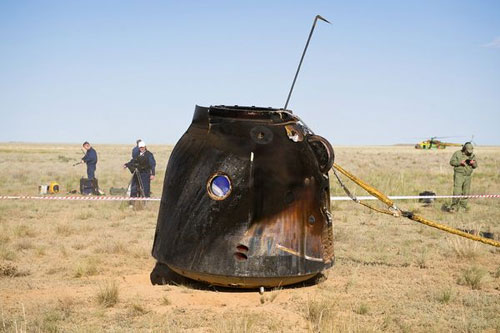
Russia's Soyuz TMA-20 spacecraft landed safely in a remote area of Kazakhstan on May 24. Return to Soyuz TMA-20 spacecraft are 3 astronauts Dmitry Kondratyev, Paolo Nespoli, and Cady Coleman after they work more than 5 months of International Space Station (ISS) .
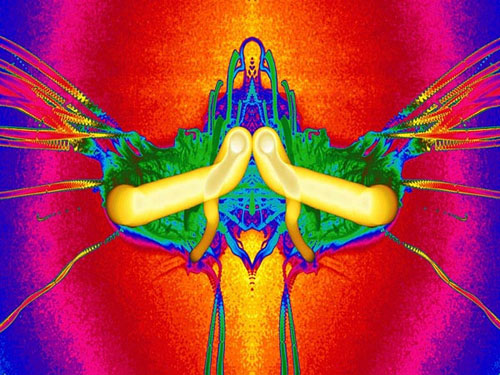
This is an image of a fire test in weightless conditions on the ISS station. The yellow part is the material used to burn, while the blue part is the soot particles that are generated after burning the material.
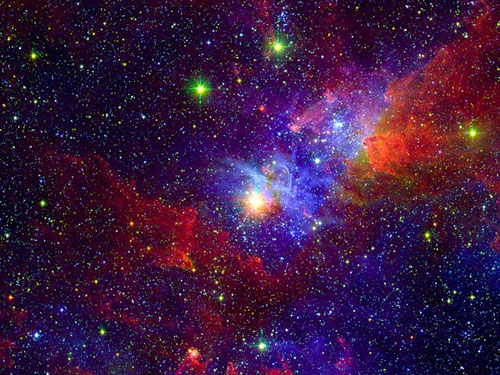
Big star Eta Carinae is surrounded by gas and dust in the constellation Carina. Astronomers believe this star is near the end of its life and can be easily observed if it explodes.
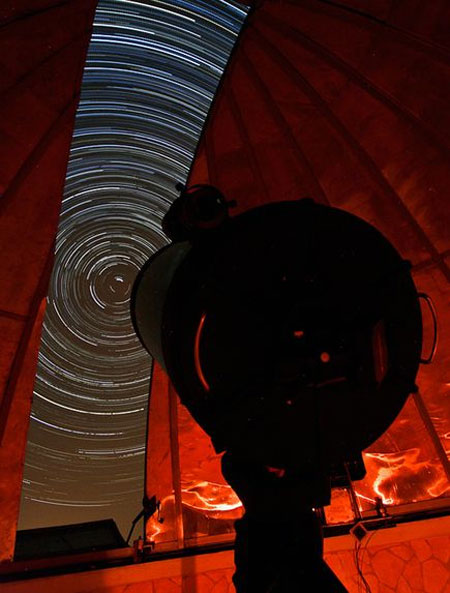
This beautiful night star image is captured by a telescope
amateur in Iran. The author of this photo takes two consecutive hours to record the trajectory
transfer of stars in the North Pole.
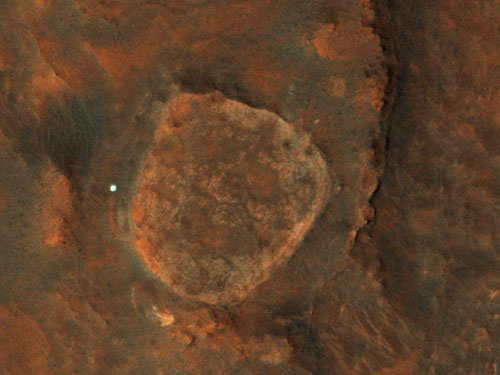
The Mars probe Mars Reconnaissance Orbiter recorded an image of a close-up of the big Gusev crater on the surface of the red planet. This may be the point where NASA 's Spirit self-propelled probe is stuck and cannot transmit signals to Earth.