Russian scientists are completing the final training steps to bring the monkey to explore Mars in 2017.
Scientists at the Russian Academy of Sciences are finalizing the final training steps for four rhesus macaques - "astronauts" that will be on the Mars expedition train in 2017.
In the past, monkeys have indirectly "cleared the way" to bring people to the Moon, and now experts are hoping that they will be the key to help us conquer Mars.
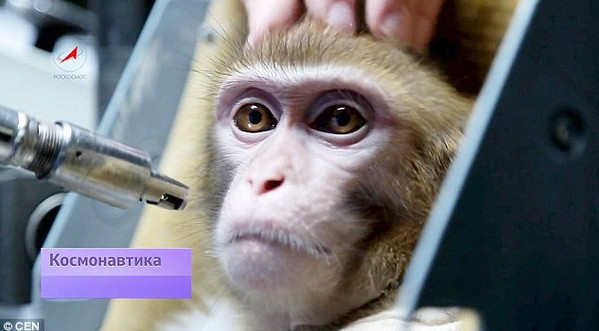
The monkey training program became an astronaut that started in the 1980s. Monkeys will be raised on a special farm, and only the smartest individuals will continue to participate in the study. The above 4 brown monkeys are also selected in this group, due to their ability to perceive and learn very quickly.
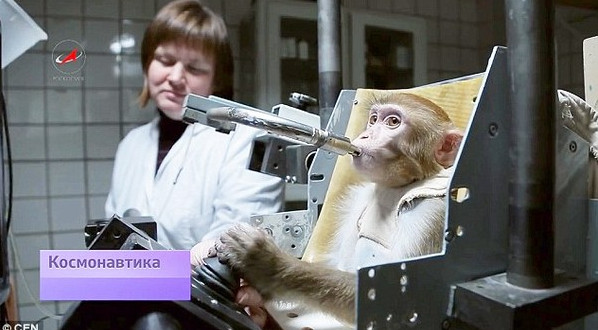
Each time the mission is completed, the monkey will be rewarded with a sip of fruit juice.
Every day, monkeys will learn each skill separately, with the reward of a sip of fruit juice after completion. By the end of the day, they will have to fulfill a series of assigned skills and tasks. The purpose of this is to train the ability to memorize assigned tasks.
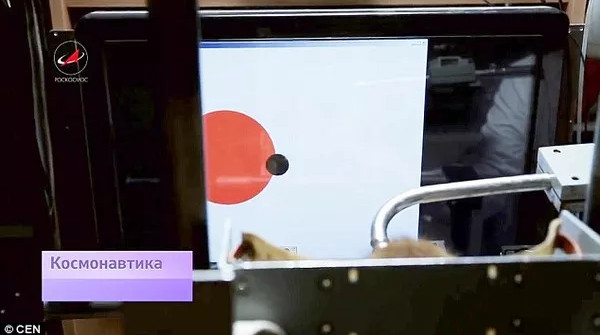
Daily exercises of monkeys.
Dr. Inessa Kozlovskava, the project leader, said: "We are trying to make these monkeys as smart as possible, so that they can help humans explore Mars' surface . " She also hopes that the "astronauts" monkeys can train other monkeys themselves to work in groups. The brown monkey has a lifespan of about 25 years, so scientists believe there will be enough time to train them to survive the 6-month journey to Mars.
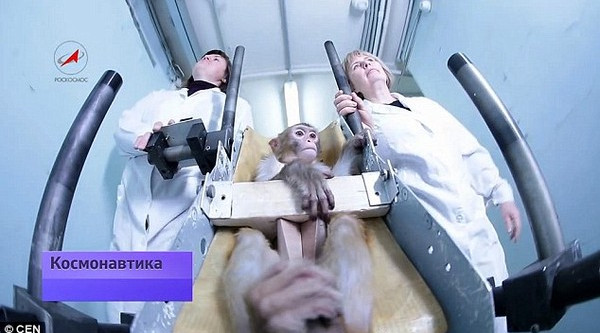
Monkeys are expected to perform a series of assigned tasks on their own.
In the past, monkeys were also used as "test subjects" many times for astronauts. The first monkey to be tested was Albert I , departing on the US Army's V-2 rocket in 1948. However, Albert I died in the flight. Monkey Albert II departed a year later and shared the same fate. In 1951, Yorick became the first safe monkey to return from the universe.
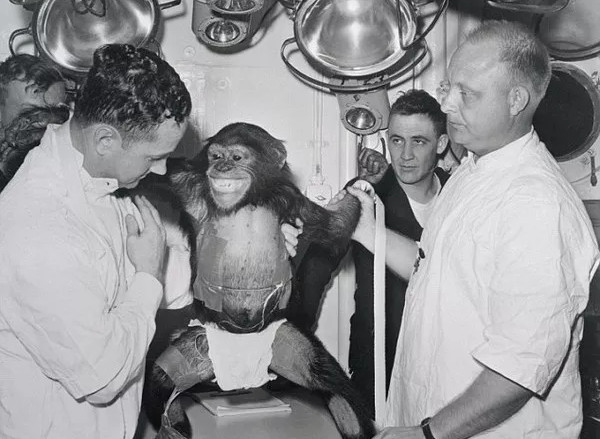
Albert I - the first monkey to fly into space.
Even dogs are used. Two dogs Dezik and Tsygan were sent by Russia to the universe in the early 1950s, and they returned safely.
However, there is no clear information on how these monkeys can return from Mars. Some animal protection organizations argue that this could be a "one-off" journey for them.
