As the Northern Hemisphere prepares to face another flu season, researchers from the National High School Laboratory at Florida National University are making progress toward better understanding of its mechanism. Withdrawal causes this disease - a virus that kills a quarter or half a million people every year.
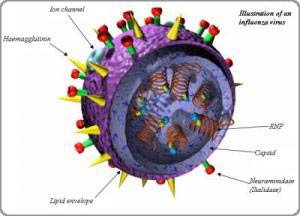
The virus causes the flu.(Accredited by: National High School Laboratory at Florida National University, Tallahassee, Florida.)
Tim Cross, the lab's director of nuclear magnetic resonance (NMR), and collaborators from Brigham Young University are trying to understand the tiny components of the virus. This type A flu is very toxic. To do so, they will use all magnetic lab NMR sources including a 15-ton 900-magnet magnet to produce a detailed skin image of the virus.
Cross, also a professor of chemistry and biochemistry at Florida State University, said: 'Using a magnet helps us build a model of the mechanisms of a virus's existence. The more detailed the model, the higher the chance for us to develop a drug that can destroy it. '
The only type of magnet in the world, type ' 900 ' is the decision for the project implementation. Otherwise, a complex image like this would be impossible.
Cross and David Busath, a biophysicist at Brigham Young University, recently discovered key components of protein holes, or ' trenches ', in the skin of the virus that causes flu. These components lead to unusual chemical reactions that are thought to be important clues to understanding how the upper grooves adjust, whether the virus distributes its genes into cells. master and reborn or not. The findings of the researchers were recently published in the National Science Institute Report.
Busath said: 'This is a virus structure that we have never seen before. And yet, through these tiny roads, the acids must go in and AND must come out when the virus exists. The proposed idea is to block this path to prevent the standard function needed for replicated viruses. '
Once researchers understand how these grooves are picky for acid, they can use that knowledge to create new drugs that can kill viruses more effectively.
The study was funded by a five-year multi-million dollar fund from the National Institutes of Health. Other authors of the National Science Institute's report are Jun Hu, Riqiang Fu, Katsuyuki Nishimura, Li Zhang and Huan-Xiang Zhou, all of Florida National University, and Viksita Vijayvergiya, a study. Previous postdoctoral student at Brigham Young University.
Thien Kim