If humans were born on the Moon, there would be many changes. This is what scientists warn .
The Moon is the "promised land" that humans want to conquer. Living on the Moon is not easy. So, if humans were born on this planet, what would happen?
Accordingly, scientists say that the gravity of the Moon will make childbirth more difficult. Even as a fetus, humans will develop more slowly. Therefore, the time a mother is pregnant on the Moon can be longer than the time she is pregnant on Earth. Imagine the time of pregnancy in space is about a year, giving birth will also take longer than when on Earth.
Because every month in space, the mother can lose about 1-2% of bone density . This will make giving birth much more difficult and also very dangerous.
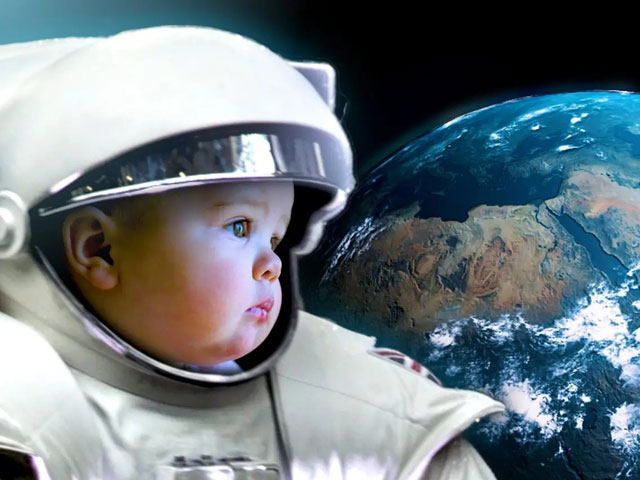
Giving birth on the Moon is not easy. (Photo: BI).
Because childbirth carries the risk of fracturing the mother's pelvis , doctors delivering babies in space will use a cesarean section. This is a method to ensure the safety of the mother when giving birth on the Moon.
This creates the first differences between babies on Earth and the Moon. Specifically, the heads of people born vaginally on Earth have evolved to be small enough to fit through the womb. But since there is no tradition of vaginal birth on the Moon, future Moon people may evolve. Their heads will be larger than their counterparts on Earth. Children born on the Moon may even evolve to have a different skin color than those on Earth. This is because melanin in the skin helps protect people from solar radiation. The darker the skin, the more natural protection people have.
Since the Moon has no atmosphere, humans would have significantly less protection from radiation. Therefore, the skin color of future lunar inhabitants could evolve to be darker to provide the necessary protection.
However, because people on the Moon spend most of their lives indoors or in protective suits, humans on the planet may have evolved to have paler skin tones than those on Earth.
What are the challenges of having humans on the Moon?
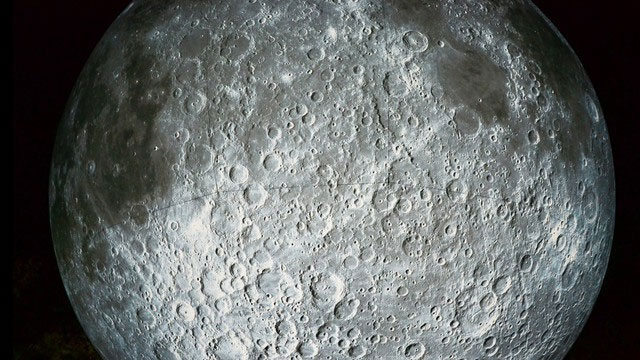
To live on the Moon, humans need to overcome many harsh challenges. (Photo: Space).
The surface of the Moon is a harsh place to live . There is no atmosphere, no protection from the Sun's radiation, and no way to maintain oxygen. People on the surface of the Moon can receive more than 400 times the safe dose of heavy ionizing radiation, enough to kill them within 10 hours, even in a spacesuit.
Therefore, humans may need robots, 3D printers to build sheltered habitats on the Moon, or prepare cave shelters formed from lava tubes in the Moon's past.
But how will humans sustain life? Food will need to be shipped from Earth in the early days. Living plants require greenhouse soil and air rich in CO2 , a gas that is scarce on the Moon. However, this gas can be synthesized from recycled materials.
Moon dwellers also have to exercise for hours a day to maintain bone and muscle mass. This is because the Moon's gravity is only 1/6 that of Earth's. Therefore, daily exercise helps people maintain a healthy body.
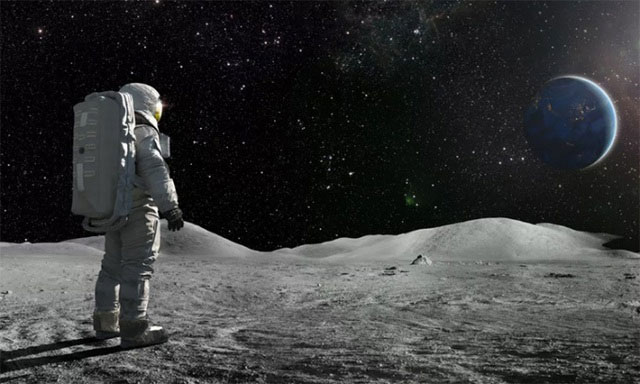
To survive long-term on the Moon, humans need to overcome many challenges. (Photo: Peepo).
According to experts, the day-night cycle at most locations on the Moon's surface includes 14 days of continuous sunlight, followed by 14 days of darkness and cold.
Because of the lack of atmosphere, the surface temperature of this planet can range from 120 degrees Celsius during the day to -180 degrees Celsius at night. In addition, the permanently shadowed regions (PSR) on the Moon are as cold as -240 degrees Celsius.
These will create the harsh environments that future lunar explorers will have to face. Lunar robots must have the ability to control their heat sufficiently to survive the long, cold nights.
In fact, the craters in the PSR are hidden from the Sun and may contain water ice, which could be an ideal resource for producing oxygen, water, and rocket fuel. While finding a way to live and work effectively on the Moon, especially the south pole with many PSRs, is not easy, experts are still working on it.
Surviving on the moon's night is important not only for the south pole but for all places where humans want to operate on the planet, said Dean Eppler, a scientist at the Aerospace Corporation.
Experts in NASA's Artemis program are currently trying to solve the problems of surviving the night on the Moon, so humans will be able to find suitable solutions in the future.