The finding of heterospecific DNA in Atlantic blue whales could raise new questions about genetics and species relationships in the marine environment.
According to Live Science, the discovery suggests that a population of hybrid blue whales , which are highly fertile, may be quietly "increasing in numbers" in the Atlantic Ocean.
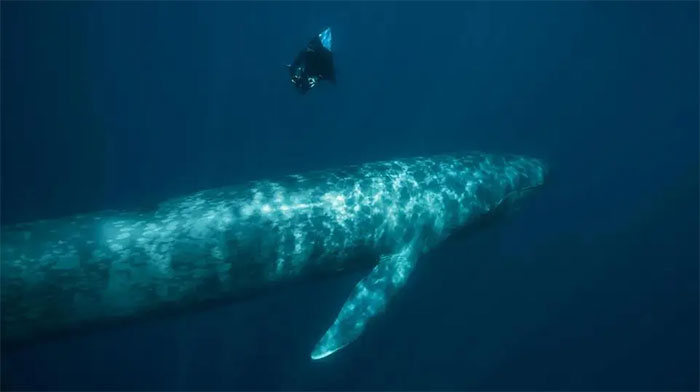
Blue whale - (Photo: Gerard Soury).
The blue whale (Balaenoptera musculus) is the largest animal of all time, reaching lengths of up to 34m.
Blue whale populations declined sharply in the early 20th century due to high levels of commercial hunting, placing them on the International Red List as an endangered species.
But it seems they're finding a new way to weave their way into the ocean's tree of life: interbreeding.
According to a paper published in the scientific journal Conservation Genetics, the research team analyzed the genome of Atlantic blue whales with the initial aim of looking for signs of inbreeding, which could prevent the population from recovering.
But they were completely surprised to find that the sampled whales contained an average of 3.5% DNA from the fin whale (Balaenoptera physalus), a slightly smaller species.
Hybrids between the two species have been discovered, but researchers previously thought they were sterile.
The new discovery suggests that not only are they sterile, they may also be highly fertile, continuing to mate with each other or with "pure" blue whales.
"The amount of introgression we found between species was surprising," said ecological geneticist Mark Engstrom from the University of Toronto (Canada).
Introgression occurred only one way, meaning there was no blue whale DNA entering fin whales, possibly because the fin whale population was larger.
This is good news, according to Dr Engstrom, because it means the blue whale population has a chance to recover thanks to this genetic diversity, which helps them avoid inbreeding, reproduce better and cope better with the environment.