Environment
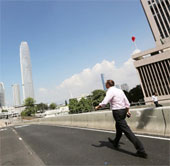
Hong Kong atmosphere is cleaner during the demonstration days
The wave of protests in Hong Kong over the past few days has caused no trouble for travel, but the blockade of many roads in crowded areas has made the sky more clear.
Explore science in everyday life, from weather and health to wildlife, geography, human biology and unusual phenomena around the world.
9,109 published items in this category and its subcategories.
The wave of protests in Hong Kong over the past few days has caused no trouble for travel, but the blockade of many roads in crowded areas has made the sky more clear.
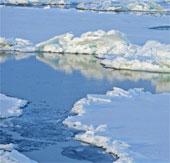
Warming oceans around Antarctica could dramatically increase global sea levels, a recent warning by Australian and New Zealand scientists.
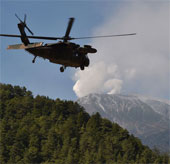
The number of deaths in the volcano suddenly erupted in Japan to 48 on October 1, after rescue forces discovered 12 more bodies in new search areas covered with ash.
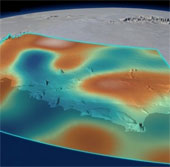
The large loss of ice in the West of Antarctica shows signs of weakening the gravity of the earth in this area.
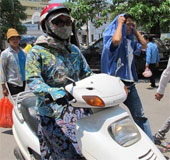
In the middle of autumn, the temperature is up to 34 degrees Celsius, the night sleep still has to turn on the air conditioner because of the effect of El Nino phenomeno…

Geologists from Stockholm University (Sweden) said that changing mineral concentrations in groundwater (such as sodium and hydrogen) could be an early warning sign for e…
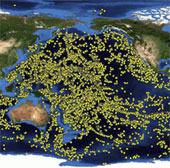
American and European researchers claim to have discovered thousands of new mountains emerging on our planet. All of them are at least 1.5 km high.

Rainbow images have a full circle in the sky, a rare phenomenon, newly recorded in Australia.

Many Nobel laureates have sounded a warning bell about the status of the Earth being over-exploited.
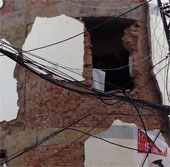
Some people living in high-rise buildings in Hanoi felt the earthquake of 6.6 magnitude in Yunnan province (China) at 21:49 minutes on October 7.
The earthquake happened on October 9 (Vietnam time), about 580km south of Easter Island, and has an epicenter at a depth of 15.5km.

A recent study published in Nature Geoscience shows that polluted air has a significant impact on the total flow of many rivers in the Northern Hemisphere.
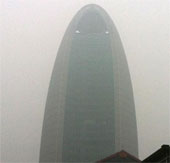
Large buildings almost disappeared under the dense smoke and mist in the capital of Beijing, China, when air pollution was still alarming.
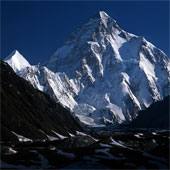
Glaciers around the world are melting, shrinking and even disappearing completely.
A new study shows that global climate models have underestimated the total amount of CO2 absorbed by plants.