A new paper published by researchers at the University of California, Los Angeles and NASA's Goddard Space Flight Center may provide new insights into the mystery of life.
The origin of life on Earth has always been a question that has fascinated scientists and the public. One of the most important aspects of the structure of life is the chirality of molecules, which determines the identity of amino acids and DNA/RNA molecules in living organisms. However, new research from the University of California, Los Angeles (UCLA) and NASA's Goddard Space Flight Center has raised a new question: is chirality really as fixed as we think?
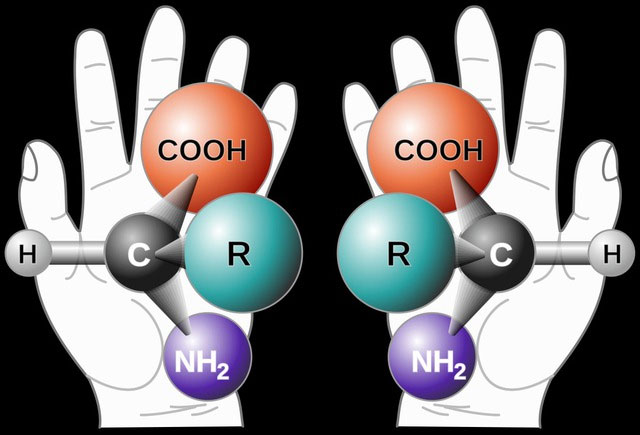
One of the most important aspects of the structure of life is chirality.
Chirality – the foundation of life
In chemistry, many molecules exist in two mirror-image forms, like left and right hands. These forms, called enantiomers , cannot superimpose on each other but play important roles in the structure and function of life.
On Earth, all living organisms use 'right-handed' sugar molecules and 'left-handed' amino acids to form DNA, RNA, and proteins. However, their mirror forms, although they exist, do not participate in the structure of life. This phenomenon has long been thought to be the result of a fixed chemical bias in the early stages of life.
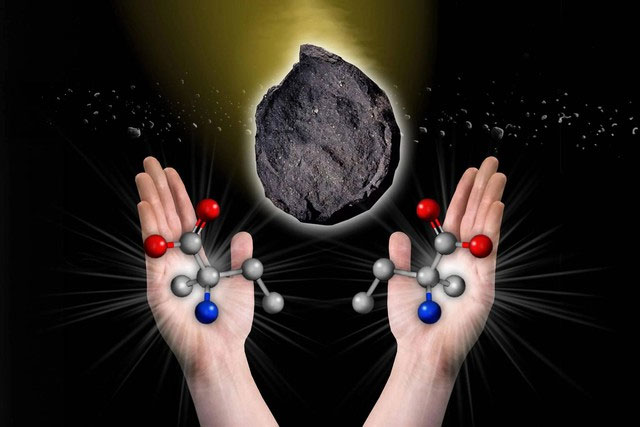
Living organisms all use "right-handed" sugar molecules and "left-handed" amino acids to form DNA, RNA, and proteins.
The RNA world and the role of ribozymes
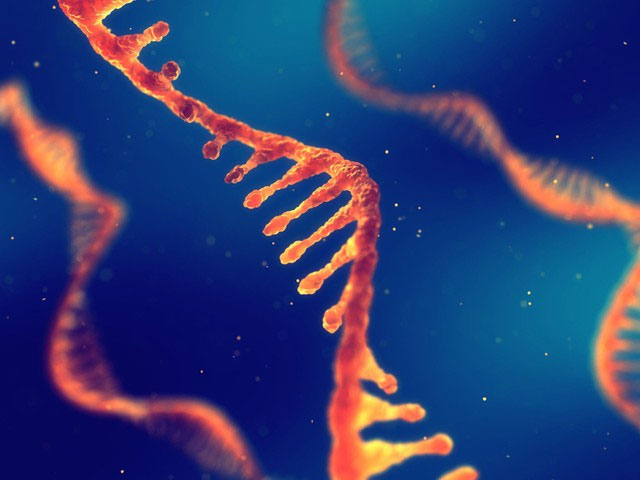
A popular hypothesis for the origin of life is the 'RNA world' – an early stage when RNA, as a catalytic molecule, took on both genetic and biochemical catalytic functions. During this stage, RNA is thought to be the precursor to DNA and proteins.
Researchers from UCLA and NASA asked whether early RNA had a clear chemical preference for a certain form of chirality. They experimented with ribozymes—small pieces of RNA that can catalyze chemical reactions—in environments that simulated conditions on early Earth, testing their ability to produce left- or right-handed amino acids.
New Discovery: Chirality Was Not Fixed in the Early Period
Results from experiments with 15 different types of ribozymes showed that early RNA had no clear chemical preference for any form of chirality . The ribozymes could catalyze both left- and right-handed amino acids, suggesting that the earliest life on Earth may have evolved randomly, unconstrained by the chirality biases that exist today.
"These ribozymes, although not directly relevant to our current biology, may represent chemical capabilities that life on Earth has never experienced, " said Irene Chen, professor of chemical and biomolecular engineering at UCLA. " This opens up a new avenue of research into the origin of life . "
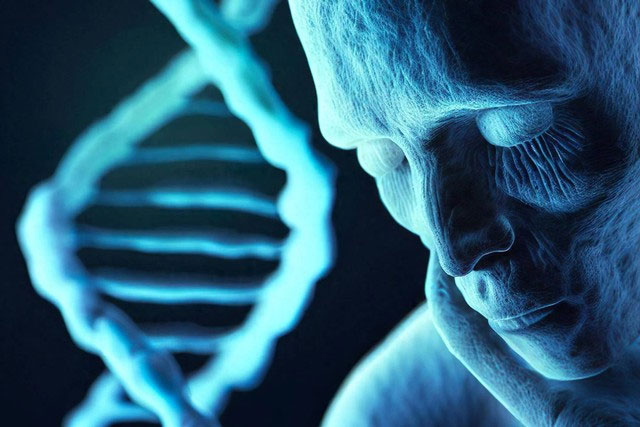
The original RNA had no clear chemical preference for any form of chirality.
Meaning beyond Earth
These findings not only challenge the traditional understanding of biological homogeneity, but also open up the prospect of searching for extraterrestrial life. If chirality is not a constant in the early stages, life could exist in many forms that are completely different from those on Earth.
"This discovery highlights the versatility and adaptability of RNA, which not only helps us better understand the emergence of life on Earth but also guides us in the search for signs of life elsewhere in the universe," explains study co-author Alberto Vázquez-Salazar .
Prehistoric Life: Clues from Meteorites
The quest to understand the origins of life cannot rely solely on chemical experiments. Because Earth's long history has erased its early traces through geological processes, scientists are also looking for clues in meteorites . These fragments may carry chiral amino acids, providing further data on how organic molecules emerged and evolved in the environment of outer space.
"Understanding the chemistry of life helps shape what we should look for when exploring life in the solar system, " said Jason Dworkin, a senior scientist at NASA. "Studies of chirality on meteorite samples and material from Mars will help shed more light on this issue."
The Future of Research: Data from Asteroid Bennu
NASA's OSIRIS-REx mission, which recently returned samples from the asteroid Bennu to Earth, will provide a valuable opportunity to analyze the chirality of amino acids in the space environment. Scientists hope that this data will complement findings on RNA and ribozymes, creating a more complete picture of how the basic ingredients of life formed and evolved.
Flexibility and randomness in the origin of life
Research from UCLA and NASA has shed light on an important truth: life, at least in its early stages, may not have been the result of a fixed chemical decision, but rather was highly flexible and adaptive. This not only changes our understanding of life on Earth, but also opens up new approaches to the search for life in the universe.
The secrets of chirality – from the early Earth to distant stars – remain a fascinating story, promising many exciting discoveries in the future.