Space science
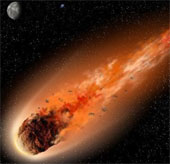
Asteroids 'baked' Earth
A collision with an ancient asteroid may have triggered a global fire storm, burning each tree and grass on the surface of our planet.
Explore astronomy, NASA missions, planets, galaxies, the Moon, the Solar System and discoveries that expand our understanding of the universe.
8,698 published items in this category and its subcategories.
A collision with an ancient asteroid may have triggered a global fire storm, burning each tree and grass on the surface of our planet.
Researchers at the University of California at Santa Cruz (UCSC) in the US have run computer programs on galaxy formation, thus discovering that our Milky Way is probabl…
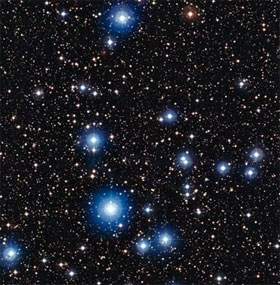
Some of the Milky Way stars must be 13 billion years old, but the production machine is constantly working to produce new generation of stars.
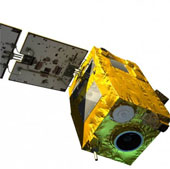
VNREDSat-1 satellite, designed and manufactured by EADS Astrium Company (France), has undergone a series of tests in cosmic simulation environments and is certified to b…
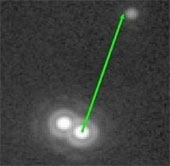
Somewhere in a distant galaxy, scientists believe they captured the first image of a planet orbiting the two suns.
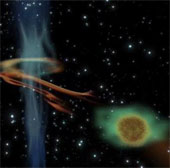
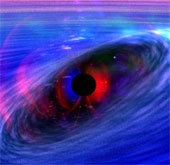
For the first time, astrophysicists at the University of Geneva in Switzerland discovered a black hole swallowing a planet with an estimated mass of 15 times that of Jup…
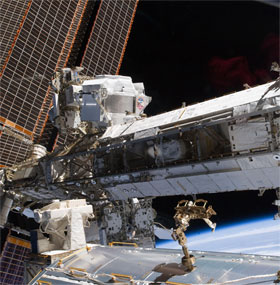
A state-of-the-art device on the International Space Station has found evidence of the existence of dark matter, which binds the universe to a mass of scientific circles…
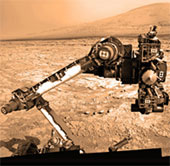
Earth, sun and Mars will line up in April, with the sun in the middle. So, if we look at the Earth in April, we won't see Mars due to the red planet
When the Russian Soyuz flew up from Baikonur Cosmodrome in Kazakhstan on March 28, Chris Hadfield - Canadian astronaut on the International Space Station (ISS) - recorde…
The Russian Federal Space Agency (Roscosmos) may join the US Aerospace Agency (NASA) in an effort to kidnap a meteorite.
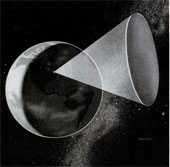
Making a weapon capable of destroying the enemy with sunlight is a plan that the Nazis almost carried out during their reign.
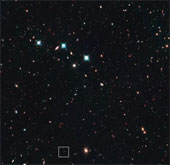
Space Agency's US Hubble Space Telescope (NASA) has captured the most distant star image in the universe so far, especially when the star exploded 10 billion years ago.
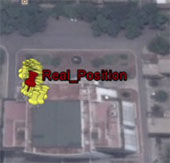
Hanoi University of Technology has just succeeded in locating through the open service of Galileo global positioning satellite system being used by Europe.
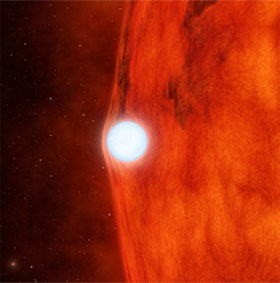
Space telescope Kepler and experts of the American Palomar Observatory found the super-solid white dwarf died in a binary star system.
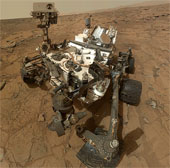
John Grotzinger, a California Institute of Technology scientist, said the incident happened when Curiosity sent radio data to Earth on March 17, US time, Space reported.