Sometimes, because people do not make mistakes, do not commit crimes that would warrant imprisonment, the prisons are empty, and the country has to import more prisoners to keep the prisons open.
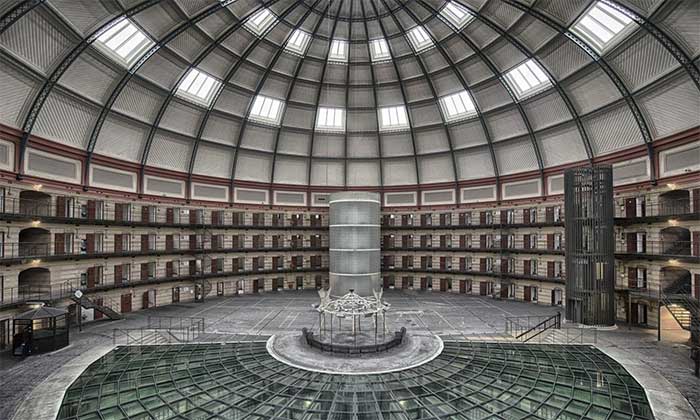
The prison was so empty that even after importing prisoners, there was still a surplus, so it had to be used to make useful buildings for society.
With 1,000 students spread across three campuses, a school in Amsterdam, the Netherlands, struggled for some time to find additional space to keep up with the growing demand for international education. That was until they found a spacious, airy 14,000 square meter property . They moved in in April.
This location has many advantages, most notably privacy and security. Because until recently, this place was still a prison .
The prison chapel has been repainted with gleaming chestnut beams. The mirrored dome in the center of the building is a great vantage point to observe the four surrounding corridors.
This is one of several prison buildings in the Netherlands that have been repurposed, often in socially beneficial ways.
Just 20km away, in Haarlem, the former De Koepel prison is being transformed into a multi-purpose site that will house both students and social housing, potentially addressing a nationwide shortage of both.
Utrecht's Wolvenplein has created a city beach inside the sloping walls of its gymnasium, while Amsterdam's Bijlmerbajes has become a temporary shelter and job for some asylum seekers. They have converted 15 prison cells into a Syrian hammam.
As Britain embarks on its biggest prison build in more than a century, with its prison population nearly doubling in the past 30 years, the prison population in the Netherlands is going in the opposite direction. Today, the Netherlands has a per capita incarceration rate half that of the UK, far fewer people re-offend, and crime rates are falling steadily.
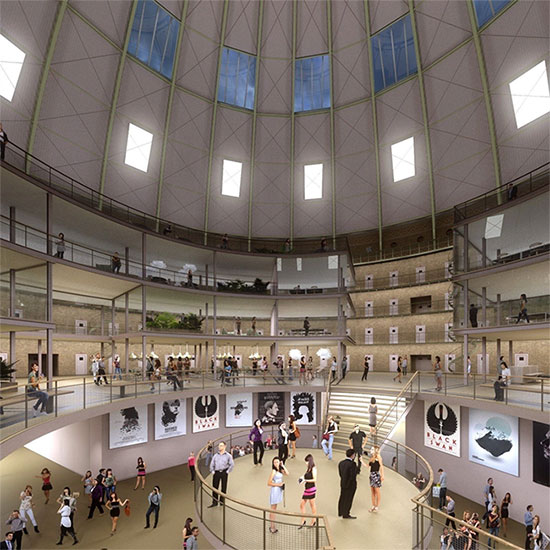
The prisons were converted into multi-purpose venues for students to study and live.
Help prisoners reintegrate into society
While the British government hands out the most life sentences in Europe, the Dutch see the benefits of a less punitive approach. On average, only about 30 people are serving life sentences in the country.
Having reeled from the Nazi occupation during the Second World War, the Netherlands has a 'strong sense of the dangers of an overbearing state and the horrors of imprisonment' , explains Francis Pakes, professor of criminology at the University of Portsmouth. That means the Dutch use fewer prison sentences than they did before the war, and detainees are often treated more humanely.
Pakes says: ' In the UK, getting tough on crime is seen as a solution to the threat of disorder. Whereas in the Netherlands, crime is something the whole system needs to address. There is investment in youth intervention programmes, electronic tagging and residential care for offenders with substance abuse and mental health problems. These actions have promoted rehabilitation and reduced the time spent in prison.'
Pakes also explains: ' In the Netherlands, prisons are generally better maintained, staff are well-behaved, accommodation is spacious and many are quite decent. Studies have shown that these are all factors that make it more likely that offenders will successfully reintegrate into society .'
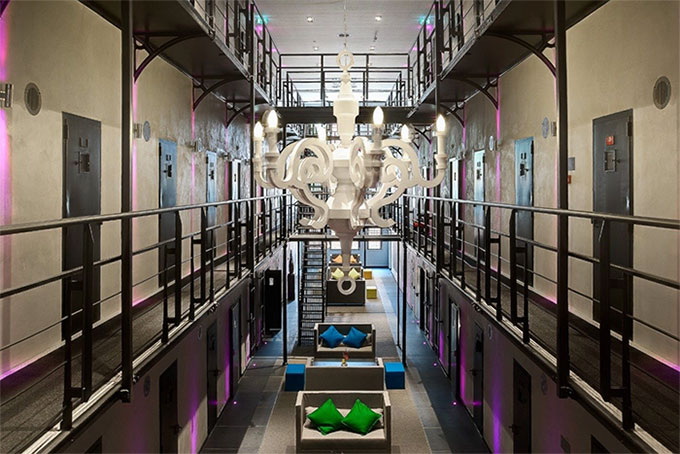
In the Netherlands, prisons are generally better maintained, staff have a good attitude.
Outdated method
Low poverty rates, high social security and a relatively non-materialistic culture play no small part in reducing crime as the Dutch generally value the virtues of not flaunting wealth and living simply.
Rivelino Rigters is an Amsterdam-based musician, author and social entrepreneur who says he has seen the downside of being incarcerated.
Orphaned and eager to fit in with other young boys, he became involved in drug dealing and theft and served his first prison sentence at the age of 13. But prison only deepened his criminal connections.
'I was worse than before I even went in there.'
Rigters stressed: 'Locking someone up is not the way to solve a problem. Sometimes it just makes a bad person worse because for some people, crime is their last resort or when they have no other way to make a living.'
Instead , Rigters' Criminal Minded organization — which mentors current and former inmates to access the skills and networks they need to rebuild their lives — is typical of the more personalized approaches now being tested.
The organization focuses on the 'strengths, talents and abilities' of offenders and 'what needs to be healed in order for them to make positive progress'.
Pakes believes the prison-based model of justice may be over. He says: 'When you talk to senior Dutch police officers, prosecutors or judges, very few will talk about the positive impact of putting someone in prison. No one really believes it works.'
Prisons are repurposed
Hotel and restaurant
In the city of Roermond, the buildings now occupied by the Hotel Het Arresthuis and its Michelin-starred restaurant Damianz were a state prison from 1863 to 2007.
The prison housed mostly drug traffickers and illegal immigrants in its later years, and now has rooms ranging from 'full-size cells' to luxury suites.
Shopping center and library
The moated entrance and spires of Blokhuispoort prison in Leeuwarden now welcome visitors to a cultural mall designed to boost investment in a province with one of the lowest GDPs in the country.
The Alibi Hostel offers affordable accommodation. The prison chapel has been converted into the city's central library, which is due to be completed in 2021.