
Biology
Reviving mammoths
Researchers from the University of Manitoba (Canada) are conducting experiments from DNA samples to revive extinct mammoths.
Browse ScienceInfo articles and explainers related to Adn.
166 published items.
Researchers from the University of Manitoba (Canada) are conducting experiments from DNA samples to revive extinct mammoths.

US scientists have created artificial DNA from chemicals to control living cells in the laboratory.

Scientists from the University of Newcastle (UK) have created embryos containing DNA of a man and two women.

Restoring the original shape of the limbs, broken bones and damaged brains can become a reality after scientists discover a particular gene.

According to the British Daily Telegraph, Australian scientists have recently reached a new breakthrough in the study of pig lung transplantation in humans.

For the first time, scientists from the University of North Carolina, USA, have completed finding about one-fifth of the HIV gene structure.

A group of experts from the British Academy of Medical Sciences announced that they began to conduct a new study evaluating the experimental implantation of human DNA in…

Many DNA testing companies in the world are promising to make silk and maternal love for couples based on the results of genetic analysis.

Chemicals that people often use to bleach hair may disable the medical doctor's blood detection techniques when investigating homicide.

The monkey that DNA scientists extracted determined unlike any other monkey species existing on Earth with very different characteristics.

The Space Flight Management Center (MCC) announced on October 30 that three astronauts returned safely to Earth after completing 40 scientific experiments lasting 115 da…
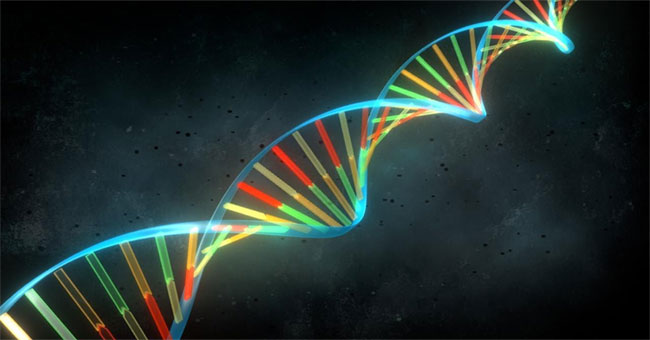
In science, life also has a similar concept - DNA bar codes, built from the most basic material of life, DNA.

By building compost containers and using flue gas from here to disintegrate animal bones, Canadian and US researchers hope to find a solution to completely destroy dead…
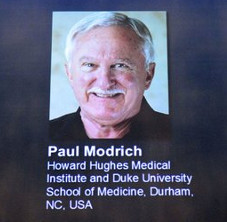
Three US, Swedish and Turkish scientists became co-owners of the 2015 Nobel Prize in Chemistry for their useful, groundbreaking studies of cell-level DNA repair.

Recently, the British Museum of Science held a poll on the most important achievement in modern science and the winning candidate was the discovery of X-ray existence.