
New technology
Artificial 'foam' absorbs heavy metals
This spongy material will absorb heavy metals in the same solution as a sponge, which promises to be useful in removing pollutants from the water. The product is the inv…
Browse ScienceInfo articles and explainers related to Material.
2,029 published items.
This spongy material will absorb heavy metals in the same solution as a sponge, which promises to be useful in removing pollutants from the water. The product is the inv…
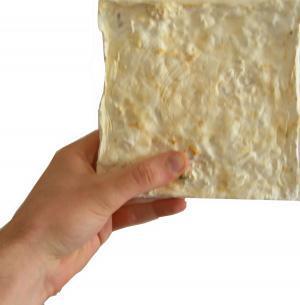
A graduate student in the Rensselaer Polytechnic Institute in New York, USA, Eben Bayer, has received an eco-friendly organic insulation patent. The product is made from…
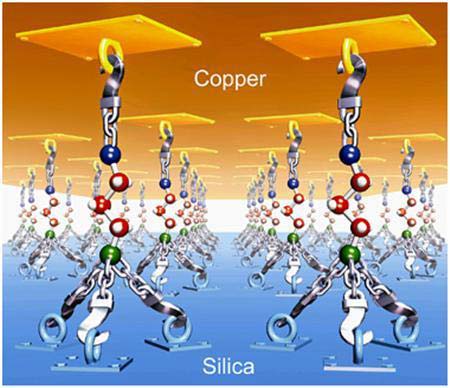
US researchers are developing an ultra-thin glue that will become more adhesive when heated. It can be used to
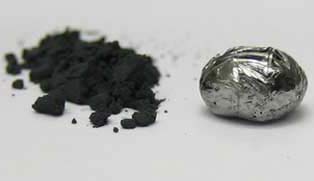
US researchers at the University of California, Berkeley (UCLA) have created a material that is roughly equivalent to diamonds but does not require high pressure to prod…
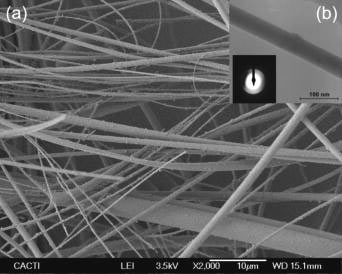
Materials researchers in the US and Spain have successfully built a new technique called
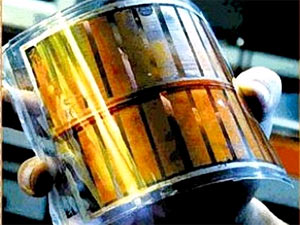
New energy collectors made from plastic will be used to roof the roof, or wall panels (outside), or it can be a decorative material for the front of the house ...

British researchers are building a room-sized machine that uses modern stereotyping techniques to print complete walls including bricks, plasterboard, windows, insulatio…
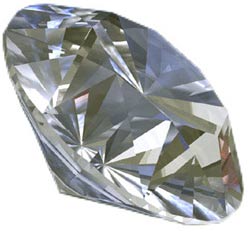
Natalia Dubrovinskaia (University of Heidelberg, Germany) together with colleagues in Bayreuth (Germany), Paris and Grenoble (France) successfully synthesized a super ha…

In the future, the car's red shock bars will be made of plastic that can deform like rubber. Japan's Toray Industrial Chemical Corporation has developed a new ki…

Nanoident (Australia) has introduced the technology to print photopolymer photoelectric circuit in operation. Particles of nanometer size will be sprayed onto the substr…

From the idea of finding new materials to replace cotton and silk, Gary Cass, a West Australian University laboratory technician, invented a fermented fabric that could…

German and British scientists have made the world's thinnest material at just 1 / 200,000th of a second. This type of membrane is connected by hexagonal carbon atoms…
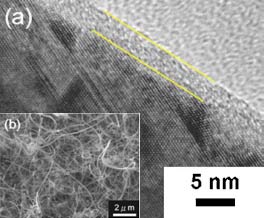
Taiwan scientists first discovered ferromagnetism at room temperature in Si nanowires with ion implants. Lih Chen's group and colleagues at the National University of Qi…

British designer Helen Story and fellow colleague, Tony Ryan, professor of chemistry, have teamed up to work out very unique outfits: The first clothes in the world are…
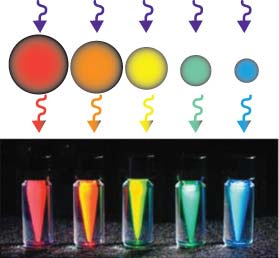
Ultra-stable and extremely low-power femtosecond laser pulses are an ideal application for creating nanocrystal particles with extremely high uniformity (very narrow par…