Space science
Mysterious decoding of
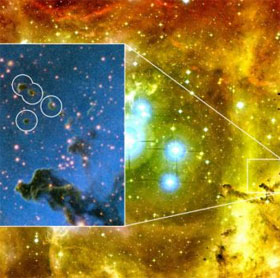
Scientists believe that they have solved the mystery of why some planets exist in the universe without orbiting any star's orbit.
Browse ScienceInfo articles and explainers related to Star.
2,098 published items.
Scientists believe that they have solved the mystery of why some planets exist in the universe without orbiting any star's orbit.
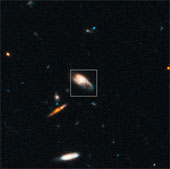
Astronomers say the Hubble Space Telescope telescope has detected a gamma-ray burst from the event named kilonova, temporarily translated.
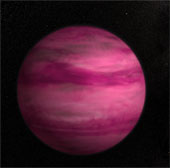
GJ 504b, the name of the pink planet, revolves around a star named GJ 504 and 57 light-years from Earth. GJ 504 star, belongs to the constellation Virgo, a little hotter…
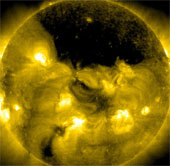
The sun-observing vision of the glass found a giant hole in the central star's atmosphere, expressed in the form of a dark halo covering nearly a quarter of the sun, con…
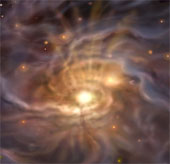
Astronomers are eager to observe the image of the largest known star in the Milky Way, thanks to modern telescopes in Chile.
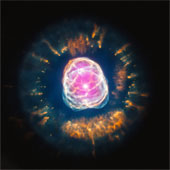
Although it can be brilliance for billions of years, our sun-like stars do not exist forever, and by the time of their death, their deaths have never been quiet, but mor…
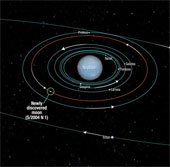
Hubble Space Telescope discovered a new satellite of Hai Vuong star, NASA Aerospace Agency (NASA) announced.
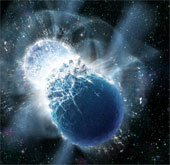
Researchers at Harvard University (USA) on July 17 said a strange light source in the universe has provided new evidence that all the gold on Earth is formed by the deat…
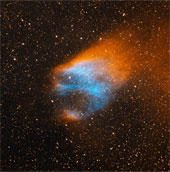
The image of the Sh2-68 nebula is like a giant skull screaming with fiery hair flying through the galaxy has entered astronomers' lenses.
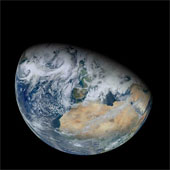
In addition to some of the planets that support human life, there are still billions of other planets in the universe that can.
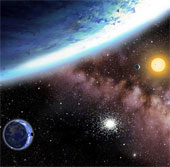
Although only discovered a few dozen candidates like the earth, scientists say the universe is likely filled with strange worlds that can support life.
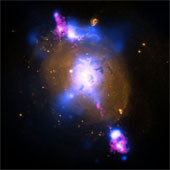
Scientists have discovered mysterious bursts of radio waves, which exist only for very short periods of time, originating billions of light years ago.
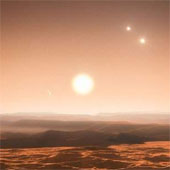
The Glise 667 C solar system near us has 7 planets, 3 of which are
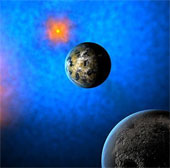
The probability of survival on the planets orbiting the binary star system is quite large - This is not the surprising conclusion of scientists but that of an American f…
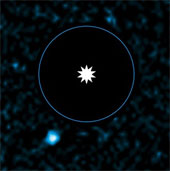
The European telescope has captured an image of an asteroid circling the central star 300 light-years from Earth, equivalent to 3.7 billion round-trips to the moon.