Space science
The young star is like the early Sun
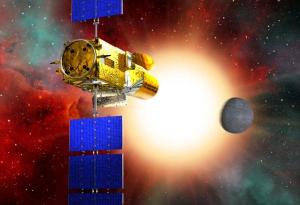
CoRoT satellite recently observed a star similar to the Sun at the age of about 500 million years, called CoRoTExo-2a.
Browse ScienceInfo articles and explainers related to Temperature.
2,022 published items.
CoRoT satellite recently observed a star similar to the Sun at the age of about 500 million years, called CoRoTExo-2a.
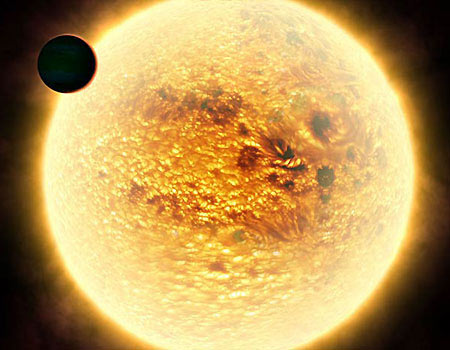
New scientists have discovered the hottest planet ever known by humans. It has a temperature of up to 2,250 degrees Celsius, equivalent to the heat at the surface of the…
In the journey to conquer the vast universe, people have discovered so many new things, but still, there are countless unknowns to date.
With a negative average temperature of 260 degrees Fahrenheit, the atmosphere is almost non-existent, with a complex network of cracks in the ice that completely covers…
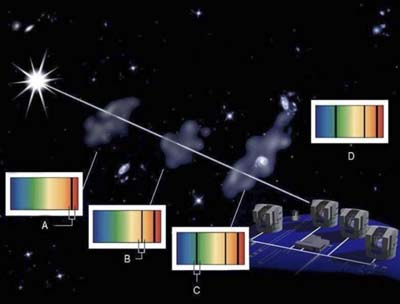
Astronomers using the giant telescope the Very Large Telescope (VLT) of Eso have for the first time discovered in carbon monoxide molecular ultraviolet radiation in a ga…
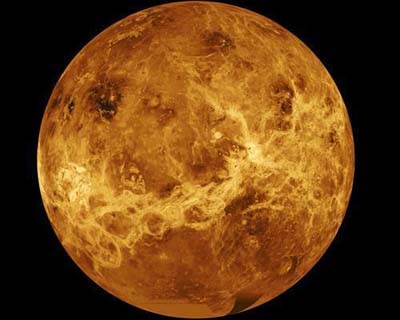
A new study of possible relationships between climate and geophysics on Earth and similar planets has found that the heat of a prolonged atmosphere can prevent stratigra…
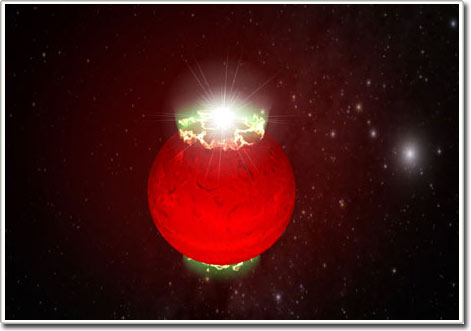
A weak, lonely and dim star, the lowest temperature ever recorded in history has been discovered, only 40 light-years from Earth.
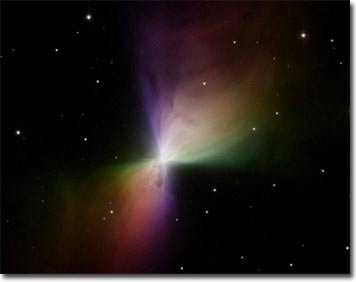
This butterfly-shaped nebula is located in the constellation Centaurusm, more than 5,000 light-years from Earth, and the coldest place in the universe. It forms around a…
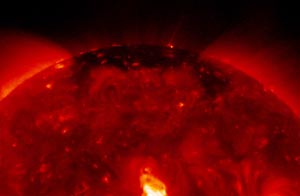
Japanese scientists have photographed an extremely rare phenomenon - plasma currents emitted from the Sun's halo. This is the first time that humans have discovered the…
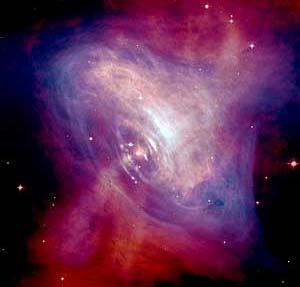
Very small changes in the temperature detected in the cosmic microwave background radiation map are often thought of as evidence to show that stars, galaxies and other l…
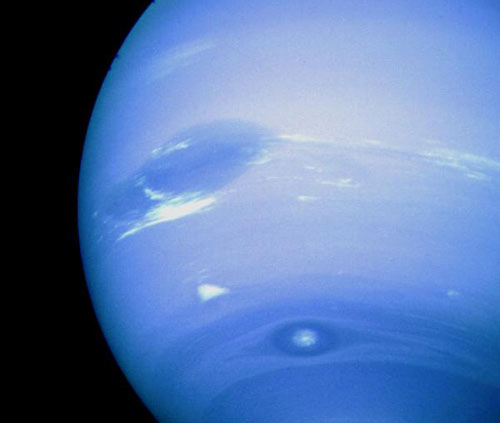
A group of international astronomers who just discovered the south pole of Neptune is much warmer than other places on the planet. This finding is based on data from ext…
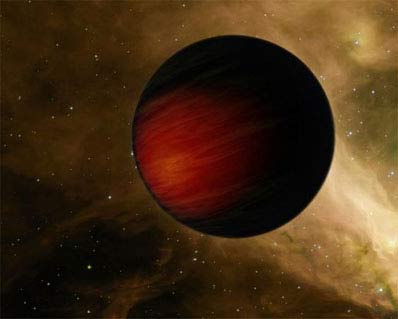
Scientists on May 9 said they have discovered an outer planet. The solar system is about the same size as Saturn, with temperatures of more than 2,000 degrees Celsius, t…
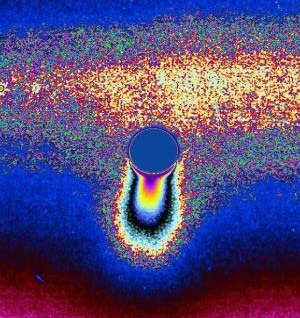
Enceladus is a small sized satellite and it is composed of ice and rock. The puzzling thing is how does it have a hole
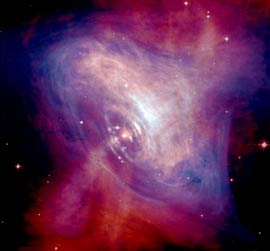
Burning by magnetic fields can play a more prominent role in the development of neutron stars than previous claims of Spanish and American scientists. The researchers an…
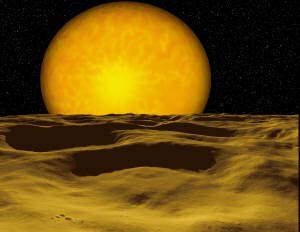
Thanks to the Spitzer telescope of the US Space Agency (NASA), astronomers first measured the temperature on a planet outside the Solar System and found it to have an ex…