Space science
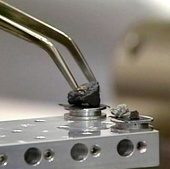
Found 53 'meteorite fragments'
Russian police are verifying information that meteorite debris falls in the central region of Urals, being sold online, while scientists claim to find 53 fragments.
Browse ScienceInfo articles and explainers related to Atmosphere.
902 published items.
Russian police are verifying information that meteorite debris falls in the central region of Urals, being sold online, while scientists claim to find 53 fragments.
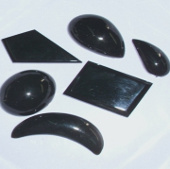
Talking to PV, Dr. Le Huy Minh said that meteorites falling into the Earth's atmosphere are relatively many phenomena. But falling to the ground like the case in Russia…
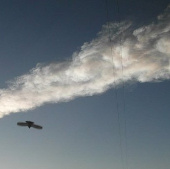
Whether an asteroid explodes or falls to the ground depends on the ability of the atmosphere to withstand the compressive pressure. They often take up to 99% of the mate…
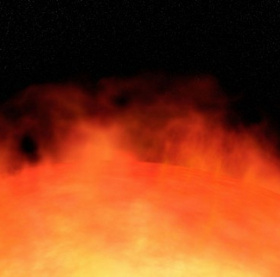
Scientists at Northumbria University, NewCastle, England have used solar imaging technology to study the chromosphere between the sun's surface and aura.

The scientific article has been published in the Proceedings of the National Academy of Sciences and Spiegel Online cites summaries of the content.

The little planet Makemake has no atmosphere, this distant icy world revealed its secret for the first time.
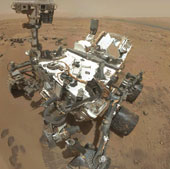
The American Curiosity autonomous device recognizes that radiation on Mars is equivalent to the radiation on low Earth's orbit so humans can function normally on the red…
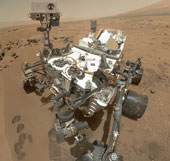
The Curiosity probe of the US Space Agency (NASA) did not detect methane in the first analysis of Mars's atmosphere.
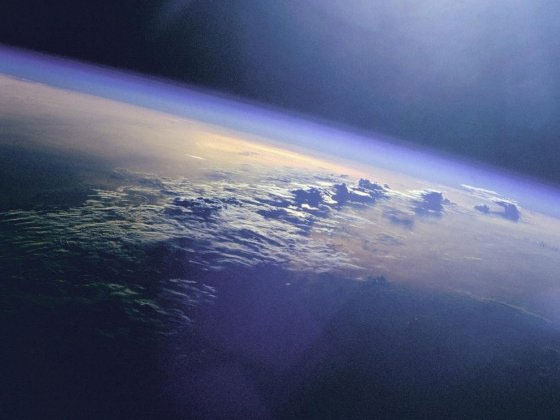
Earth's atmosphere is less xenon gas than meteorites of the same type of rock that make up the earth. This makes some scientists think that xenon gas has been hidden in…
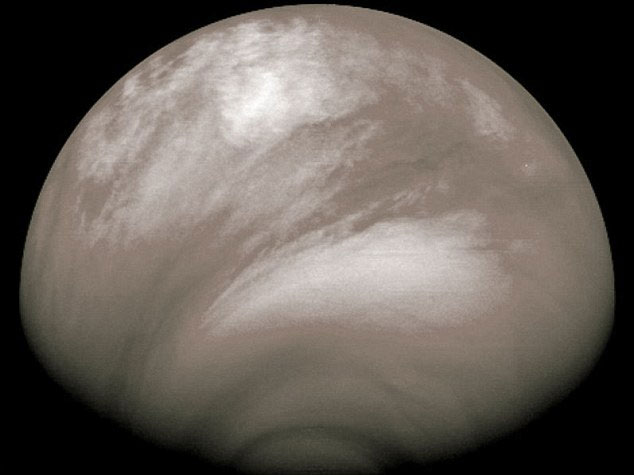
The Venus Express spacecraft of the European Space Center has discovered a cold area in the planet's atmosphere. Here, the temperature is cold enough to freeze carbon di…

The sun - the star in the solar system and the source of energy and natural light for the Earth. But few know exactly what constitutes the Sun.
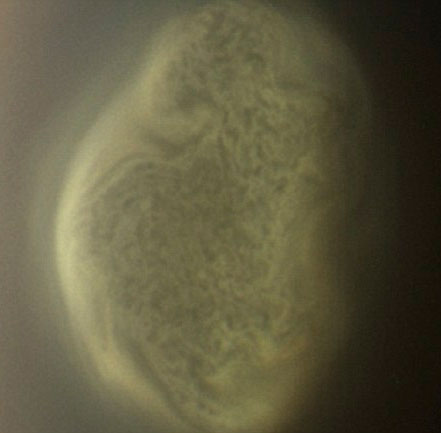
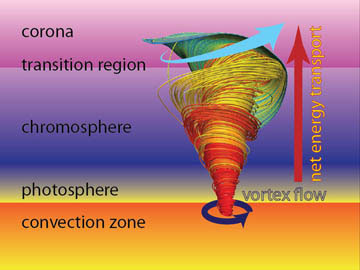
A new study has revealed that the cause of the Sun's atmosphere is much hotter, 300 times higher than the surface temperature of the Sun, due to tornadoes of thermal lay…
Shortly after NASA announced the cancellation of the Southeast Asian climate research project (SEAC4RS), a group of about 20 leading Thai scientists planned to study the…
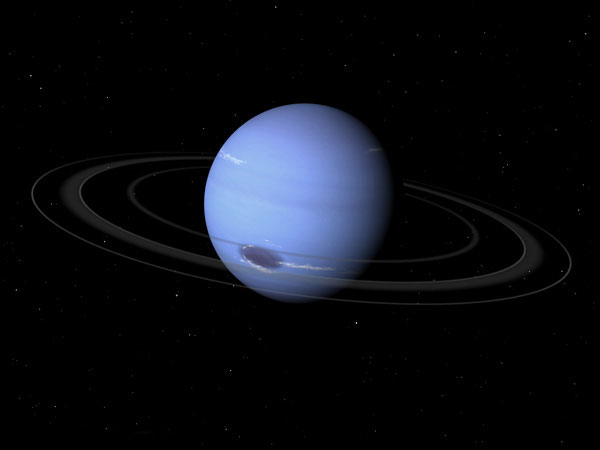
Erich Karkoschka, a scientist from the University of Arizona, USA, accurately calculated the self-motion time within a week of this giant planet is 15 hours 57 minutes 5…