Space science
CERN successfully simulated the Big Bang cosmic explosion
Successful implementation of inter-collision experiments
Browse ScienceInfo articles and explainers related to Bang.
231 published items.
Successful implementation of inter-collision experiments
The collective of international scientists who have successfully built Alpha spectroscopes can detect the signs of the existence of anti-space.

Recently, cosmologists have gradually lifted the veil of mystery about the formation of the early pink universe through the theory of cosmic bubbles after the Big Bang.

Maximo Banados and Pedro Ferreira have discovered the unimaginable human conclusions about the history of the universe.

Scientists have created in the laboratory a terrible temperature threshold: 4 million degrees Celsius.
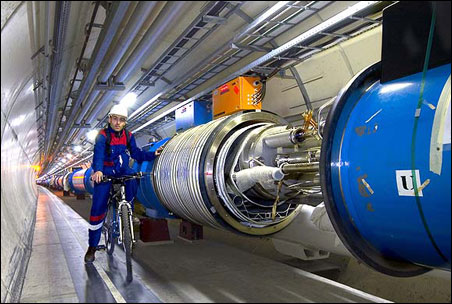
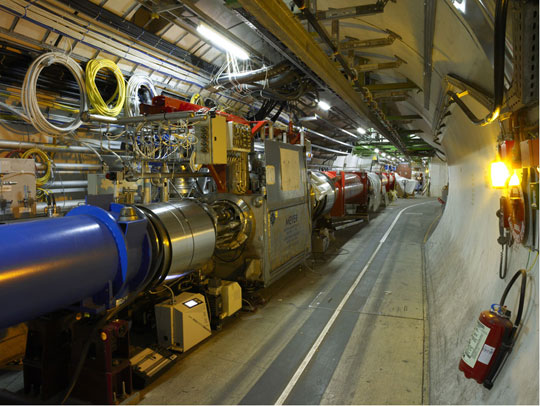
The large particle accelerator re-starts last night after a problem more than a year ago, and will begin the process of simulating the Big Bang explosion.
Will the universe continue to expand and eventually end with the state of nihilism that diffuses dry, cold, and black?
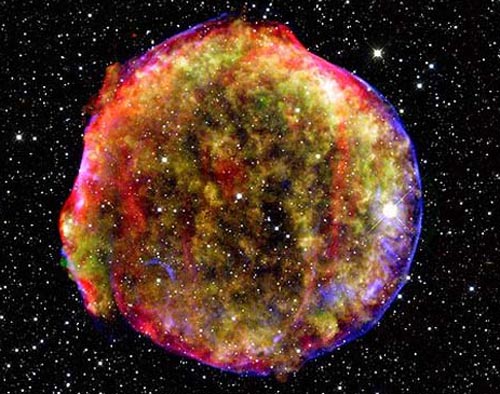
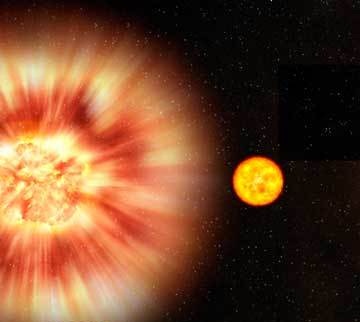
Physicists working at Argonne National Laboratory (USA) use supercomputers to build a model of the demise of big stars.
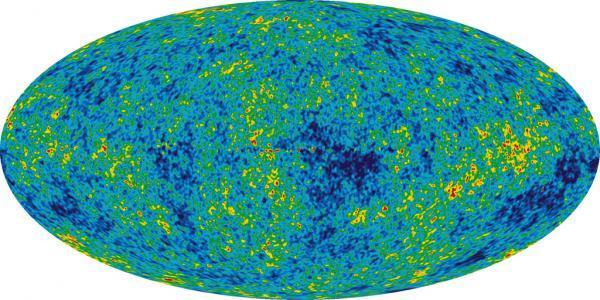
What happens in a trillionth of a trillionth of a trillionth of a second after Big Bang?

The world's largest particle accelerator (LHC) of the European Nuclear Research Center (CERN) will resume operations next September.
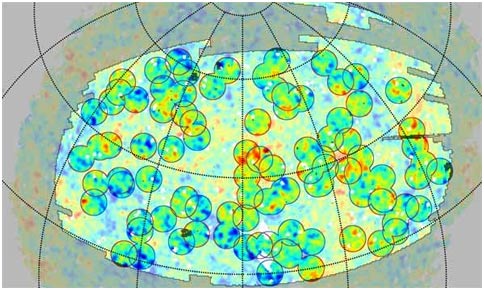
Dark energy accounts for 70% of the mass of the universe - and is completely invisible. Even so, scientists have proved it: thanks to what remains from the moment right…

The first stars that appear in the universe are likened to the most cruel but destitute monsters. They have forever changed the nature of the universe, dispelling a blac…
Scientists from the University of Penxinvania (USA) have developed a cosmic model before the Big Bang big explosion 13.7 billion years ago, forming the current universe.
At a physics conference that took place on Ecuador's Galapagot Island on June 21, international scientists said they would reproduce the immediate consequences of the Bi…
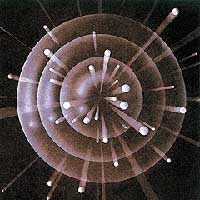
According to Mark Whittle, professor of astronomy at Virginia University, the Big Bang big bang 13.7 billion years ago caused a tremendous noise, releasing billions of s…