
New technology
Solar cell with nano-carbon technology converts heat into light, increasing efficiency to 80%
The solar industry breakthrough will allow us to take advantage of huge energy
Browse ScienceInfo articles and explainers related to Carbon Nanotube.
19 published items.
The solar industry breakthrough will allow us to take advantage of huge energy

According to a study published in Nature, the blacksmiths from damas steel (Damascus steel) knew how to build carbon nanotubes more than 400 years ago.

Recently, a group of researchers at MIT implanted carbon nanotubes into organelles inside plant cells to improve the production efficiency of plants' energy.
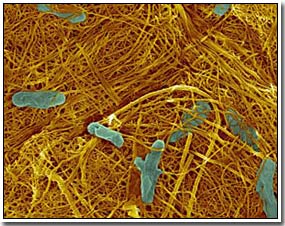
Chemists and engineers from the United States and South Korea have discovered some types of semiconductor nanotubes made from living organisms, bacteria - this discovery…
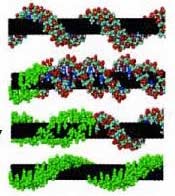
Experts from the University of Illinois (USA) have used carbon nanotubes to successfully manufacture biological sensor chips. When introduced into living cells, it helps…

The group of young scientists from the Department of Materials Research and Components Technology has just launched a product that promises to bring super profits to the…

Black bottles containing carbon nanotubes with large applications, seen with the naked eye, are easy to imagine, including coal powder. In fact, it is a high-tech produc…

Dr. Nguyen Chanh Khe and his colleagues at the HCM City Hi-tech Research and Development Center have just launched a scientific
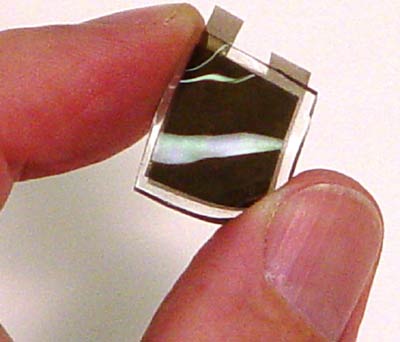
US researchers have successfully fabricated electric storage batteries for the first time using a random network of carbon nanotubes (CNT). Components have excellent ene…

Carbon nanotube implants can react with nitro-aromatics to help detect mines and ammunition buried underground.
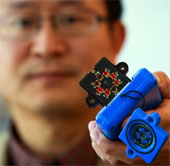
Recent carbon nanotubes have also been used to detect explosives and toxic chemicals.
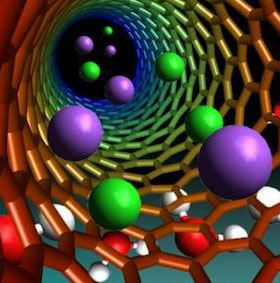
But in order for this material to be useful, they must first be introduced into the human body without affecting the immune system.
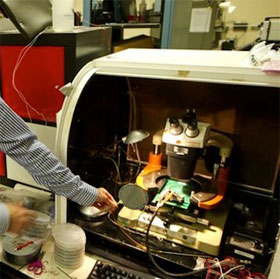
Scientists have successfully created the first prototype computer made entirely of carbon nanotubes
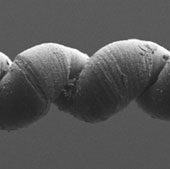
US scientists have developed artificial muscle that is 200 times more potent than muscle fibers similar in size to human muscle.

Scientists at the Massachusetts Institute of Technology have discovered a new way to generate electricity: using carbon nanotubes to generate electricity.