Health
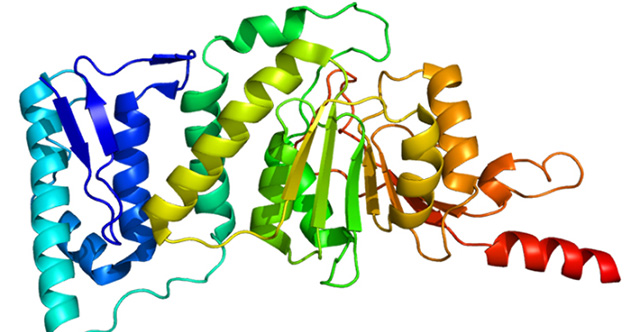
Identified enzyme that helps sperm production for life
New research in mice shows that sperm production during the adult stage would not take place without the enzyme DOT1L.
Browse ScienceInfo articles and explainers related to Gene.
1,953 published items.
New research in mice shows that sperm production during the adult stage would not take place without the enzyme DOT1L.

Geneticist George Church is trying to revive the woolly mammoth that went extinct 4,000 years ago.

A project to regenerate the Tasmanian tiger from ancient and new genes is underway in Melbourne, Australia.

Researchers from the University of Bologna (Italy), part of an international team, have discovered a gene that is important in the healing of heart damage after a heart…

Transplanting pig hearts into humans promises to solve the shortage of organs, but it also raises many ethical questions.

Authors in Israel discovered how to regulate B white blood cells, which release antibodies against HIV, thereby helping to cure the disease after just one injection.

A journalist introduces the theory of 'Life's Big Bang'. However, there are still many holes in this theory…

Israeli researchers have developed a new method that can neutralize HIV and developed an injectable drug that can cure HIV/AIDS.

More than 100 years ago, German biologist Richard Semon coined the term 'engram', which means that the production of memory causes certain physical or chemical changes i…

The gene bank located in Jingdezhen town, Jiangxi province, will store data on nearly 20 million pieces of ancient ceramics.

Italian and Danish scientists have successfully decoded the DNA of two Pompeii people - a city devastated by the volcano Vesuvius 2,000 years ago, famous for its shockin…

Humans have a unique sequence of two amino acids in the FOXP2 gene located on chromosome 7. This gene FOXP2 regulates the development of brain structures important for v…

Antarctic bacteria contain genes that give them natural antibiotic and antibiotic resistance, and the ability to spread beyond the polar regions.

Researchers at Georgia State University, USA are shocked after gene editing experiments make hamsters more aggressive

According to the results of a study published in the journal Science Advances, brain gene editing could be a potential treatment for anxiety disorders and alcoholism.