Discover the world's first reactor that can produce endless energy
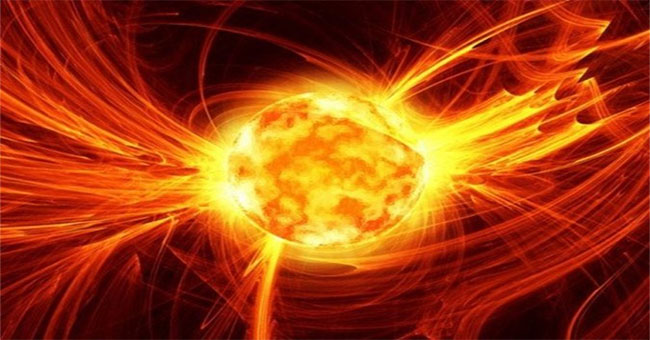
This is the world's first reactor that will power the Earth using nuclear reactions like the Sun.
Browse ScienceInfo articles and explainers related to Nuclear Fusion.
17 published items.
This is the world's first reactor that will power the Earth using nuclear reactions like the Sun.
Soon, the world will witness the ultimate orbital performance with this unique super rocket.
We all know about China with its coldness and horrible frost in winter. So the government of this country has joined scientists to build a solution.
The fusion reaction, or fusion reaction, nuclear fusion reaction in physics, is the process of two nuclei fusing together to create a heavier new nucleus.
Superheated helium gas passes through the metal and leaves pores that weaken and gradually destroy the nuclear fusion reactor.
Imagine we are holding a giant bucket of water to put out the Sun's fire.
Nuclear fusion is the opposite of the reaction inside atomic energy plants, which can produce endless energy.
If it is smaller than the Left, the Sun will burn, Earth and planets in the system will float, dragging away the life.
Chinese scientists successfully maintained plasma from a nuclear reactor within a minute. This is an important step for the plan to exploit energy from
The sun - the star in the solar system and the source of energy and natural light for the Earth. But few know exactly what constitutes the Sun.
After 19 years of research, 1.1 million hours of tireless work, costing more than 1 billion euros, eventually the scientists at the Max Planck Institute built the comple…
Taylor Wilson (17, American) advised the Homeland Security Bureau on counterterrorism tactics and coordinated with the Department of Energy to study nuclear fusion. Tayl…
German reactors can produce powerful, high-precision 3D magnetic fields that can generate endless energy for humans.
Chinese scientists can produce three times more hot hydrogen gas than the Sun's core by using nuclear fusion and maintaining this temperature for 102 seconds.
A new high-intensity laser can heat matter at a temperature of tens of millions of degrees Celsius as in the solar core for a fraction of a millionth of a second.