
New technology
The first time slow down the speed of light
For the first time, scientists have slowed down the speed of light - particles called photons - as it passes through an empty environment, according to a new study.
Browse ScienceInfo articles and explainers related to Particle.
803 published items.
For the first time, scientists have slowed down the speed of light - particles called photons - as it passes through an empty environment, according to a new study.
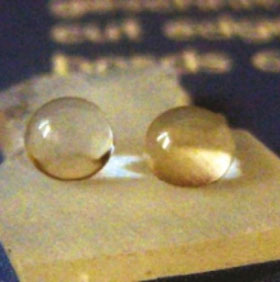
Scientists have created a new material that can keep dirt particles from sticking.

By using a laser to bombard hot plasma in a desktop-plasma laser accelerator, the scientists created accelerated energy to 4.25 giga-electron volts (GeV).

Scientists at the University of California have just discovered an easier way to detect these extraneous elements, but the most important thing is that they use the came…
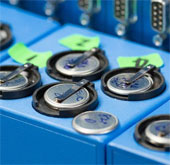
A new study published by California scientists (USA), can change the way lithium-ion batteries clean in consumer electronics products and electric cars, help extend batt…
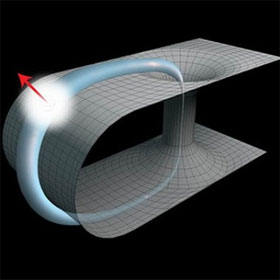
A team of researchers at the University of Queensland led by Dr. Martin Ringbauer successfully simulated time travel using the fundamental particles of light.

By exploiting a quantum phenomenon called particle entanglement, the team said they were able to transfer data within a 10m distance without any connection.
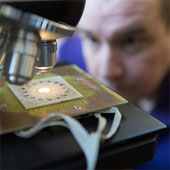
British scientists have found for the first time the ability to use ultrasound to capture or move certain micro particles in the body.

Scientists have for the first time found a groundbreaking technique that turns light into matter, a goal that has been thought impossible since the idea came out 80 year…

MIT scientists have developed a micro-chip with color bands that can be used to test the authenticity of currencies, pharmaceuticals, consumer products, and virtually ev…

Scientist Stephen Burkinshaw of Leeds University is working on developing the Xeros washing machine using the mechanical force of specially designed polymer particles to…
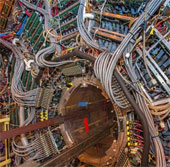
Scientists and law experts expressed concern that an ambitious experiment using a super accelerator could accidentally destroy Earth.
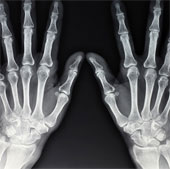
Scientists have recently developed an in-house X-ray that can be easily viewed and mapped to three-dimensional nano-sized molecules.

New armor production technology helps to reduce volume and increase the flexibility of outdated armor.
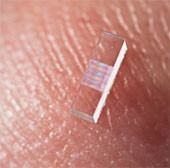
In the first experiment, electron particles were accelerated to near the speed of light in a conventional accelerator.