
Biology
The secret of sunflowers
Sunflowers follow the sun thanks to the biological clock mechanism and not completely follow the light as previously predicted.
Browse ScienceInfo articles and explainers related to Sunlight.
248 published items.
Sunflowers follow the sun thanks to the biological clock mechanism and not completely follow the light as previously predicted.

Researchers have shown that a common bacterium can use natural conductivity to pull electrons from minerals deep in the soil and in sediment while bacteria remain on the…

Great calculations have helped scientists solve a difficult problem, haunting them for over 100 years.

Scientists at the Basel Zoo in Switzerland have announced the success of pressing a rare and precious jellyfish that looks like a breeding egg in an artificial environme…
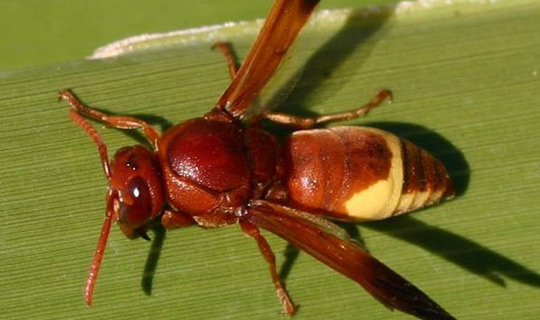
This Eastern bee species belongs to the bumblebee family, which has a special structure on the abdominal cavity that helps capture sunlight, and a special pigment that c…

Plankton are the foundation of the marine food chain, they need sunlight to carry out photosynthesis as well as other nutrients like nitrate, phosphate and iron to feed…
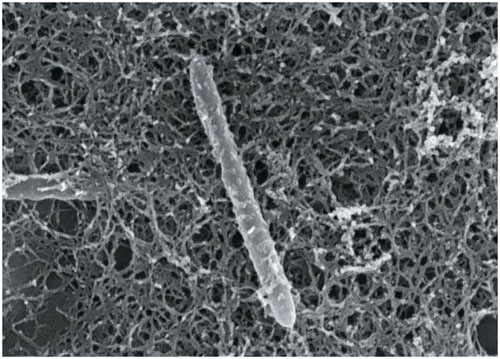
Biological experts are stunned to find a whole new strain of bacteria at a depth of 2.8 km underground.

Looking at this picture, one of us is more or less attracted by the sparkling, glittering skin of the snake.

Many people still claim that polar bear fur is white or yellow, but the truth is absolutely not.

How have we been able to monitor the movement of birds without affecting their daily lives?

You will have a lovely garden corner without using the soil and can be arranged anywhere in the house.

Experts from the Institute of Chemistry (Vietnam Academy of Science and Technology) are deploying the application of new technologies: storing seawater by solar energy t…

Glenn Smith, a professor at the Georgia Institute of Technology (USA), explained this problem: seawater is actually colorless but because it reflects the sky's blue colo…

Scientists from both US and Harvard universities have proposed an idea to combat global warming by using chemicals to reduce the intensity of sunlight.
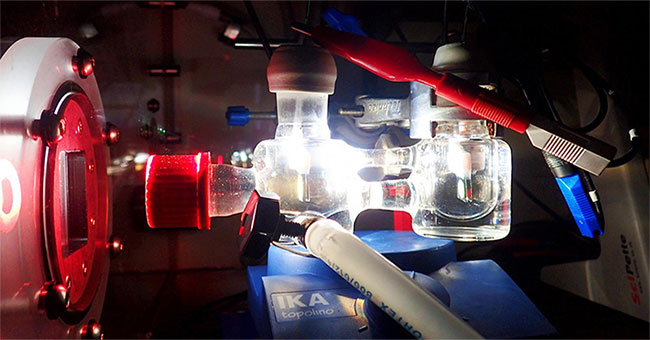
Scientists have devised a new way to convert sunlight into fuel by transforming photosynthesis in plants.