Space science
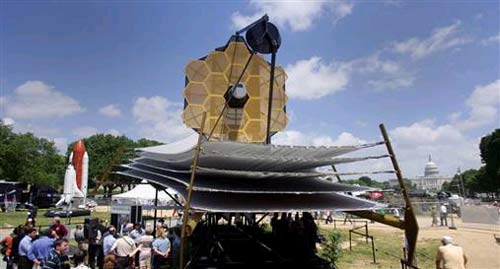
NASA announced Hubble's new successor telescope
NASA has introduced a real-life model of the future James Spaceb telescope (JWST). JWST will be launched in 2013, replacing the Hubble telescope to observe the universe.
Browse ScienceInfo articles and explainers related to Telescope.
1,099 published items.
NASA has introduced a real-life model of the future James Spaceb telescope (JWST). JWST will be launched in 2013, replacing the Hubble telescope to observe the universe.

According to US cosmologists, in the next 20 years, new technologies will allow the discovery of Earth-like planets and other forms of life in other solar systems in the…
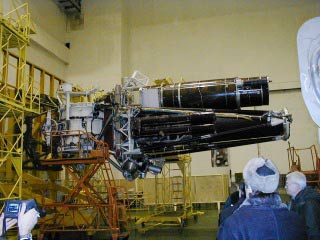
The Spectrum-RG astrophysical observatory project (scheduled to be launched in 2011) will have a target for space exploration with X-rays and gamma rays. Observing the e…
The Swedish Space Company has said scientists have made a breakthrough in understanding how stars form when detecting molecular oxygen in interstellar space.
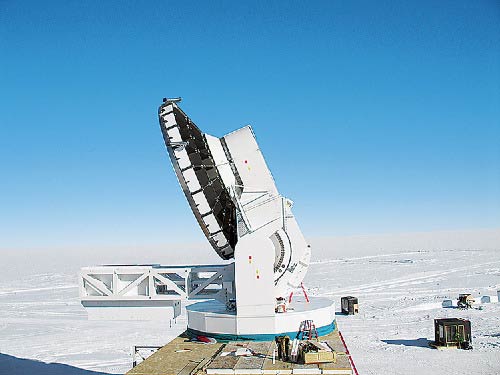
A telescope equipped with a mirror with a diameter of 10m has been placed in Antarctica to study the components of the universe. As a result of cooperation from many US…
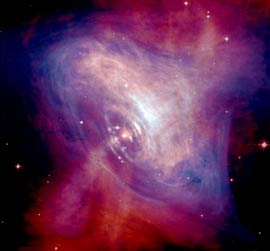
Burning by magnetic fields can play a more prominent role in the development of neutron stars than previous claims of Spanish and American scientists. The researchers an…
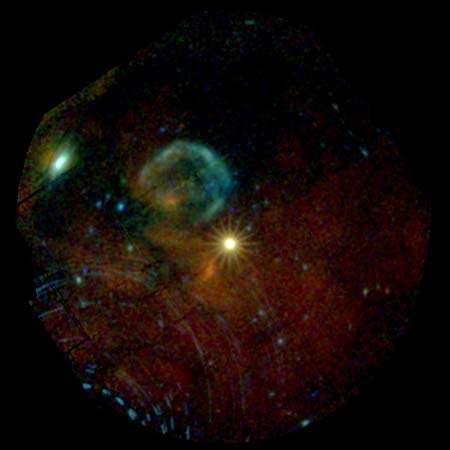
Twenty years after the first observation of supernova explosion SN 1987A, this is a near supernova explosion
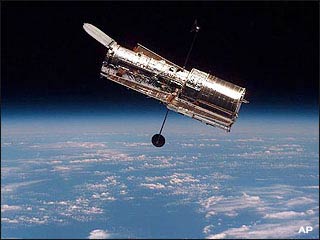
NASA's Space Aeronautics Agency has said the Hubble Space Telescope's main camera may have lost two-thirds of its ability to observe after electrical incidents.
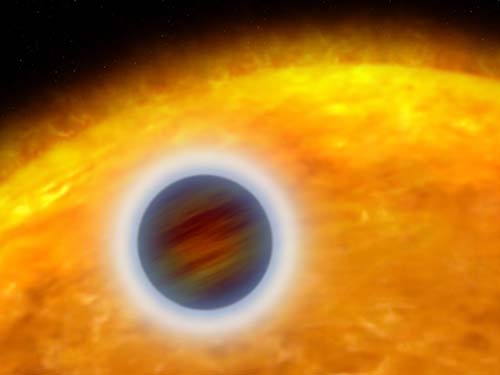
Thanks to one of the Hubble Space Telescope's instruments, the researchers have distinguished the different layers of the atmosphere from an atmosphere.
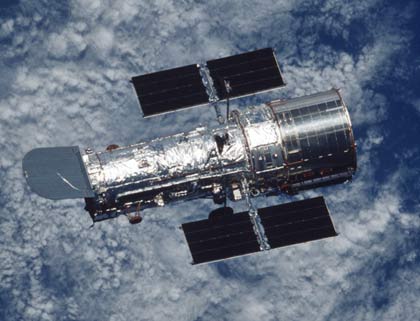
According to the US Aeronautics and Aeronautics Agency, on September 11, 2008, it was chosen for the group of astronauts to fly up to the Hubble telescope space. They wi…
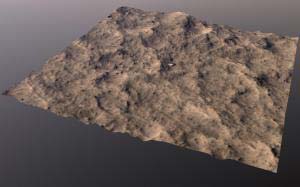
The meteorite's high-resolution telescope (Mars Reconnaissance Orbiter-MRO) drew a detailed map that landed on July 4, 1997 by the Mars finder (Mars Pathfinder). Thereby…

Gone are the days when astronomical research had to have big, expensive telescopes and must be professional researchers. Today's digital age is
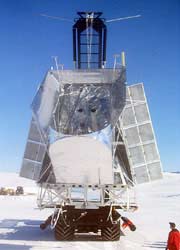
Canada and three partner countries, the United States, Britain and Mexico, have conducted an experiment in the South Pole sky. The 2,000kg heavy telescope called BLAST h…
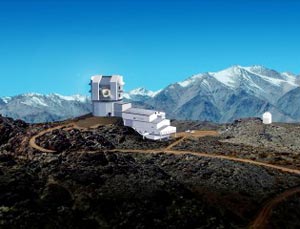
Google has plugged its flag on Earth, Moon and Mars. Next might be the universe: this world's leading online search company is collaborating with scientists to build a g…
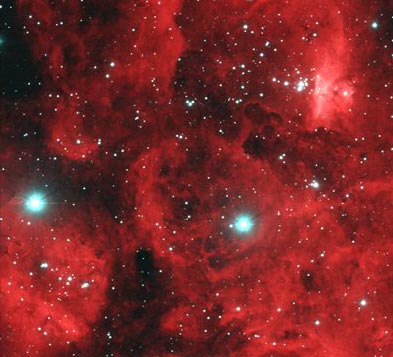
The star Pismis 24-1 was stripped of the Milky Way's heaviest title after the new Hubble telescope's measurement method shows that it is essentially a double star.