Déjà Vu is finally being accepted as mainstream science.
Have you ever had that strange feeling, that you feel like you've been in a situation exactly like this before, and can't quite remember when? Everything feels vaguely familiar and strange at the same time?
Most of us have been baffled by that strange sense of familiarity when doing something for the first time. We feel like we've been here before, or done this before, but we know for a fact that it can't be. In fact, according to various surveys, about two-thirds of us have experienced déjà vu at least once in our lives.
This phenomenon, called déjà vu, has puzzled philosophers, neuroscientists, and writers for a very long time.
Déjà vu — which means 'already seen' in French — was coined in 1876 by French philosopher and psychiatrist Émile Boirac. (Photo: Patrick Chauvel, MD / Health.clevelandclinic.org)
Beginning in the late 1800s, many theories began to emerge regarding what might cause déjà vu, [the phrase is French for "already seen"].
People think déjà vu may stem from a mental disorder or perhaps some kind of brain problem. Or it may be a temporary glitch in the otherwise normal functioning of human memory.
DéJà Vu: From Myth to Mainstream Science
At the beginning of this century, a scientist named Alan Brown - PhD, Professor of Psychiatry and Epidemiology at Columbia University Medical Center (USA), author of many books about déjà vu - decided to review everything that researchers had written about déjà vu up to that point.
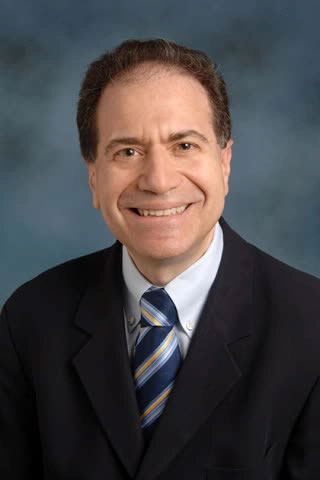
Alan Brown - PhD, Professor of Psychiatry and Epidemiology at Columbia University Medical Center (USA), author of many books on déjà vu. (Photo: Columbiapsychiatry)
In 2003, Alan Brown published a paper in the journal Psychological Bulletin that looked at what little was known about déjà vu and connected that information to existing models in cognitive psychology and memory research. His foundation essentially set the stage for the research community to take a deeper look at the phenomenon in the years to come. Since then, he and a number of other scientists have helped bring the study of déjà vu into mainstream science.
Much of what he could find had a tinge of the mystical, related to the supernatural - things like past lives or psychic abilities.
In addition to its paranormal associations, déjà vu has presented another obstacle for researchers. The experience typically lasts no more than a few seconds and comes with no warning of when it is about to occur, making it extremely difficult to study. Much of what is known about déjà vu is based on surveys.
From all of these studies, Alan Brown was able to glean some basic findings about the phenomenon of déjà vu.
For example, Alan Brown determined that about two-thirds of people experience déjà vu at some point in their lives. He determined that the most common trigger for déjà vu is a setting or location, and the next most common trigger is a conversation.
He also reports on a century or more of suggestions in the medical literature about a possible link between déjà vu and some kind of seizure activity in the brain.
Alan Brown's review brought the subject of déjà vu into the mainstream of science, because it appeared in both a scientific journal that cognitive scientists tend to read, and a book for scientists. His work served as a catalyst for scientists to design experiments to investigate déjà vu.
Testing DéJà Vu in a psychological laboratory
Prompted by the work of Alan Brown, a research team led by cognitive psychology professor Anne Cleary (Colorado State University, USA) conducted experiments aimed at testing hypotheses about the possible mechanisms of déjà vu.
Professor Anne Cleary's team investigated a nearly century-old hypothesis that déjà vu can occur when there is a spatial similarity between a current scene and an "unnamed" scene in your memory . Psychologists call this the familiarity hypothesis of Gestalt psychology (a school of psychology that emerged in Austria and Germany in the early 20th century).
For example, imagine you are passing by the nursing station in a hospital on your way to visit a sick friend. Even though you have never been to this hospital before, you will feel as if you have been here before.
The underlying cause for this déjà vu experience may be the layout of the scene , including the placement of furniture and specific objects in the space, and whether they have the same layout as another scene you have experienced in the past.
According to researchers, people have experienced this phenomenon long before it was named. (Photo: Internet)
Maybe the layout of the nursing station—the furniture, the items on the counter, the way it connects to the corners of the hallway—is similar to the arrangement of a welcome desk set with signs and hallway furniture at the entrance to a school event you attended a year earlier.
According to the Gestalt hypothesis of familiarity, if a previous situation with a similar layout to the current one does not come to mind, you may be left with a strong sense of familiarity with the current situation.
To investigate this idea in the lab, the team of scientists used virtual reality to put people in certain situations. That way, the researchers could visualize the environment that the test participants found themselves in.
As predicted, déjà vu is more likely to occur when people are in a scene that has the same spatial arrangement of elements as a previous scene that they have viewed but do not recall.
This research suggests that one contributing factor to déjà vu may be the spatial similarity of a new scene to a scene in memory that is not currently consciously remembered.
However, that doesn't mean that spatial similarity is the only cause of déjà vu. It's likely that many factors can contribute to making a scene or situation seem familiar. More research is underway to further investigate the possible factors involved in this mysterious phenomenon.
The French term déjà vu was coined in 1876 by French philosopher and psychiatrist Émile Boirac. According to researchers, people experienced the phenomenon long before it was named.
Over the centuries, people have often used déjà vu as evidence of what they already believed. Sigmund Freud saw déjà vu and saw repressed desires. Carl Jung suggested that the experience was related to the collective unconscious. Plato described something similar to déjà vu as evidence of past lives. And of course, there's the modern idea, nurtured by Hollywood, that déjà vu is the result of a glitch in the Matrix.
While no one has yet determined exactly what causes déjà vu, it's good to see that science is finally taking this strange phenomenon seriously.
"I think studying déjà vu will shed light on processes that help us understand memory better on a broader level than just trying to understand déjà vu," said Anne Cleary, professor of cognitive psychology and memory researcher at Colorado State University.