In ancient times, executioners were those who enforced justice, punishing criminals, and always appeared in a terrifying and mysterious image.
During the Middle Ages in Europe, executioners generally led complicated lives. They were ostracized by many for doing the work of Death, a source of dread for criminals.
What was life like for an executioner in ancient times? Here are some secrets revealed about the profession of killing in the name of justice.
Little-known facts about the executioner profession.
A job that is always busy and bloody.
Executioners are typically depicted shirtless, wearing a hood that covers their face except for their eyes, and carrying a large axe or sword. They are usually paid a high salary for the task of sending prisoners to hell.
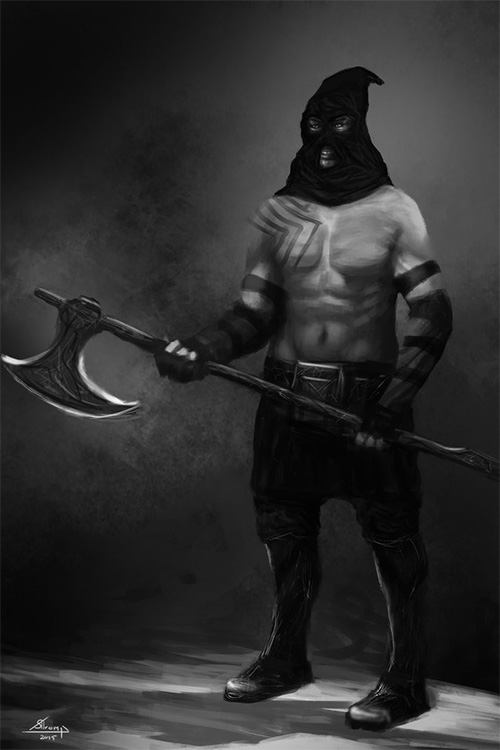
Executioners are often depicted shirtless, wearing a hood that completely covers their upper bodies.
On the day of an execution, one or more people would be killed. There were days when they had to work continuously, without rest, to 'meet the deadline' as required by the authorities. It is estimated that during the reign of King Henry VIII in England, there were as many as 72,000 executions, forcing the executioners to work diligently and at high productivity.
I had to follow the profession because I was carrying on the family business.
Becoming an executioner is sometimes not voluntary, but mostly compulsory. They enter the profession because they are appointed or assigned by the authorities. In some cases, the condemned person is offered the role of executioner instead of dying.
However, most executioners entered the profession as a family heir , a hereditary career passed down from father to son. Many young men were forced to follow in their father's footsteps and abandon their own dreams. Therefore, the concept of 'family executions' emerged in Europe during that period .
Being discriminated against and ostracized by the community.
Because of the nature of their work, which involves death and public executions, executioners instilled fear and avoidance in many people. According to ancient beliefs, executioners were messengers of hell, often carrying negative energy, and their appearance signaled the approach of death.
Therefore, the executioners' guild, controlled by the government, were rarely invited to people's homes, were not allowed to attend church, lived in remote areas far from residential areas, and some schools even refused to teach the children of executioners.
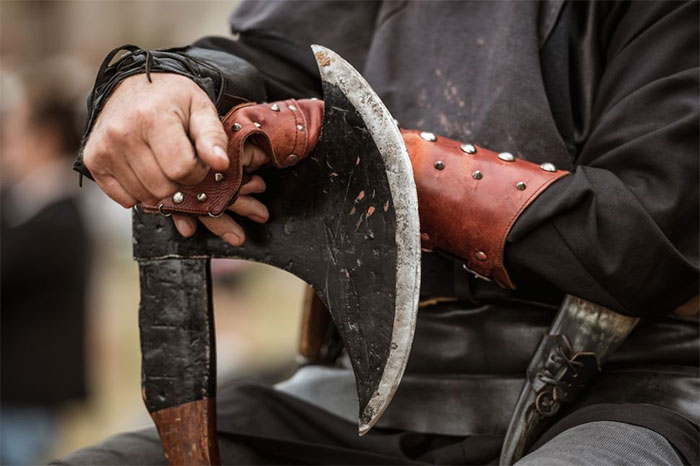
The government's butchers' guild is not usually invited to people's homes.
In social relationships, they had few choices, so they often associated and collaborated with elements of the underworld such as prostitutes, gangsters, and lepers. This, in turn, increased the stigma and hatred of the community towards executioners.
To encourage executioners to maintain and pursue their profession, medieval authorities enacted policies that benefited them. These included generous salaries, exemptions from many taxes, allocation of land and housing, and the right to obtain free food at markets or shops.
No mistakes are allowed.
Before becoming an executioner, a man had to undergo rigorous training and acquire a high level of expertise. They were trained from the beginning of their careers, regularly practicing chopping with axes or swords, and studying anatomy and the Bible.
When carrying out executions, executioners were required to make no mistakes. They had to perform the beheading smoothly and successfully. In some regions, executioners were limited to three beheadings per execution. Failure would be considered incompetent and cruel, resulting in a brutal punishment. They would be imprisoned or dismissed by the authorities, or even lose their lives, dying in place of the condemned.
It's not just about killing.
Executioners didn't simply behead or kill criminals; they also performed countless other tasks such as providing medical care, acting as shamans in rituals, or participating in the sentencing of criminals.
Historical records indicate that a relatively high percentage of executioners were literate. They possessed a basic understanding of biology and the human body. Some were even invited to people's homes to treat illnesses due to their medical knowledge.
Additionally, they would replace priests in reciting prayers or confessions for prisoners. Sometimes they were also invited by the authorities to participate in sentencing cases because of their knowledge of the law and the executive mechanisms of the dynasty.
He is not a cruel, heartless, cold-blooded brute.

They often enter the profession under duress, mostly following in their family's footsteps.
People often assume that executioners are heartless individuals, ready to wield their knives and kill on command. In reality, they always carry their own private sorrows that not everyone can empathize with or understand. They often enter the profession under duress, primarily following in their family's footsteps. They are psychologically haunted, sometimes even falling into depression.
Executioners and prisoners sometimes became close. Before carrying out the execution, some executioners cared for and treated the prisoner, ensuring their health. They also fulfilled the condemned's requests, such as allowing them to meet with family to say goodbye, or praying and reading the Bible to ask for forgiveness so that the prisoner could go to heaven.
Executioners, after all, are human beings with thoughts and feelings. They simply accept the tough, intimidating appearance and the heavy atmosphere of a job that involves killing in order to maintain public order and enforce the nation's laws.