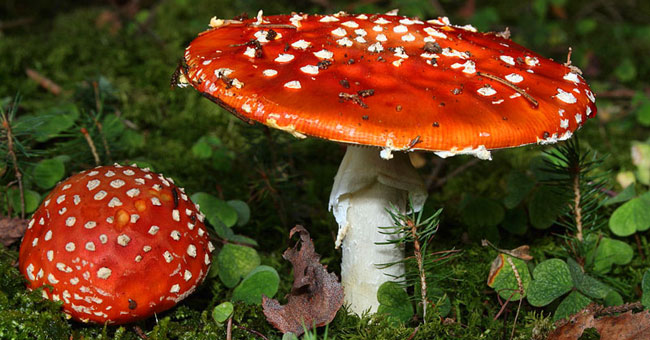
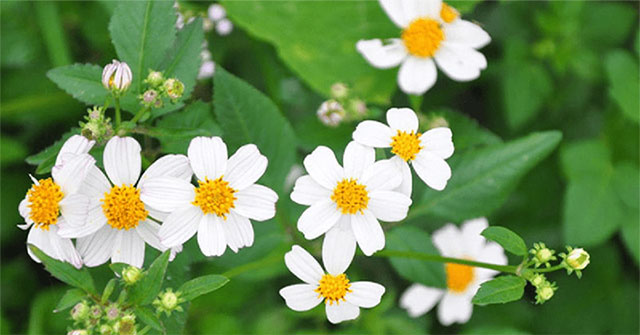
Medically, we classify poisonous mushrooms according to the toxic components they contain or the duration of their effects. Mushroom poisoning can occur when a forager mistakenly identifies a poisonous species as edible, although many cases are intentional ingestion. Mushroom poisoning can range from benign symptoms of general gastrointestinal upset to potentially devastating manifestations including liver failure, kidney failure, and neurological sequelae.
Most poisonings present with only gastrointestinal symptoms, which are common to a number of toxins and are likely to occur when small amounts of poisonous mushrooms are ingested.
Common poisonous mushroom groups
In Vietnam, the 4 most common groups of extremely poisonous mushrooms are:
Mushrooms contain amatoxins.
White umbrella mushroom (amanita verna) : This amatoxin-containing mushroom often grows in clusters or singly on the ground in forests.
White cone mushroom (amanita virosa): Regarding the cap, this type of mushroom has a pure white color, a smooth surface, and a round, egg-shaped head when young, tightly attached to the stem. When mature, the cap is flat with a diameter of about 5-10 cm (white umbrella mushroom) or conical with a diameter of 4-10 cm (cone mushroom).
The underside of the cap (gill) is white. The stem is white, the upper part of the stem is membranous, close to the cap, the base of the stem is bulbous and has a calyx-shaped base sheath.
The mushroom flesh is soft, white, has a mild aroma (white umbrella mushroom), and an unpleasant odor (cone-shaped poisonous mushroom).
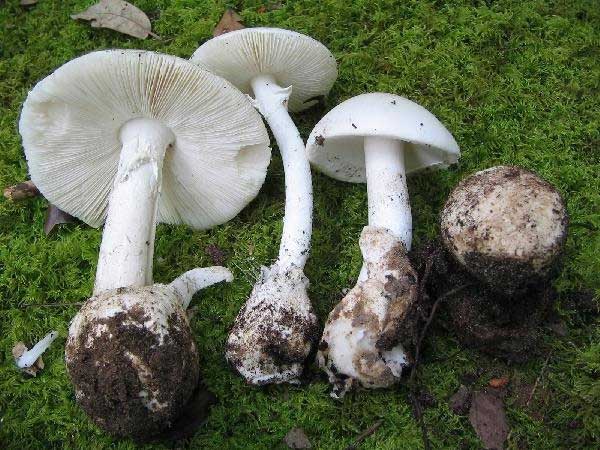
White parasol mushrooms contain highly toxic amanitin (amatoxin) that can be fatal if eaten by mistake. (Photo: Mundodeportivo).
This mushroom's main toxin is amanitin (amatoxin), which is highly toxic and affects cell cytoplasm, causing cell destruction, especially liver cells, causing acute liver failure.
Symptoms of poisoning often appear late (from 6 to 24 hours) such as abdominal pain, vomiting, diarrhea, jaundice, bleeding, little urine, coma. Treatment should be carried out as soon as possible to reduce the risk of death.
Poisonous mushrooms containing muscarine (grey-brown ribbed cap mushrooms)
Poisonous mushrooms containing muscarine usually grow on the ground in forests or places with a lot of rotting leaves. This type of mushroom has a conical to bell-shaped cap, pointed at the top, with yellow to brown filaments radiating from the top to the edge of the cap. When old, the edge of the cap is split into separate rays. The diameter of the mushroom cap is 2-8 cm.
Young mushroom gills are slightly white, tightly attached to the stem, when old they are gray or brown, separate from the stem.
The mushroom stem is white to yellow-brown in color, 3-9 cm long, the base is not bulbous, and there is no stem ring. The mushroom flesh is white.
The main toxin of this mushroom is muscarine, which affects the parasympathetic nervous system, causing symptoms such as sweating, difficulty breathing, wheezing, slow pulse, coma, and convulsions. Symptoms appear early (from 15 minutes to a few hours), and the disease heals after 1-2 days, and death is rare.
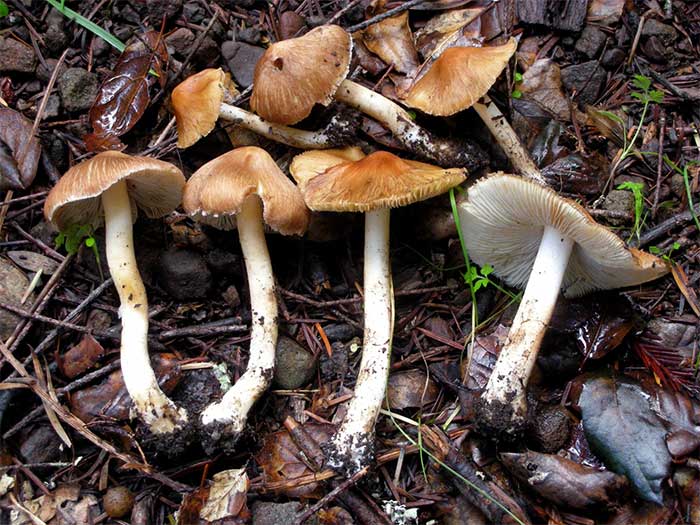
Grayish brown ribbed cap mushroom. (Photo: urbanmushrooms.squarespace).
Poisonous mushrooms contain toxins that cause digestive disorders.
White umbrella mushroom with green gills grows in clusters or singly on the edges of cow and buffalo barns, on lawns, corn fields and some other places.
The cap of this mushroom when young is long and hemispherical, pale yellow, with small light brown or light gray scales. When mature, the cap is umbrella-shaped or flat, white, 5-15 cm in diameter. The surface of the cap has thin dirty brown scales that thicken towards the top of the cap.
The gills are white when young, pale green or grey-green when old, the green color is more obvious as the mushroom gets older. The stem is white to brown or grey, with a ring at the upper part close to the cap, the stem base is not bulbous and has no sheath, the stem is 10-30 cm long. The mushroom flesh is white.
This mushroom belongs to the group of toxins that stimulate the gastrointestinal tract. The poison acts quickly, causing nausea, vomiting, abdominal pain, cramps and diarrhea. Symptoms appear early after eating from 20 minutes to 4 hours and gradually decrease over 2-3 days.
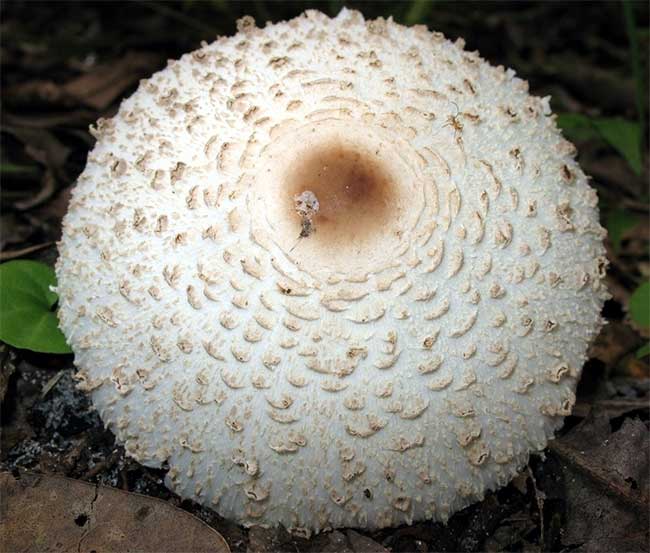
The green-gilled white umbrella mushroom grows in clusters or singly on the edges of cow and buffalo pens, on lawns, corn fields and some other places. (Photo: Baonghean).
Magic mushrooms or psilocybin mushrooms
The main toxins of mushrooms are psilocybin and psilocin, which cause mental disorders (hallucinations, emotional disorders, irritability). Symptoms appear early (one hour after eating) and disappear after 12-24 hours.
Magic mushrooms often grow in places with cow dung, rotten grass or rotten wood. The mushroom cap is 1-2 cm in diameter, yellowish brown (when dry it turns straw-colored), conical, covered with a layer of clear mucus. The young mushroom gills are white, when old they have a light green or gray-green tint, the older the mushroom the more obvious the green color. The mushroom stem is very long, fragile, the color is like the mushroom cap, sometimes turning green or blue. The mushroom flesh is light brown, has a light smell, and a bland taste.
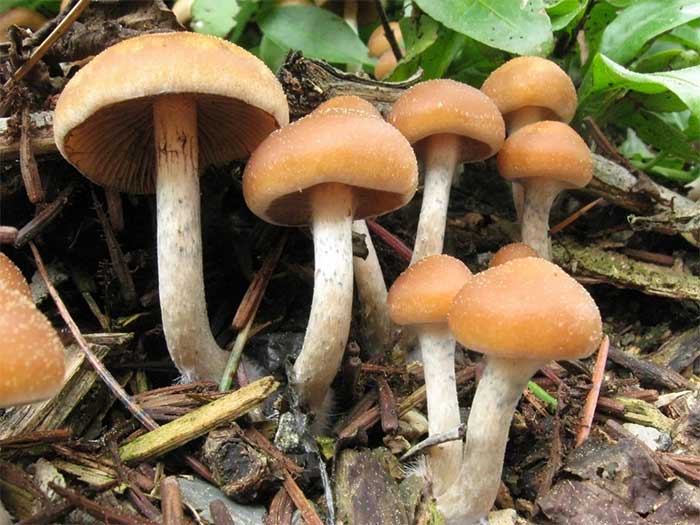
Magic mushrooms often grow in places with cow dung, rotten grass or rotten wood. (Photo: Abq.news).
How to prevent mushroom poisoning?
According to Poison Control doctors, people should not pick wild mushrooms to eat. Besides, we also need to refute some of the following misconceptions:
- Poisonous mushrooms are often brightly colored: This is false. For example, the mushrooms that often cause death in the northern provinces of our country are pure white mushrooms ( white poisonous umbrella mushrooms and white poisonous cone mushrooms ).
- Try feeding the mushroom to an animal first, if it doesn't die, it's not poisonous: This is only true for some mushrooms and animals. Many animals are not sensitive to amatoxins through the digestive tract. Furthermore, mushrooms with amatoxins that are deadly to humans take an average of 12 hours to show the first symptoms after eating the mushroom, and animals usually die on the 5th-7th day after eating the mushroom.
Thus, mushroom poisoning cases affect the health and life of patients. Health education and prevention are the most important things. People should not arbitrarily pick mushrooms to eat and when symptoms appear, they should be hospitalized promptly for timely treatment to avoid unnecessary losses.