Nature has always fascinated people with many extraordinary events. There are some amazing natural phenomena that occur so rarely that we can only see them once in a lifetime. What interesting things will happen on Earth in the next 100 years?
Rare astronomical phenomena will happen soon in the future
1. October 14, 2023: Ring of Fire
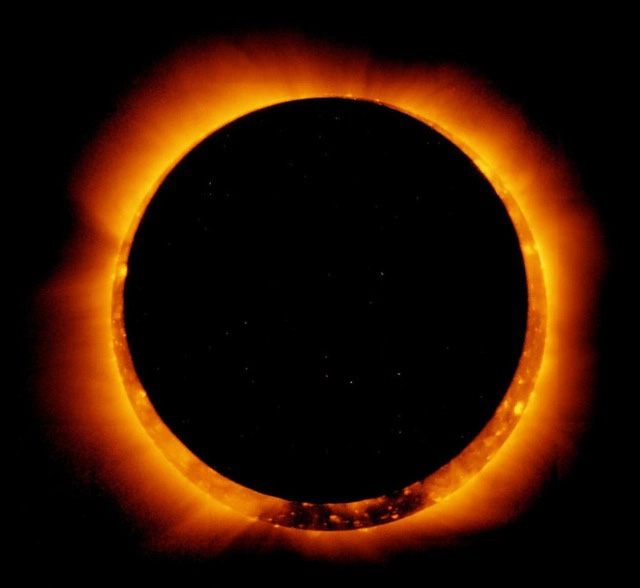
This is an annular solar eclipse that occurs when the moon passes between the sun and Earth, but the moon is too far away from Earth to completely cover the sun. That's why the moon appears smaller than the sun and doesn't completely cover the sun. Nearly all of North America will be able to see this partial solar eclipse, known as the "Ring of Fire."
2. April 13, 2029: Asteroid Apophis will pass by Earth
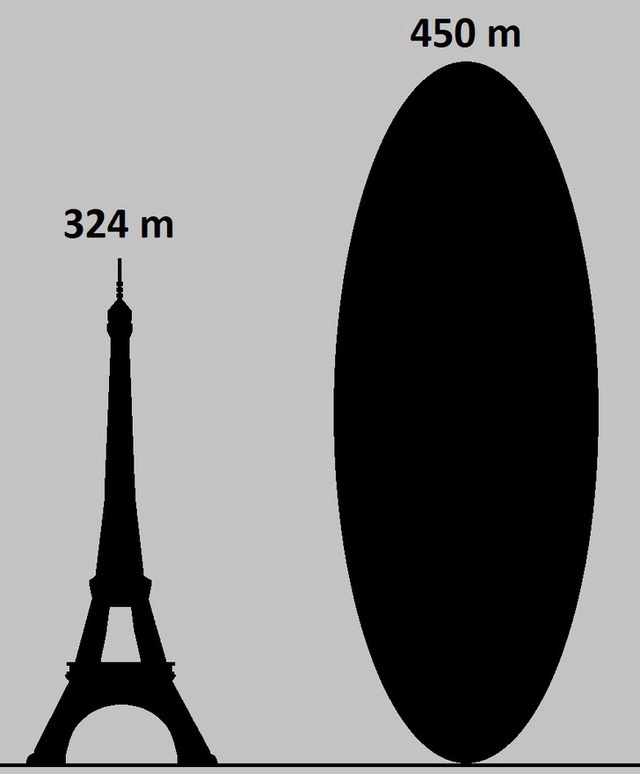
Our universe is filled with asteroids, ranging from small pebbles to giant mountain-like boulders. Apophis was discovered in 2004. It was identified as a potentially hazardous asteroid that could impact Earth because of its large size. Apophis is about 369 meters in diameter, slightly taller than the Eiffel Tower.
On April 13, 2029, the asteroid will come within a few feet of our planet's surface, less than 32,000 kilometers (20,000 miles). People on the ground in the Eastern Hemisphere will be able to see Apophis without the aid of a telescope or binoculars. But if for some reason you miss it, don't worry, in 2068, Apophis will return and fly close to Earth again.
3. June 26, 2029: Darkest Lunar Eclipse of the Century
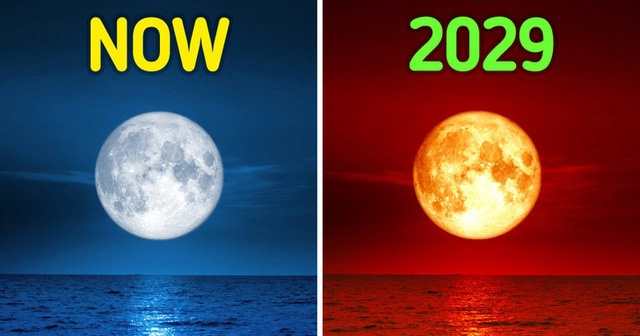
A lunar eclipse occurs when the Moon passes completely into the Earth's shadow. On June 26, 2029, scientists say we will witness one of the darkest lunar eclipses in hundreds of years. The event will last about 1 hour and 42 minutes.
When this happens, the Moon turns bright red and looks scary, so the phenomenon is called a 'Blood Moon'. The simple reason is because the red rays are passing through our atmosphere, giving it that color. This event will be best viewed in South America.
4. September 8, 2040: Parade of the Planets
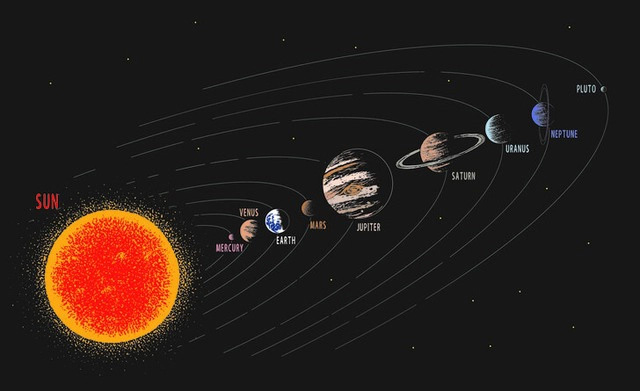
The Parade of Planets is a rare event when all the planets in our solar system line up. In 2040, according to NASA, we will be able to see with the naked eye a group consisting of Mercury, Venus, Mars, Jupiter, Saturn and the Moon standing in a straight line.
5. December 6, 2052: Brightest Supermoon of the Century
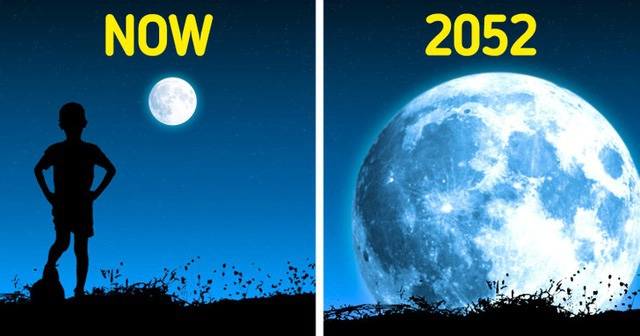
The Moon's orbit around Earth is egg-shaped, not circular. So there are two times during its orbit around Earth when the planet is closer to us or farther away. And because the size of the Moon's orbit changes slightly over time, its closest point each month isn't always the same distance from Earth.
A supermoon is when a full moon is very close to us. It gets its name because the moon appears much larger and up to 30% brighter than usual. In 2052, it will be the closest and brightest supermoon of the century. Our moon will be 17,000 miles closer to Earth than usual.
6. March 24, 2100: The North Star will be closest to its north pole.
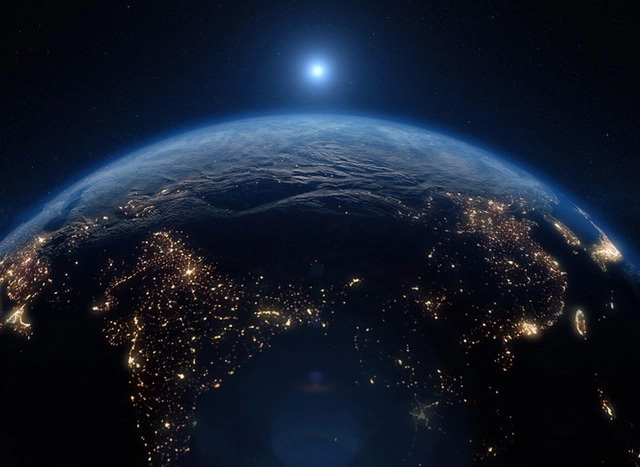
The North Star is famous for being the first compass for sailors for centuries, helping to point north. But, ironically, the star doesn't align exactly with north.
Our planet does not have a fixed axis because the Earth moves through space over time, spinning like a giant buoy. So the North Star does not lie exactly on the Earth's axis of rotation, but instead circles the sky each night. The arc is so small that humans cannot see it.
However, on March 24, 2100, the North Star will finally appear above our planet's true north. After that, it will begin to slowly move away and will not return again for another 26,000 years. So this is a very rare event indeed.