Many people might think that tungsten is the substance with the highest melting point on our planet, but that is not the case at all.
The amount of light and heat the Sun radiates every second is beyond our imagination. The average surface temperature of the Sun is about 5,500 degrees Celsius and the temperature at its core is as high as 15 million degrees Celsius.
In reality, we have not yet been able to get close to the Sun and have never set foot on its surface, so this temperature data is estimated by analyzing the Sun's radiation.
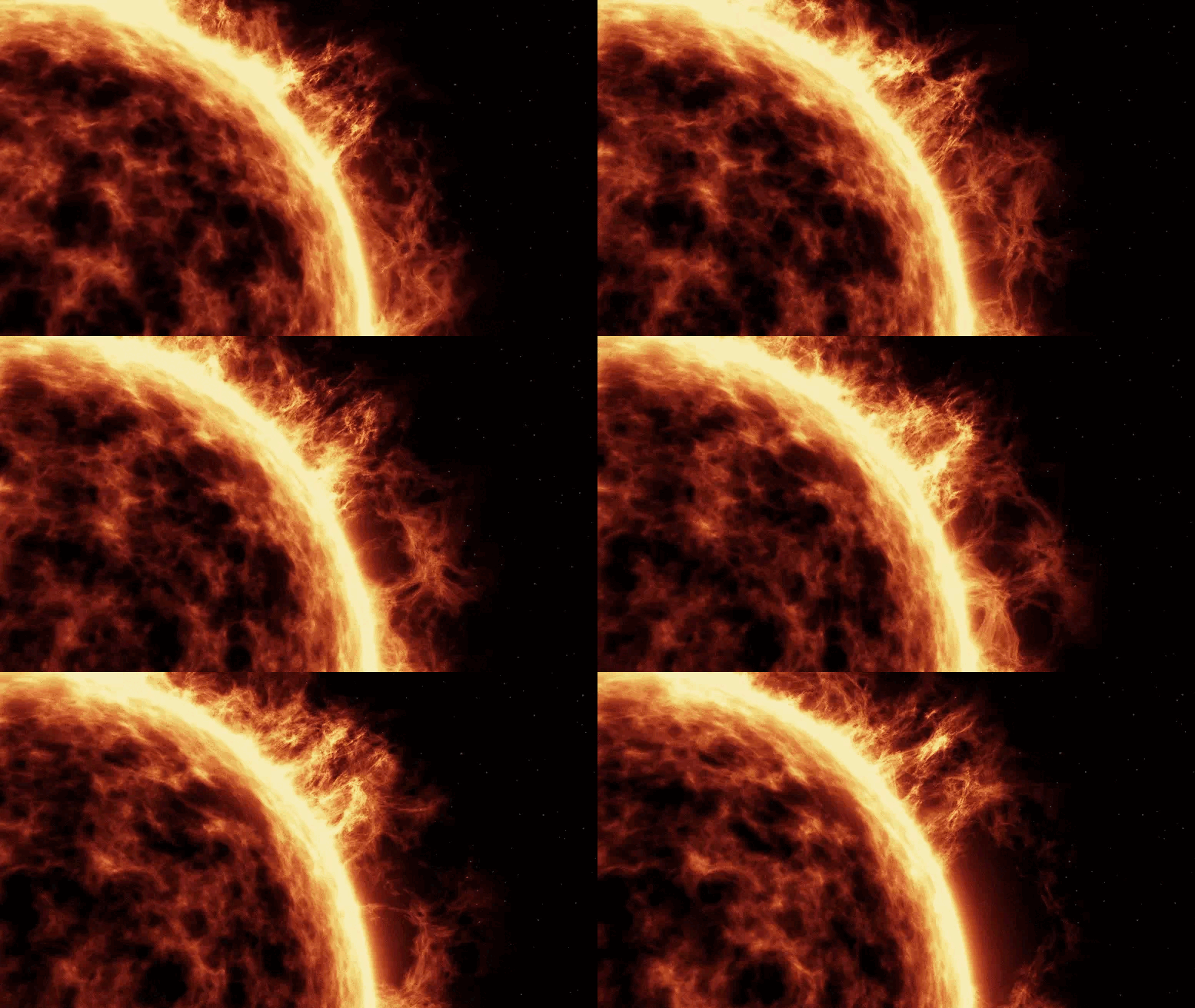
The surface temperature of the Sun is about 5,537 degrees Celsius, while the temperature inside the Sun's core reaches about 15 million degrees Celsius.
On Earth, temperatures as high as 400 to 500 degrees Celsius are enough to burn forests, temperatures over 1,500 degrees Celsius are enough to melt steel, and temperatures as high as 5,500 degrees Celsius can melt almost anything on our planet.
In general, nothing on Earth can withstand the high temperature of the Sun's surface. If the Earth gets too close to the Sun, the rocks on the Earth's surface will be melted by the high temperature and become magma. Regardless of whether it is a simple substance or a compound, any matter that falls to the Sun's surface will be instantly turned into plasma, and the original molecular and atomic forms will no longer exist. In fact, the Sun is a giant plasma fireball.
In the minds of many, the melting point of metals is very high and tungsten is the substance with the highest melting point on our planet. The melting point of tungsten is only 3,410 degrees Celsius.
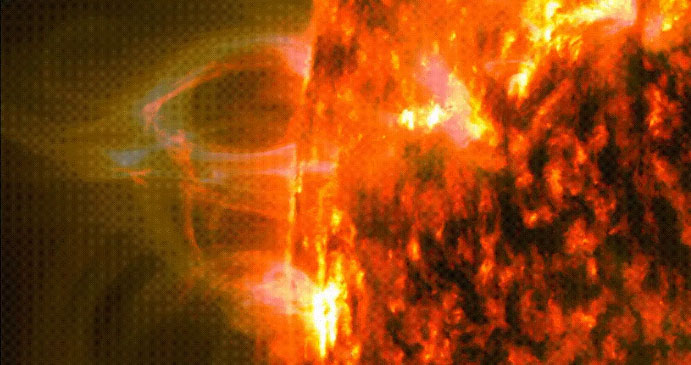
The Sun's temperature can melt everything in the world. We boil water at about 100 degrees Celsius. Ironworkers smelt iron, the temperature in the furnace exceeds 1,000 degrees Celsius. The Sun's temperature is much higher than the temperature in the furnace.
However, tungsten is not the substance with the highest melting point on Earth, it is just the elemental metal with the highest melting point. The non-metallic element with the highest melting point on Earth is graphite , its melting point is higher than tungsten, reaching 3,850 degrees Celsius, but still much lower than the temperature on the surface of the Sun.
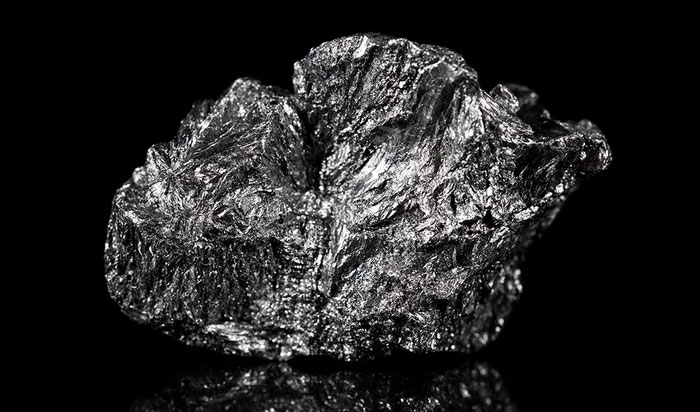
The non-metallic element with the highest melting point on Earth is graphite.
Currently, the substance with the highest melting point on Earth is a synthetic hafnium alloy - tetratantalum hafnium pentacarbide (Ta 4 HfC 5 ), which has a melting point as high as 4,215 degrees Celsius . But this is still 1,000 degrees lower than the temperature on the surface of the Sun, and it still cannot withstand the high temperatures on the surface of the Sun.
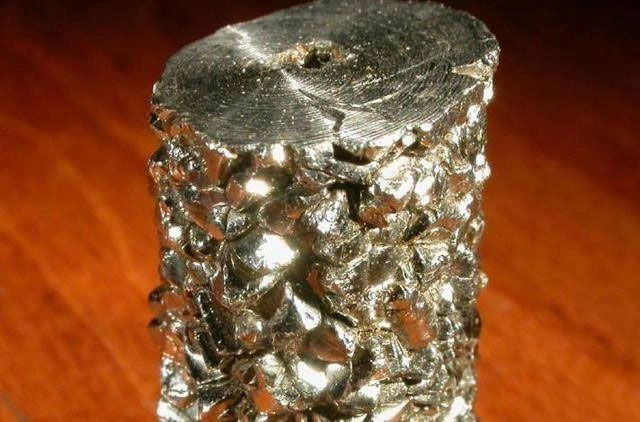
Tantalum hafnium carbide is a refractory chemical compound with the general formula Taₓ Hfy-x Cy, which can be regarded as a solid solution of tantalum carbide and hafnium carbide.
According to scientists' estimates, the deeper into the Earth, the higher the temperature, the temperature at the Earth's core is even as high as 6,000 degrees Celsius, higher than the temperature on the surface of the Sun. But the iron core at the Earth's core can still be in a solid state, why is that?
The temperature in the Earth's core is so high that iron can remain solid because of the pressure , the pressure in the Earth's core is 3.5 million times the atmospheric pressure on the Earth's surface. It is under such extreme conditions that the melting point of a substance will undergo a drastic change.
But it is a mistake to compare melting points in this way, since we usually talk about the melting points of substances under standard atmospheric pressure.
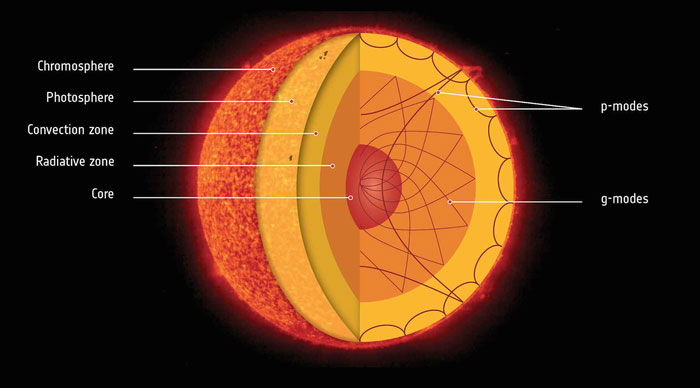
The temperature at the Earth's core is even higher than the temperature at the surface of the Sun.
Scientists are currently researching a miniature artificial Sun in the laboratory, the temperature required for the reaction can reach 100 million degrees, so what substances are stored in this miniature Sun?
In fact, scientists "store" the nuclear fusion fuel of the artificial mini-Sun through a strong magnetic field and a tokamak - a device that uses extremely strong magnetic fields to hold hot plasma in a torus-shaped object. At high temperatures of hundreds of millions of degrees, matter will exist in the form of plasma, the charged particles will be affected by the Lorentz force in the magnetic field, so of course they can be controlled by the magnetic field.
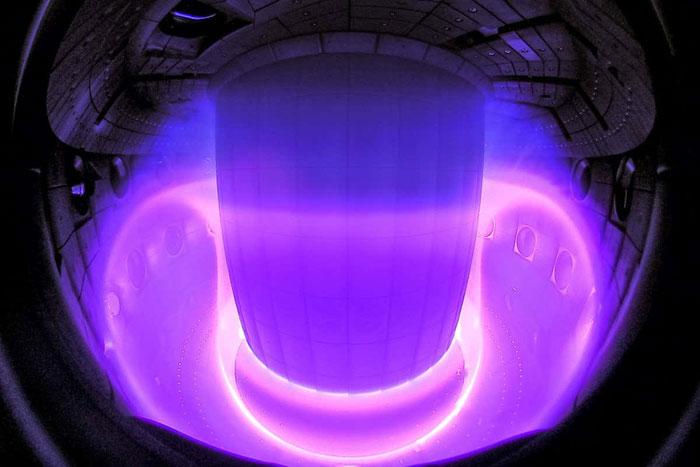
A tokamak is a device that uses a powerful magnetic field to confine hot plasma within a torus-shaped object. A tokamak is one of several types of magnetic confinement devices being researched for the production of energy through controlled fusion reactions.
The sun relies on nuclear fusion to produce light and heat, and research on artificial mini-suns is one step toward achieving controllable nuclear fusion, which can yield near-eternal energy. Because of the force that light can exert on matter, scientists have used lasers to bind nuclear fuel.
Normally, what we call matter is made up of matter particles such as quarks, protons and atoms. In a broad sense, magnetic fields also belong to matter. Magnetic matter is invisible and intangible, but it really exists, it is an invisible substance and usually only they can withstand infinitely high temperatures.
The Sun's high temperature is mainly transmitted through thermal radiation. Mirrors can reflect light, so a mirror with a reflectivity of 100% and the ability to reflect electromagnetic waves in all bands can be completely insulated. But in reality, that is completely impossible because there is no such mirror in the world.
