The Moon is the Earth's only natural satellite. In fact, the Moon orbits the Earth at a steady speed of about 1km/s.
However, if the Moon moves closer to Earth, the gravitational pull from our planet will increase . This will also cause the Moon to speed up a lot.
As it continues to move closer to Earth, the Moon will orbit faster and faster.
The Moon currently completes a full orbit around Earth every 27 days. This would no longer be true if the Moon were closer to the blue planet. Additionally, with the Moon's increased visibility and speed, lunar eclipses would become a regular sight.
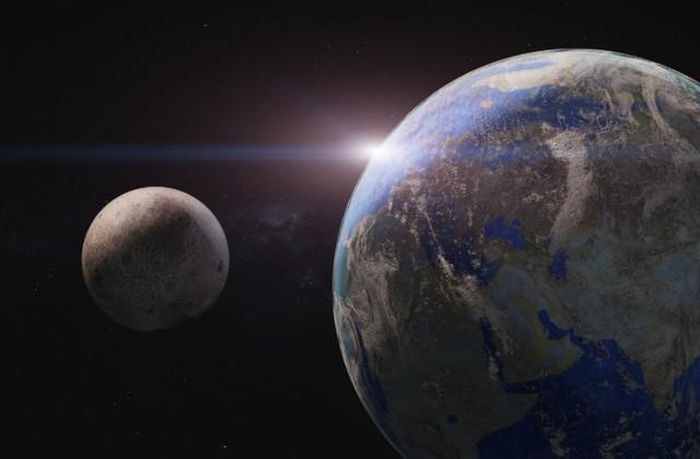
The moon has an intimate relationship with the Earth. (Photo: Shutterstock).
But that view in the sky wouldn't make up for the hell on Earth. If the Moon moved closer, its gravity would tear apart the Earth's crust. This increased gravity would cause earthquakes and volcanic eruptions across the globe.
What's more, the oceans rise and fall thanks to the Moon's orbit and the gravitational pull of the Earth and the Sun. So when the Moon gets closer to Earth, ocean tides become much larger. Specifically, they can be up to eight times higher than average.
Coastal cities would also be flooded. Some islands would be underwater for most of the day. In particular, the nearly 700 million people living in low-lying coastal areas would be at constant risk unless they were evacuated in time.
What would happen if the Moon started moving faster?
According to Kepler's third law, the Moon will only orbit faster as it gets closer to Earth. If the Moon gets to about 11,000 miles from Earth, it will reach a tidal limit. That's the point at which the Moon is so close to Earth that tidal forces are strong enough to tear the body apart.
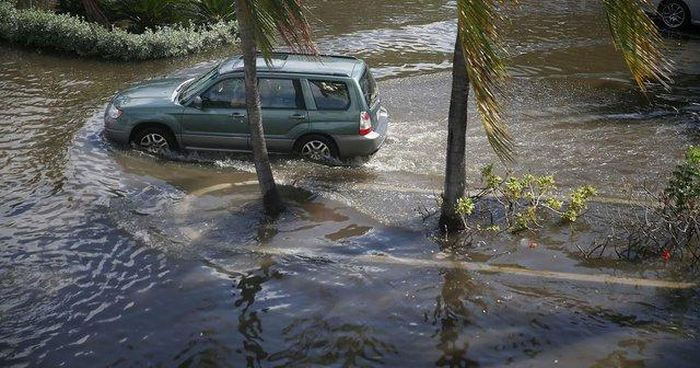
If the Moon comes closer to Earth, it could cause many disasters. (Photo: CBS News).
Fortunately, this cannot happen, according to scientists . The reason is that when the speed increases, the Moon will be thrown into space . Because once the Earth's satellite reaches a speed of 1.4 km/s, it will have enough momentum to escape the Earth's gravity.
Without the Moon, the Earth's rotation would slow down. As a result, days would become longer. Earthquakes and floods would also occur more frequently. Tides would also become smaller and weaker without the Moon.
Additionally, any coastal ecosystems that have not been destroyed by massive flooding will now be completely inactive.
Thus, without rising tides, animals that depend on food sources that normally float in the ocean would not receive the nutrients they need to survive.
In particular, without the light of the Moon, nocturnal predators would have difficulty completing their hunts. This could also create a mass extinction event of both land and sea creatures.
The Earth is currently tilted at about 23.5 degrees Celsius , an orbital angle that makes the seasons possible. It is the Moon's gravity that keeps this tilt stable and from tilting further.
On the other hand, if the tilt increases, it could cause extreme weather conditions. The Earth could even fall into an ice age again. Therefore, the faster rotation of the Moon could cause all life on the blue planet to quickly become extinct.
How far is the moon from Earth?
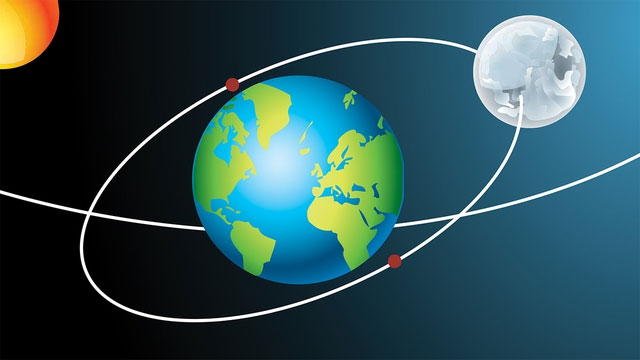
The moon currently orbits the Earth every 27.3 days. (Photo: NSTA).
The Moon has a close relationship with Earth and is believed to have formed about 4.5 billion years ago. Currently, the Moon orbits the Earth every 27.3 days, and is moving away from the blue planet at a rate of 3.8 cm per year.
The Moon's distance from Earth affects the intensity of tides and the occurrence of eclipses.
In fact, according to NASA, the average distance between the Earth and the Moon is 384,400 km. The Moon orbits the Earth in an oval-shaped orbit. Therefore, there are places on the Moon's path that are either closer or farther away from the Earth.
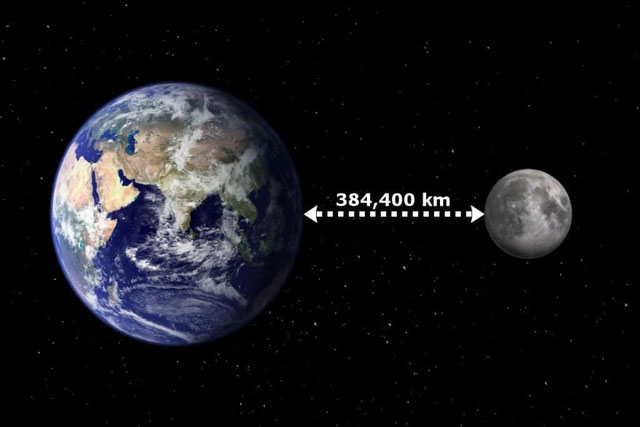
The average distance from the Moon to Earth is 384,400km. (Photo: nineplanets).
Specifically, when the Moon moves to its closest position to Earth (also known as perigee ), the distance will be about 363,300 km. The size of the Moon when viewed from Earth will also be larger.
When this perigee coincides with a full moon, the Moon appears much brighter and larger when viewed from Earth. This phenomenon is called a supermoon.
According to experts, when the supermoon phenomenon occurs, the Moon will be 30% brighter and 17% larger than the Moon at its farthest distance from Earth in its orbit.
The Moon's gravity affects Earth's oceans to create tides, so the Moon's closer proximity to the planet can also cause higher-than-usual tides.
Conversely, when the Moon is at its farthest distance from Earth (called apogee ), the distance will be 405,500km.
In 1959, the Soviet Union carried out the first mission to the Moon, with the flight of the artificial satellite Luna 1. The Soviet Union then continued to launch Luna 2, which landed on the surface of the Moon, and Luna 3, which provided the first images of the back side of the planet.
In particular, from 1961 to 1972, NASA carried out the Apollo space exploration program, sending 12 people to the Moon via many spacecraft. The Apollo program is considered one of the largest-scale efforts in American history, with the participation of tens of thousands of NASA employees.
