The laws in ancient China were extremely strict, and there was even a special Ministry of Punishment responsible for carrying out punishments. When talking about the brutal and inhumane punishments of ancient times, we cannot help but think of: beheading, being torn apart by five horses, being slowly slicing. but these types of torture were not the most tragic.
Tru di cuu ton is probably a very familiar punishment because it appears in ancient Chinese palace dramas, when someone insults royal power, rebels and does things against the Emperor.
Origin of the Tru di punishment
The Tru di penalty is usually applied to the most serious crimes, including: "treasonous collusion" (treason, colluding with the enemy), "lying to the king, insulting the royal family", "secretly plotting rebellion" (plotting rebellion, treason), "traitorous death" (heavy crime).
This punishment was intended to eliminate future troubles, eradicate the influence of criminals and their relatives, and at the same time consolidate the supreme authority of the Emperor. The main methods of execution in Tru di were by slow slicing or public beheading.
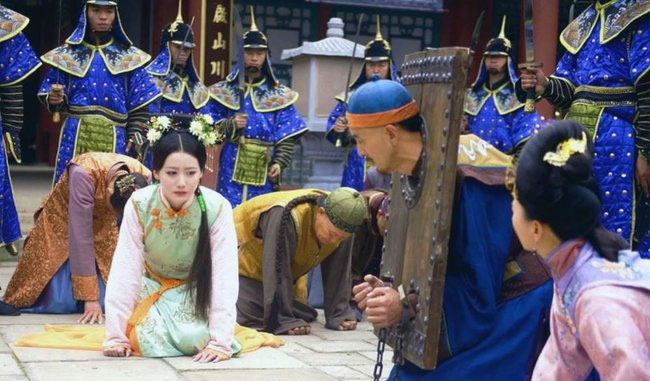
The death penalty is usually applied for the most serious crimes.
The Tru di punishment is said to have originated during the Shang Dynasty in Chinese history. At that time, this punishment was called Nhi Dien, executing criminals along with their children.
During the Qin Dynasty , the punishment of extermination became more severe under Qin Shi Huang, being extended to the scope of "three clans", "five clans", and "seven clans". During the Han Dynasty , although the punishment of extermination was still inherited, it was more moderate. In many cases, the emperor would withdraw the sentence, and so exterminations were much rarer than during the Qin Dynasty.
However, at the end of the Eastern Han Dynasty , executions occurred more frequently as the power of the emperors largely fell into the hands of powerful ministers, notably the two executions of Dong Zhuo and Dong Cheng ordered by powerful ministers Wang Yun and Cao Cao.
The punishment of extermination was extended to the time of Emperor Yang of the Sui Dynasty. During the Tang Dynasty , the punishment of extermination was only applied to those who conspired against the Emperor's rule, and the subjects of execution were parents, children over the age of sixteen, and other close relatives.
During the Ming Dynasty , exterminations became more frequent. The Qing Dynasty extermination punishment was a direct imitation of the Ming Dynasty regulations. This cruel punishment was only officially abolished in 1905, at the end of the Qing Dynasty .

This cruel punishment was only officially abolished in 1905.
There are many different theories about the definition of "three clans". One theory says that "three clans" are parents, siblings, wife and children. Another theory says that "three clans" are father, mother and wife. Another theory says that "three clans" are father, children and grandchildren.
"Nine clans" also have many different explanations, but until now people still consider 9 families according to the Zhou dynasty : Parents, brothers and sisters, sons and daughters; maternal aunts; children of sisters; grandchildren; maternal grandfather; maternal grandmother; paternal aunt; father-in-law; mother-in-law.
Times when the Tru di punishment was carried out shocked Chinese history
Many people think that Tru di cun cun toi is a common punishment because it is often mentioned in TV dramas, but in reality, very few people in history were actually Tru di cun cun cun toi. The most typical cases are the following two:

In fact, there are very few people who were actually executed throughout history.
The first was Yang Xuangan of the Sui Dynasty. He was born into a family of noble officials. His father, Yang Suo, was an official in the Sui Dynasty. He helped Emperor Yang of Sui gain the throne and suppress the rebellion of King Yang of Han, Yang Liang. He was a great contributor to the imperial court.
But after Yang Suo passed away, Yang Xuangan inherited the position and was promoted to the Ministry of Rites. At this time, Emperor Yang of Sui's suspicions became more and more serious, and Yang Xuangan also had the intention to disobey. Emperor Yang of Sui waged a second war with Goryeo, but he did not expect that the consequences would come from someone close to him.
Yang Xuangan took this opportunity to rebel, but underestimated Emperor Yang of Sui. Emperor Yang was fighting with all his might on the front lines, so he was forced to return to the capital and quickly suppress Yang Xuangan's rebellion. After capturing Yang Xuangan, Emperor Yang hated him immensely and tortured him in every way possible.
At the same time, Emperor Yang of Sui punished Yang Xuangan's nine clans and changed his surname to "Kieu" as a punishment, because "Kieu" in hieroglyphics represents the image of a person being beheaded and then displayed on a tree.
The second person to be executed by the nine clans was Fang Xiaoru, a high-ranking official in the early Ming Dynasty. However, Fang Xiaoru was not executed by the nine clans, but by the ten clans, implicating ten branches of his family.
After the Jingnan Campaign (a civil war in the early years of the Ming Dynasty between Zhu Yunwen and his uncle, the Prince of Yan, Zhu Di), the Prince of Yan, Zhu Di, took over Nanjing, with Fang Xiaoru as the head of the group of ministers. Zhu Di also tried his best to use all means to get Fang Xiaoru to side with him, using threats and enticements.
But Phuong Hieu Nhu was stubborn and unyielding. In the end, Chu De became very angry and said to Phuong Hieu Nhu: "Aren't you afraid that I will exterminate your entire family?".
Phuong Hieu Nhu: "Even if you kill ten clans, I am not afraid." Chu De was furious, so he massacred 10 clans of Phuong Hieu Nhu's family.
Why don't prisoners' relatives run away?
Countless people in the house were implicated, so why didn't they run away? In fact, it wasn't that people didn't want to run away, it was that they were 'lazy' and didn't dare to run.
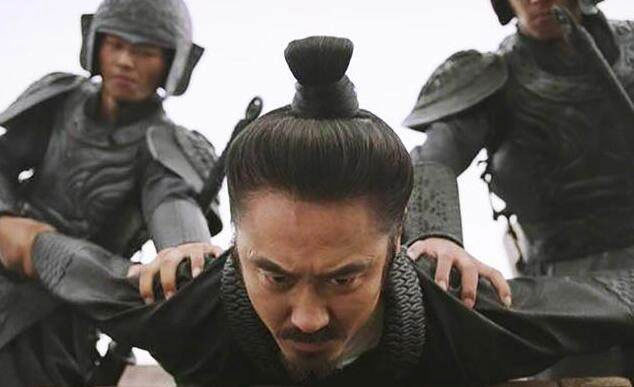
Therefore, many people are simply too lazy to escape, and even if they wanted to, they wouldn't dare.
One is inconvenient transportation. In ancient times, transportation was backward and travel was very inconvenient, so "the net of heaven is vast, although sparse, it is difficult to escape", no matter where you run, it is difficult to escape the court's pursuit net.
Second, there was nowhere to go . The household registration system in ancient times was quite complete. Therefore, it was very difficult to move from one place to another without a pass. Entering and exiting the city gates had to go through many layers of inspection. Even if one accidentally escaped from the city, it would be difficult to survive elsewhere.
Third, he wanted to die. Even if he escaped, his family members had been sentenced to death. What was the use of staying in this world alone?
Furthermore, the ancient Chinese were influenced by the idea that 'The King wants his subjects to die, and the subjects cannot help but die'. In feudal society, where power was everywhere, instead of thinking about the impossible escape, it was better to find a way to be forgiven by the Emperor, thereby escaping the danger of death.