Japanese train punctuality arises from a cultural emphasis on time, advanced technology, rigorous training, and meticulous planning.
Japan's railway system has long been a symbol of punctuality and efficiency. Its trains, especially the Shinkansen - also known as the "bullet train" - are famous for their near-perfect accuracy. The average delay of trains is measured in seconds, an impressive record that few countries can match. So what has helped Japan maintain this feat for so many decades?
The answer lies in the perfect combination of advanced technology, development history, punctual culture and strict personnel training .

Shinkansen train with absolute precision.
The History of Japan's Punctuality
Japan's railway system is not only a product of modernization, but also closely linked to the country's history of development since the late 19th century. During the Meiji Restoration, Japan began a process of extensive modernization, including the adoption of Western time measurement standards. Previously, the Japanese used traditional methods such as incense clocks or uneven division of day and night to measure time.
The introduction of mechanical clocks and the standardization of time paved the way for the modern railway system. The first railway line, opened in 1872, was the beginning of a network that has grown at an astonishing rate. Over its 140-year history, Japan has steadily improved its infrastructure and accumulated experience to make its railway system a global model.

Japan's railway system has been closely linked to the country's history since the late 19th century.
Advanced Technology: The Key to Precision
Japan has always been at the forefront of applying technology to railway management and operation. One of the important breakthroughs was the implementation of the Autonomous Decentralized Traffic Operation Control System (ATOS) in 1972. ATOS helps synchronize train schedules, minimize delays and increase operational flexibility.
In addition to ATOS, the Japanese railway industry also uses the Computerized Operation and Safety Management System (COSMOS) , which was specifically designed for the Shinkansen. COSMOS not only ensures absolute safety, but also closely monitors maintenance and operation activities, helping bullet trains maintain their reputation for punctuality.
Furthermore, advanced monitoring systems combine automation and human intervention. This ensures that technology and human resources complement each other, resulting in optimal efficiency.
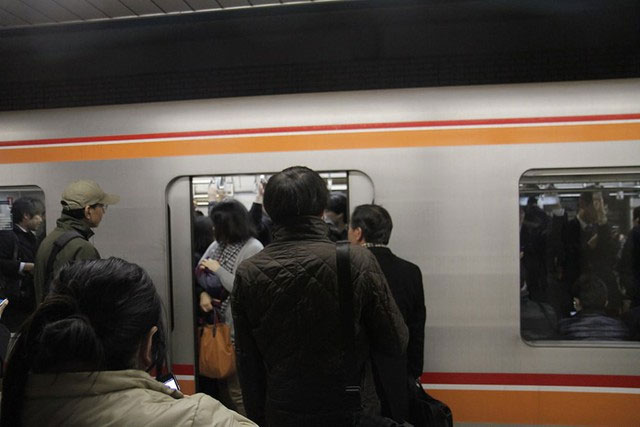
Punctuality is not just a habit but has become a core value in Japanese thinking.
Punctuality Culture: Foundation from Collective Thinking
Not only relying on technology, Japanese culture also plays an important role in maintaining the accuracy of the railway system . Punctuality is not just a habit but has become a core value in Japanese thinking. From work to daily life, Japanese people always attach importance to observing time as a way of respecting others.
This stems from the collectivist mentality that characterizes Japanese society, where individuals are expected to contribute to the common good of the community. In particular , the 'uncertainty avoidance' mindset makes Japanese people tend to plan and adhere to schedules strictly.
Furthermore, due to its high population density and frequent exposure to geological phenomena such as earthquakes, Japan has developed a strong culture of order and discipline . This culture not only helps maintain stability in society, but also ensures that railway operations run smoothly.
Rigorous training and safety commitment
Another factor that contributes to the success of the Japanese railway system is the professionalism of its staff . Train operators, drivers and station staff all undergo rigorous training to meet high standards of punctuality and safety.
One prominent training method is the 'point and call' (shisa kanko) technique , in which employees perform specific actions accompanied by verbal confirmation of tasks. This method has been shown to significantly reduce workplace errors, improve accuracy, and ensure operational safety.
Furthermore, the dedication of Japanese railway employees is also demonstrated through a high sense of responsibility. They always prioritize completing tasks with the best quality, regardless of the circumstances.
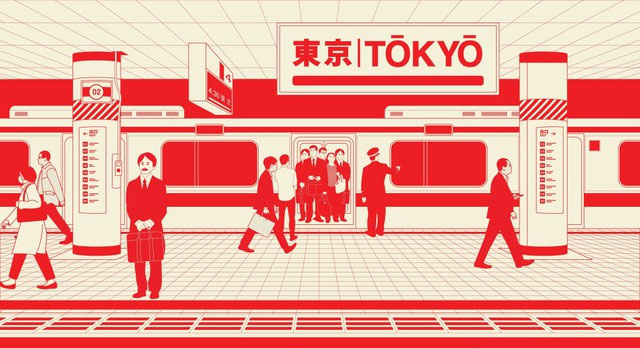
Train operators, drivers and station staff all undergo rigorous training.
The success of Japan's railway system is a testament to the harmonious combination of history, technology, culture and people. Even in the face of challenges such as natural disasters, Japanese trains have maintained a high level of reliability, with average delays measured in seconds.
The system serves not only as a means of transportation but also as a reflection of the nation's identity: an emphasis on precision, order and mutual respect. In a world where time is increasingly a precious commodity, Japan has proven that a commitment to punctuality can make a big difference.
While it is true that not every country can completely copy the Japanese model, principles such as focusing on technology, rigorous training and prioritizing punctuality are still valuable lessons for countries that want to improve their public transport systems.
Japan doesn't just run trains, it runs a legacy of punctuality that is a global symbol of efficiency and reliability.