In the vast desert, there is a mysterious creature that arouses many curiosity. It has a slender body and agile limbs, and is endowed with perfect intelligence to blend in with this boundless golden sand. The most shocking thing is that this mysterious desert cat eats poisonous snakes to survive.
The desert cat is a small cat that lives in harsh desert environments. Despite the challenges of the desert's harsh climate and lack of food sources, this cat has a unique evolutionary adaptation strategy - eating venomous snakes.
Desert cats are smaller than other cats, which makes them more agile and agile. In a complex and harsh environment like the desert, agility is the key to survival. Venomous snakes are generally fast and aggressive animals, but desert cats use their body to maintain an advantage when chasing venomous snakes.
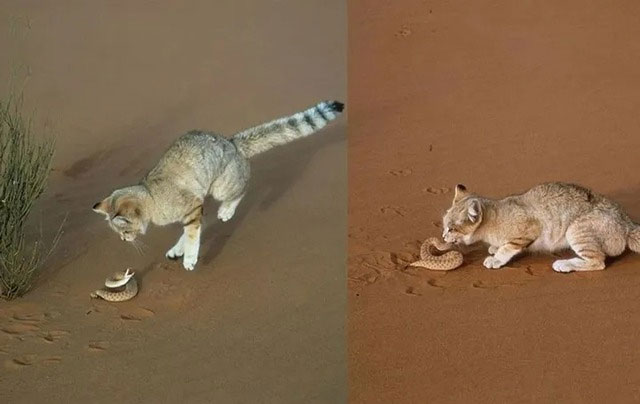
Their flexible body structure and skills allow them to successfully hunt venomous snakes.
At the same time, desert cats also have immune and physiological properties against venomous snakes, allowing them to safely obtain food. This adaptive evolutionary strategy allows desert cats to survive in the harsh desert environment and ensures their ability to survive and reproduce.
Desert cats are highly adaptable in their choice of food . Since food sources in the desert are limited, desert cats must find suitable food sources for their survival. And venomous snakes happen to be one of the common foods in the desert. Despite the deadly venom of venomous snakes, desert cats have gradually developed immunity to them due to living with them for a long time. They have adapted a special ability to resist venom, allowing them to hunt venomous snakes safely.
Desert cats also possess excellent skills and strategies. They specialize in hunting and ambushing prey in the desert environment. For venomous snakes, precision attacks are very important. Desert cats can accurately identify the head of a venomous snake and kill it with lightning speed. This precise attack strategy reduces the risk of a venomous snake counterattack and ensures that the desert cat can successfully obtain its food.
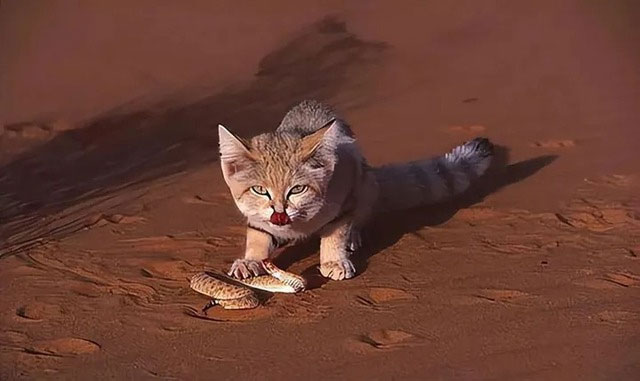
Desert cats live in hot, dry desert areas where food is scarce . In such a harsh environment, desert cats have gradually developed their own unique way of survival. Venomous snakes, although threatening, are one of the abundant foods that desert cats can hunt. Compared to other prey, venomous snakes are easier for desert cats to catch, which is one of the reasons why desert cats choose to eat venomous snakes.
In addition to evolutionary adaptations, desert cats also exhibit other physiological traits related to eating venomous snakes. For example, their scaly skin protects them from being punctured by venomous snakes' teeth. Their teeth are also relatively strong, allowing them to bite into venomous snakes and quickly render them defenseless.
The reason why desert cats eat venomous snakes is not only an evolutionary adaptation but also related to the number and distribution of venomous snakes in the desert. Desert areas often lack other large prey for desert cats to hunt, and venomous snakes are relatively common in this environment. Desert cats make efficient use of this resource by choosing venomous snakes as their main food source.
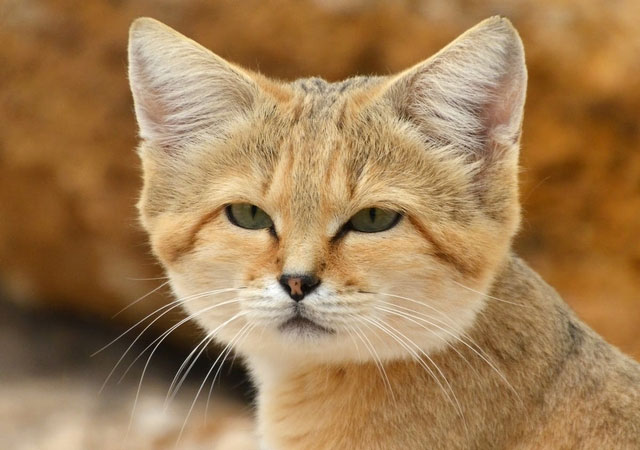
Because food is scarce, desert cats have to endure prolonged periods of hunger. The desert cat's body is adapted to this environment. They can survive for days, even weeks, without food. This is because desert cats have a special metabolic mechanism in their body that helps them conserve energy better . Desert cats also have a smaller body size and a lower metabolic rate, which makes them require less energy. This high hunger tolerance allows desert cats to survive in resource-poor desert areas.
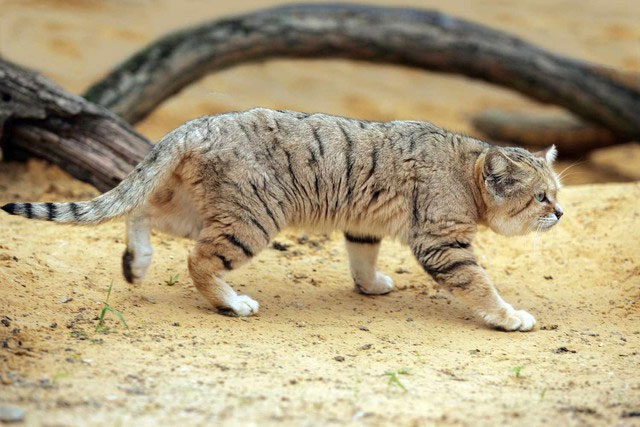
Desert cats do not only eat venomous snakes. Their diet also includes other small mammals, reptiles, and insects. These foods, while not as plentiful as venomous snakes, can still provide the necessary nutrients for desert cats. Desert cats are not very picky eaters and can adapt to a wide variety of foods and get the energy and nutrients they need.
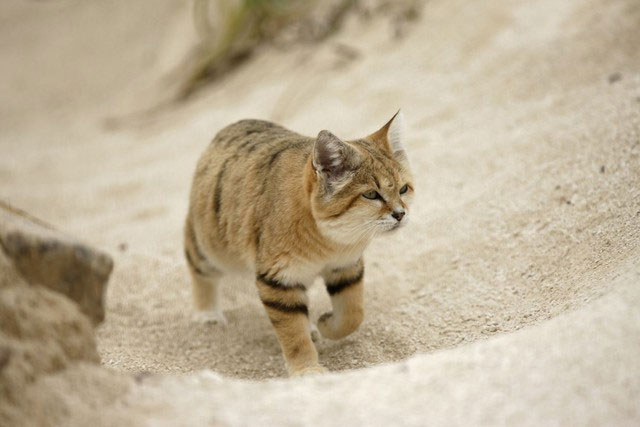
Desert cats have very strong teeth and jaws. Their teeth are so sharp that they can easily bite the heads of venomous snakes. Furthermore, their jaw structure is very strong and can withstand the pressure of a venomous snake bite. This strong tooth and jaw structure allows desert cats to hunt venomous snakes without harming themselves.
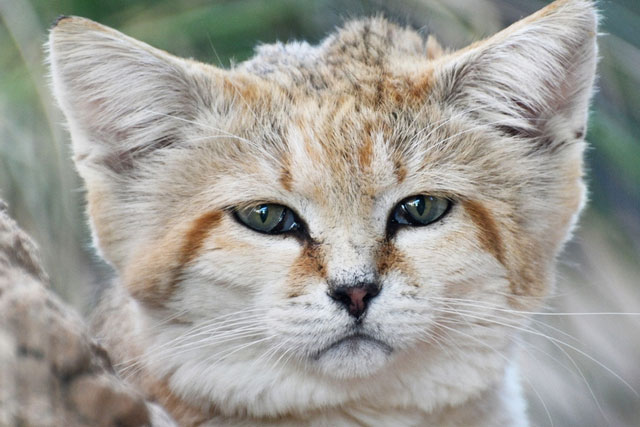
Because venomous snakes contain enzymes that are fatal to normal animals, desert cats secrete a special enzyme before eating venomous snakes. This enzyme can quickly neutralize the enzyme in venomous snakes and render it inactive. The desert cat's digestive system then kicks in, breaking down the venomous snake's body into nutrients. Desert cats contain a special antibody in their bodies that can bind to venomous snakes and reduce damage to body tissues. This powerful immune system allows desert cats to safely eat venomous snakes.
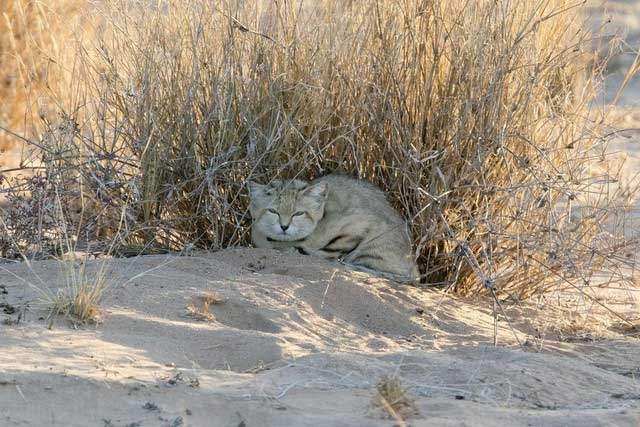
Desert cats possess great speed and agility. When hunting venomous snakes, desert cats use their claws and flexible bodies to quickly climb to places that venomous snakes cannot reach. At the same time, desert cats have excellent running ability and can chase venomous snakes in the desert. This speed and agility allows desert cats to catch venomous snakes without fear of retaliation.