When dogs are going to the toilet, they often look at us intently and scientists have found the answer to this action .
This action does not mean that your dog is angry or about to attack someone else, it is just a normal reflex of its.
Dogs have lived with humans for centuries and over time, they have learned to use a variety of signals to read human emotions from analyzing their owners' tone of voice to their facial expressions and scent.
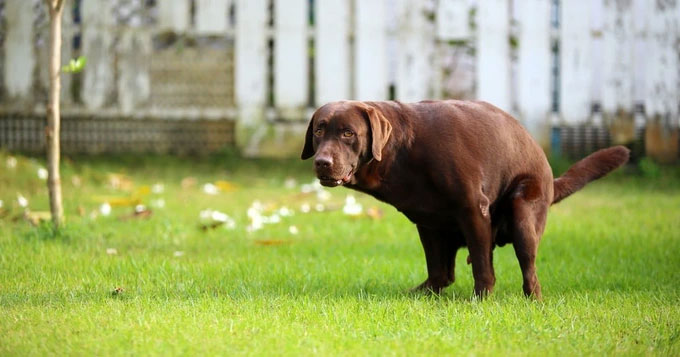
In fact, dogs watch humans quite attentively, even quietly peeking at us (Illustration: Science ABC).
Basically, it's just trying to figure out how you feel.
Desire to communicate
Dogs cannot talk, but on a human level, they can communicate with other dogs.
But it's different for humans. Luckily, it has figured out a few "tricks" after centuries of living with us.
Typically, when dogs are hungry, they will look at us quite attentively, often sitting where you feed them, or in the kitchen.
Likewise, when they want their owner's attention, they will do adorable things like nudging you with their nose.
"If you teach your dog and give them verbal rewards or treats, they will probably stare at you every time they complete the tasks you ask them to do, because they are eagerly anticipating your praise or reward," says Stephanie Gibeault, a professional dog trainer.
Defensive move
Dogs are social creatures, their ancestors were wolves in the wild which lived in packs.
Modern dogs still have that mentality. For them, their owners or family members are part of their pack.
Why is that important?
Because being in a pack will give dogs a sense of security.
Animals that live together, whether in large or small groups, have the added benefit of always having a designated number of members to watch for danger.
This keeps them safe and gives all their kind a better chance of survival.
It is especially useful in dangerous situations when some animals in the group may be caught off guard.
For example, most ambush predators, such as crocodiles or tigers, stalk their prey when they do not expect to be attacked by others.
In both cases, there are always some members of the pack keeping watch for predators lurking nearby.
The same idea applies to modern dogs.
Dr. Jo Anna Pendergrass, a veterinarian at PetMD, a US-based online pet health agency, agrees that when dogs need to relieve themselves, whether indoors or outdoors, they are acutely aware that they are in a vulnerable position and essentially trust their owners to watch out for potential threats in their environment.
So they will stare at you.