To keep the roofs of the palaces in the Forbidden City clean and free from bird droppings, the ancients devised a very clever method.
The Forbidden City in Beijing is a magnificent palace complex, holding the history of China through the ages. It is currently used as China's most famous tourist attraction (the Palace Museum).
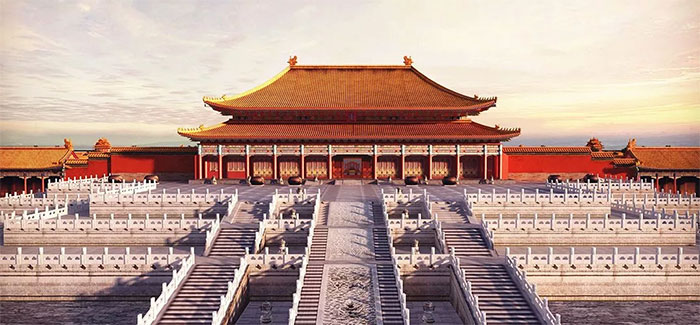
The Forbidden City, despite having existed for over 600 years, still looks as magnificent as new. (Photo: Sohu)
The Forbidden City was built during the Ming Dynasty and completed after 13 years. Even after more than 600 years, the Forbidden City still retains its majestic and magnificent beauty, enduring through time.
The Forbidden City spans 720,000 square meters and comprises 800 palaces of varying sizes. As you can see, the Forbidden City is an incredibly vast complex with many fascinating attractions. The Forbidden City is surrounded by numerous legends, one of which is that despite being over 600 years old, the roofs of the rooms and palaces are completely free of bird droppings or weeds. What is the reason behind this?
Many scientists and architects participated in researching this topic. The results of the study were published in the 'China Science and Technology Daily' . According to the study, there are three main reasons why birds cannot defecate on the roofs of the Forbidden City.
The color of the roof

Viewed from above, the roofs of the palaces are all a beautiful golden color. (Photo: Sohu)
The roofs of the palaces in the Forbidden City are all yellow. According to ancient beliefs, yellow glazed tiles and red walls were symbols of the imperial family.
However, this yellow color dazzles the birds and reduces their ability to see. Therefore, they will not swoop down onto the roof.
The roof tiles are made of a special material.
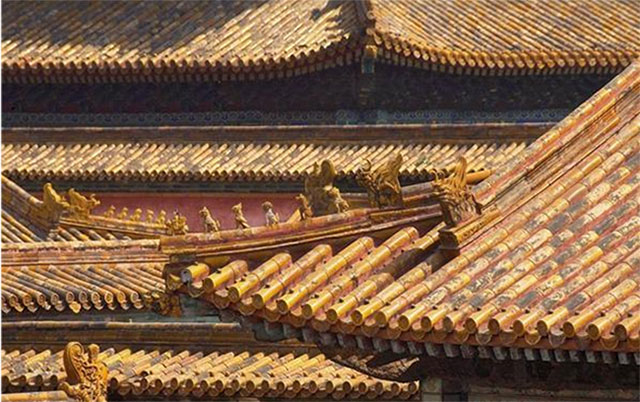
The roof tiles are all glazed and arranged to prevent birds from perching for too long. (Photo: Sohu)
According to staff at the Palace Museum, the use of glazed tiles also helps to deter birds from perching on the roof. Glazed tiles reflect sunlight, making birds uncomfortable and unwilling to approach.
The firing process for this type of tile is very complex, involving material selection, design, molding, bisque firing, etc. Going through 36 processes, the finished tiles are very smooth.
In fact, in China there is a type of architecture called 'Oanh bất lạc tưởng đỉnh' , meaning birds cannot perch on the peak. This design mainly focuses on the slope; the width of each brick is greater than the distance between the toes of all bird species, making it impossible for them to perch for too long or build nests.
This type of construction is very effective in limiting birds from perching and defecating on the roof.
Similarly, if a seed were to fall onto the roof of the Forbidden City, it would either roll down quickly due to the tiles or be washed away by heavy rain. Therefore, it would have no chance to sprout and grow.
Regular cleaning
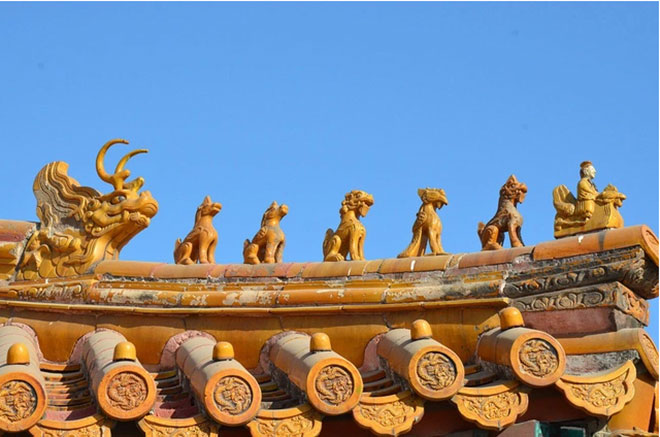
The roofs of the buildings within the Forbidden City are regularly cleaned and repaired. (Photo: Sohu)
During the feudal era, the palace typically had a dedicated department responsible for building and repairing the palace . These were skilled craftsmen selected from across the country.
This team of workers will renovate the Forbidden City every three years, and after five years they will replace the eaves and rafters in the major structures.
In addition, they also had to regularly clean and maintain the palaces and areas within the imperial palace. Today, staff at the Palace Museum still regularly clean the roofs of the palaces and buildings. Therefore, the roofs of the palaces in the Forbidden City are always clean and beautiful.
- Why are there no trees in the Three Great Halls of the Forbidden City?
- Unveiling the secrets behind the construction of the Forbidden City.
- Unraveling the mystery of the imperial palace's secluded quarters in the Forbidden City.