In Egyptian mythology, there are many gods, the residents here believe that everything in heaven and earth is governed by the gods. Therefore, temples of the gods are everywhere, with the hope of receiving the gods' blessings for favorable weather and bountiful crops.
Famous Egyptian Gods
1. Amun - The Supreme God

Amun was an important god throughout Egyptian history.
Like Zeus, the supreme god in ancient Greek mythology, Amun-Ra, also known as Amon, is considered the king of the gods and is also the most worshiped of the 10 gods of ancient Egypt. Accordingly, Amun, along with Mut and his son Khonsu (God of the Moon), are the three most worshiped gods in ancient Egypt. Amun is an important god throughout Egyptian history. He is one of the most powerful gods of the ancient world with the appearance of a man wearing a crown with a long feather tip. This god is praised as the 'King of the Gods', bringing luck, justice and protection to his people. Therefore, Amun became a guardian god, worshiped by people in the Nile basin.
This is one of the most powerful gods of the ancient Egyptian world, with the appearance of a man holding a hammer and wearing a long crown. During the time of the most prosperous Nile civilization, Amun was called the 'King of the Gods' , bringing luck, justice and protection to travelers. When combined with the sun god Ra to form Amun-Ra, this god became even more powerful. In Thebes, the famous Karnak temple complex has a large and important temple of Amun.
2. Mut - Mother Goddess
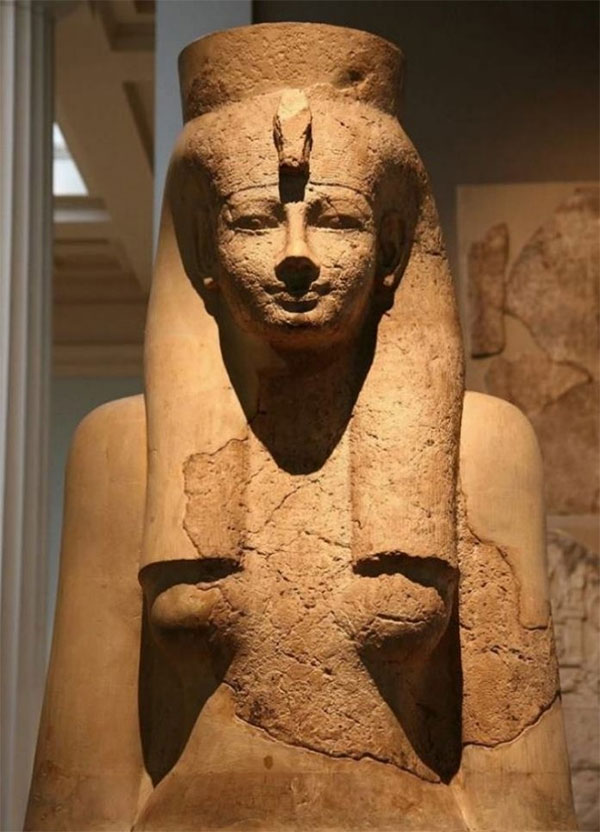
She was one of the eight supreme Ogdoad deities and consort of Amun.
Mut, which means 'Mother' in Egyptian, is a primordial deity of ancient Egypt and is known as the mother of goddesses and various aspects of the culture that has changed over the millennia. She is depicted wearing two crowns on her head, representing Upper and Lower Egypt. And in hieroglyphs, Mut is depicted as a vulture or a cat or a snake. She is one of the eight supreme Ogdoad deities and consort of Amun.
The goddess Mut replaced the image of Amaunet - a wife of Amun during the Middle Kingdom. After Amun became the chief deity, she became Queen of the gods during the New Kingdom. When Amun was united with the sun god Ra, Mut was given the title "Eye of Ra" (other goddesses such as Sekhmet, Hathor, Tefnut, Bastet and Wadjet also received this title). She also associated her power with many other goddesses such as Mut - Isis - Nekhbet, Mut - Wadjet (sometimes Sekhmet) - Bastet, or Mut- Sekhmet - Bastet - Menhit.
3. Osiris - King of Life
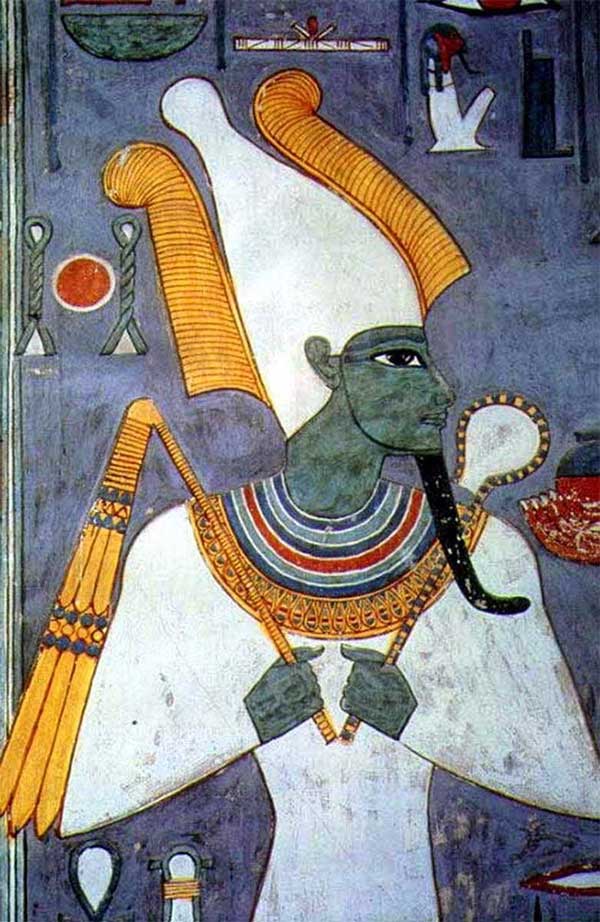
This is the god who rules the afterlife.
According to legend, Osiris was the eldest son of the Earth god Zeb and the Sky god Nut. He was the god of the underworld, as the ancient Egyptians believed there was life after death. He was depicted with green skin. He was also the protector of vegetation, all life, and the giver of the Nile River. Osiris was often depicted as a human mummy with white skin that could represent the mummy's body. In other depictions, he has black skin, a color associated with the gods of the underworld. Osiris was sometimes depicted wearing other crowns of complex form, but the Egyptian royal white crown or Atef crown (a white crown with ostrich feathers on each side and a disc at the top) is the most well known.
Osiris was a king who married his sister Isis. When he was murdered by his evil cousin Seth, Isis used magic to bring Osiris back to life and help her conceive and give birth to a son. This king's son Horus avenged his father's death by killing his evil uncle. Osiris' son then became king of Egypt while he became king of the dead and judge of the underworld. Each Egyptian pharaoh would be Osiris after death and Horus in life. Osiris was also the god of vegetation and was often painted green on his skin. It was a color that symbolized growth and renewal.
4. Anubis - God of embalming the gods
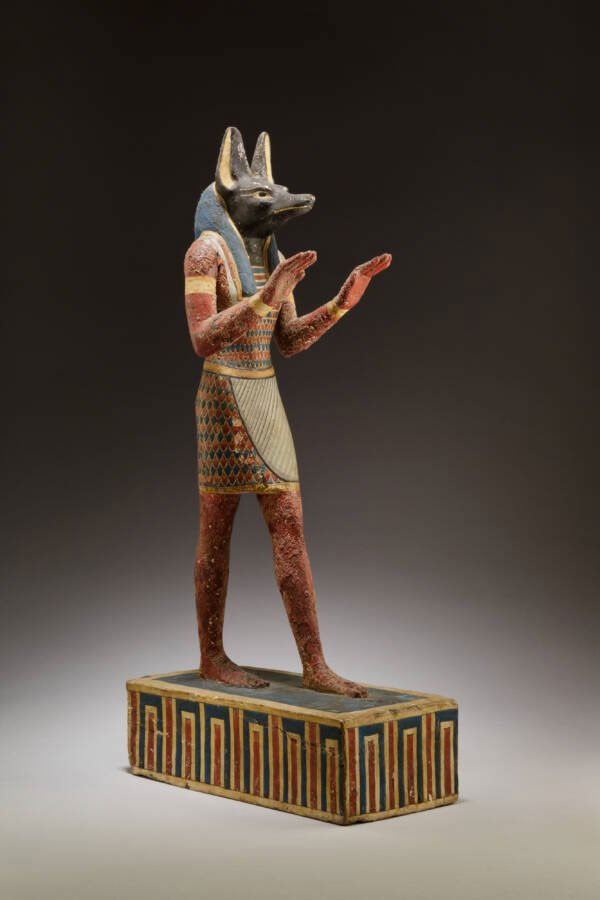
The symbolic image of Anubis probably originated from the wandering jackal.
All ancient civilizations worshiped a god of the dead. For ancient Egypt, that god was Anubis, who oversaw mummification and judged a person's soul's worthiness for the afterlife. Symbolized by a black dog or a muscular man with the head of a black jackal, the ancient Egyptian god of the dead was believed to oversee every aspect of the death process. He facilitated mummification, guarded the graves of the dead, and decided whether a soul should be granted eternal life.
The symbolism of Anubis probably originated from the wandering jackals that tended to dig up and scavenge newly buried corpses. His head was often black, reflecting the ancient Egyptians' association of the color with decay or the soil of the Nile Delta. Although we know a lot about Anubis today, some things remain a mystery. However, one thing is certain: Anubis, the Egyptian jackal god, played a central role in alleviating the ancient Egyptians' natural anxiety and fascination with what happens after we breathe our last breath.
5. Ra - God of the sun and light
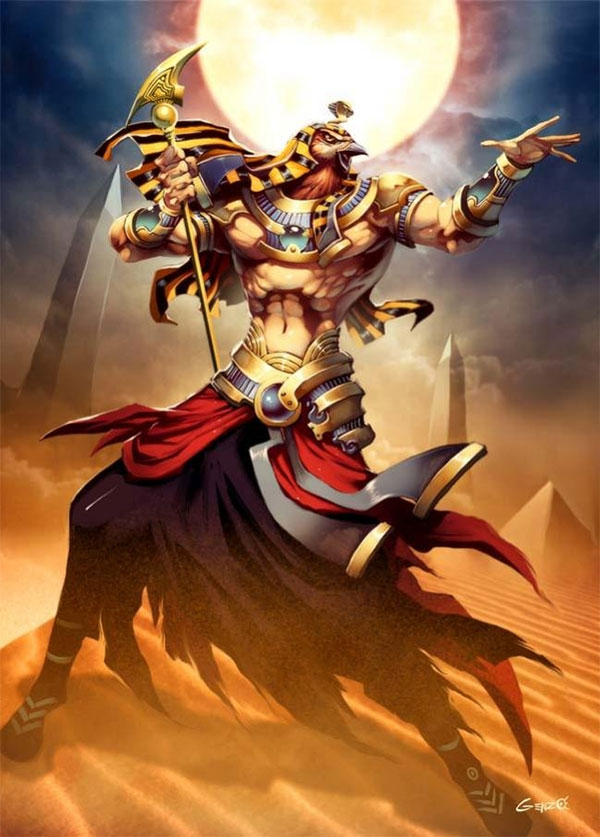
Ra was a very important part of the Egyptian pantheon.
Ra was a very important part of the Egyptian pantheon. It was said that he began his life on the small primordial mound that rose from the lake of Nun and began the work of creation. However, he was sometimes depicted as a boy emerging from a lotus flower. The Egyptians believed that the sun god was born once a day. In the morning, after bathing and eating breakfast, he would begin his journey across the sky in his boat, spending an hour each day inspecting one of his 12 regions. When the sun set, Ra was said to have entered the underworld until the next morning when he was reborn. During the night, this supreme god fought with his enemy, Apep, the terrible cosmic serpent of the underworld.
Ra had sons Shu, the god of wind, and Tefnut, the goddess of moisture. According to one myth, these two gods disappeared to travel the universe. When Ra finally found them, he was so happy that he cried. The first humans were created from these tears. Another story says that when Ra had become a long, old man, the goddess Isis decided to discover his secret name. She mixed clay with his saliva and molded it into a snake and placed it on the side of the great god's path. As Ra passed by, the snake bit him, injecting venom that made him cry out in pain. Isis would only heal him if he told her his true name. Ra was so heartbroken that he finally agreed to reveal his secret. Isis promised not to tell anyone what she knew except Horus, and healed Ra after reciting his name.
6. Horus - God of Revenge
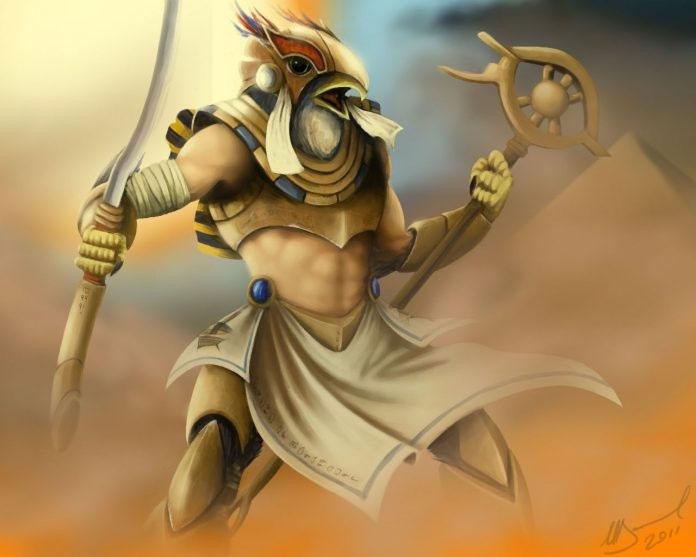
The god Horus represents health, life and rebirth.
Horus is the falcon-headed god of the sky, the son of Osiris and Iris. Therefore, he sees everything through the keen eyes of a falcon. Horus represents health, life, and rebirth. His right eye is white, representing the sun, and his left eye is black, representing the moon. Therefore, the Egyptians identified Horus' right eye with the sun god, Ra. His left eye with the moon god, Thoth.
The Eye of Ra is a symbol of conquest and defeat of enemies. This eye was also used to symbolize a number of Egyptian goddesses such as Mut, Bastet, Hathor, Wadjet and Sekhmet. Although considered a symbol of violence and destruction (like the heat of the sun), the Eye of Ra is also considered a symbol of protection. Therefore, it often appears on amulets and on house walls. In ancient times, this eye often appeared as a symbol of royal power.
7. Thoth - God of knowledge and wisdom
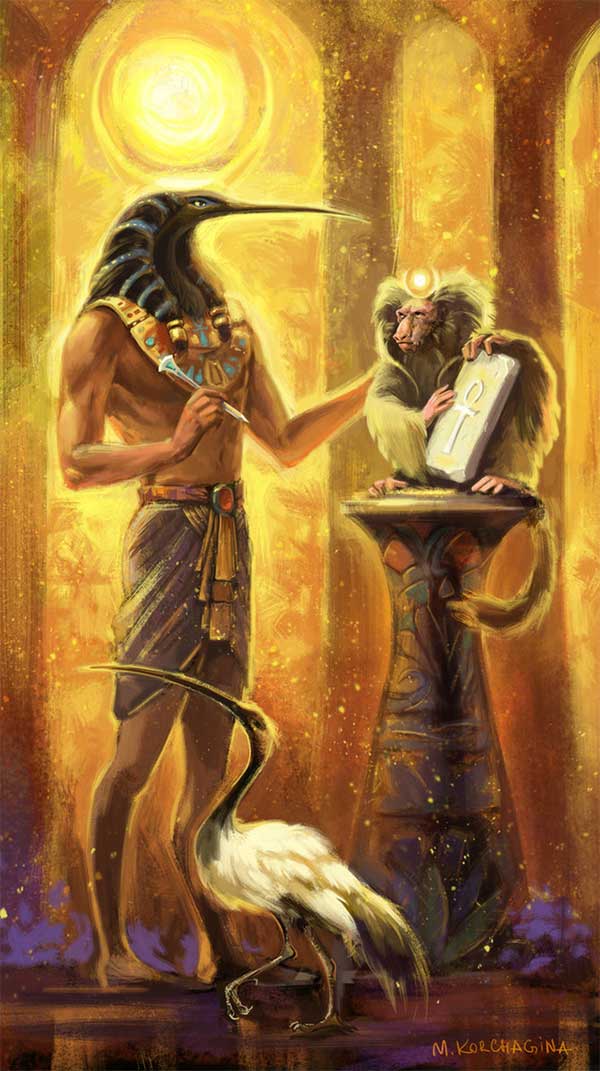
This is the most worshiped god in the "land of the pyramids".
Thoth is the god of wisdom and knowledge, the patron of Egypt. This is the most revered god in the "land of the pyramids". Thoth, in ancient Egyptian beliefs, is the god of the Moon, time, the ruler of writing and knowledge and the "God of the Scriptures" , the one with boundless wisdom. Thoth is the great official of Osiris, the god of herbs and the dead. Because of his mystical knowledge, Thoth once effectively assisted in the burial of Osiris. He is a scribe and plays an objective role as an "arbitrator" between good and evil in the underworld as well as recording the judgments at the Maat gate.
In Egyptian mythology, Thoth was a good god on Osiris' side, always protecting Osiris from Seth's attacks. Thoth was also the one who helped Isis revive Osiris and made him the lord of the world of the dead. The boundless power of Thoth's wisdom also helped people escape all shackles, including the shackles of the evil god Seth. It was also Thoth who hid Horus from Seth's hunt and helped Horus regain the throne of Egypt. The magicians worshiped Thoth as a great magician, who would show them the way to magic that would give them magical powers as strong as the gods.
8. Hathor - Goddess of motherhood
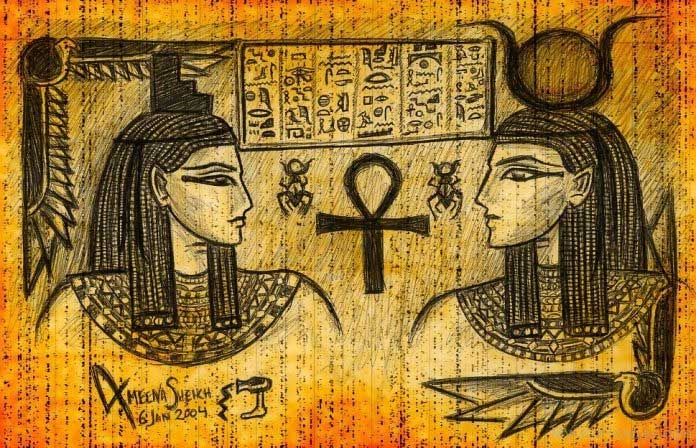
Hathor is a symbol of motherhood and a daughter's love.
Hathor is the goddess of noble and sacred motherhood. She takes the dead to their place of reincarnation. Hathor is the name of the most beautiful Egyptian goddess. She is the biological daughter of Ra. Hathor is a symbol of motherhood and the love of a girl. She is also considered by the ancient Egyptians as the goddess of dance and music. The Egyptians believe that Hathor will bless women when they are pregnant and after giving birth. She always brings joy, music and dance to everyone. Taking care of mothers and children, nurturing the living and sending the dead to hell, that is her duty.
The goddess of motherhood – Hathor has a gentle demeanor and a gentle personality. She always treats all human beings well, so she is loved and praised by the Egyptian people. Each god born has a noble and sacred mission. And the names of the Egyptian gods are always loved, worshiped and worshiped very solemnly by the people here. Hopefully, with the above sharing, it will help you get useful information about the culture of ancient Egypt.
9. Sekhmet - Goddess of War
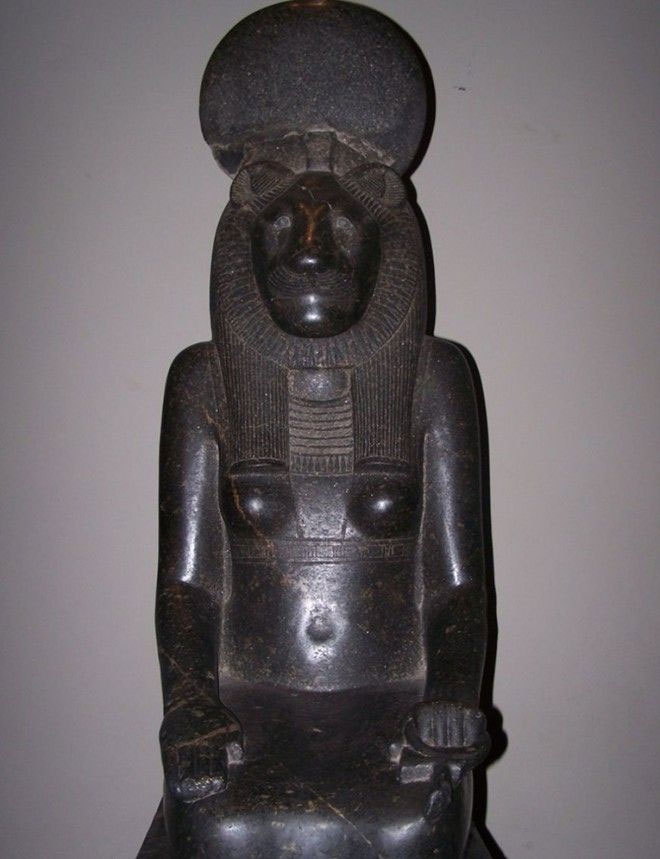
Sekhmet is obsessed with the color red and is always seen wearing red clothes.
'Sekhmet' comes from the Egyptian language and means 'power' or 'will'. The Egyptian goddess Sekhmet has the head of a lion, representing the dark power of the Sun, and is a symbol of war and revenge. However, her main duty is to protect the Sun's disc. This is one of the strange contradictions in the story of Sekhmet, as she is known as the first vampire.
Sekhmet was obsessed with the color red and always appeared in red clothes. Therefore, Sekhmet was often known as "The Red Lady" . In battles, she served as a war goddess and helped protect the Pharaohs. It is believed that the goddess Sekhmet saved all humanity by drinking all the blood in the Nile River. God Ra realized that there was no way to stop Sekhmet from her bloodlust. He ordered the people to dye 7,000 jars of wine red and place them on the ground. God Sekhmet believed it was blood and drank until she was drunk. At this time, God Ra was able to turn the goddess back into Hathor (the goddess of love) (in the form of a cow).
10. Geb - God of the Earth
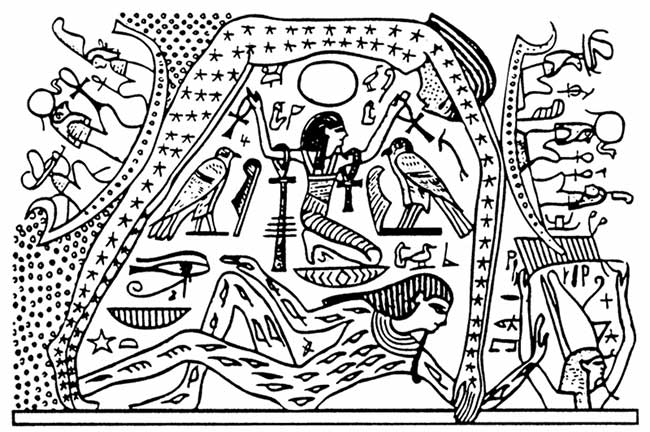
Geb is generally seen as a benevolent god.
Geb was the god of the Earth. He was the son of the air god Shu and the moisture goddess Tefnut, and the grandson of Atum-Ra. He was the brother and husband of the sky goddess Nut. They had four children together: Osiris, Isis, Set, and Nephthys. His two grandchildren were Horus and Anubis. He was depicted in paintings as a man wearing the Atef crown, or with a goose on his head - the sacred animal of the god. He was often depicted with a beard, lying at the feet of Shu. He was sometimes colored green, suggesting that plants grew from his body. He was sometimes shown with a goose or in the form of a bull.
As a god of the earth, he is associated with underground water and the vegetation that grows on his body. He is responsible for guarding tombs and also participates in trials in the "Hall of Ma'at". The souls of those who are convicted will be imprisoned underground forever. Geb is often seen as a benevolent god, helping people to have crops in the fields and healing them. Geb is the third pharaoh of Egypt, after Atum/Ra and Shu. After Osiris - the fourth pharaoh was murdered by Set, he supported the elevation of his nephew Horus to the throne. The pharaohs all claim to be "Heirs of Geb". To mark the accession of a pharaoh, people release four geese in the four corners of the sky to wish the new king good luck.