Industrial revolution and the process of urbanization in many big cities like London and New York caused many rivers to land to make room for construction works.
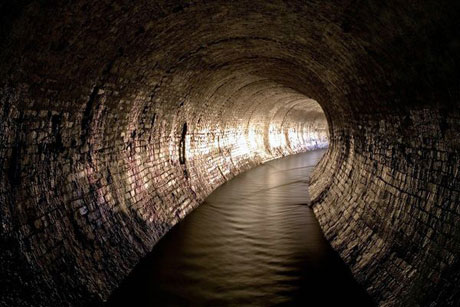
Tibbetts is the name of a river that supplies water to a lake in New York City, USA. But due to urban development, it becomes an underground flow beneath Tibbetts Avenue.
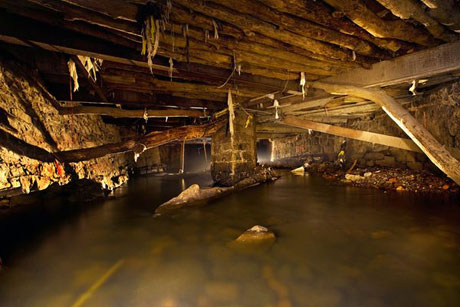
The longest branch of the Hudson River, the Sawmill River flows from the city of Chappaqua, New York state, to the city of Yonkers in the state. From the beginning of the 20th century, the river was gradually covered by bridges. Over time, the number of demand increases and their size increases. Today the Sawmill River has been completely covered below the city of Yonkers.
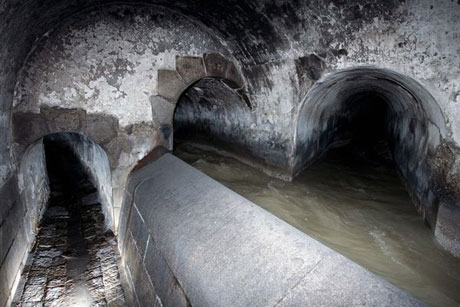
The Wein River in Austria's capital Vienna is no longer visible on the ground after it has been brought into the sewer system decades ago.
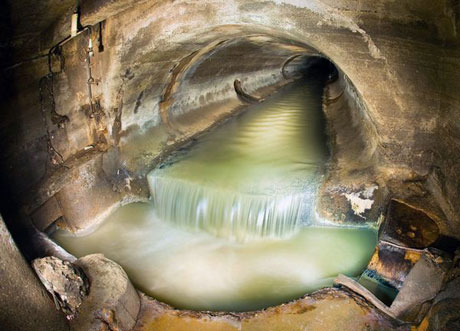
Having appeared on the map in the 70s of the 19th century, today the Sunswick Creek River is just a small stream of water flowing through underground pipes in New York City, USA. Photo: Steve Duncan.
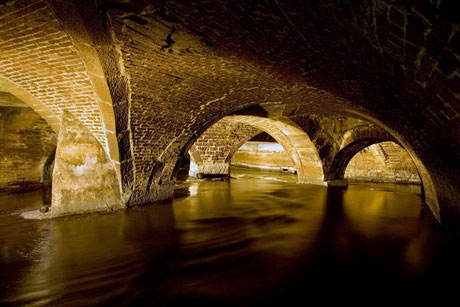
A stretch of more than 6km of the Bradford Beck River runs under construction works in the city of Bradford, England.
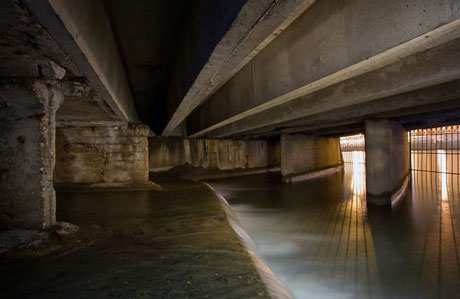
The Neglinnaya River once flows from north to south of the Russian capital Moscow until it is buried by 7.5km long tunnels. Today its water flows into the Moscow River in two ways.
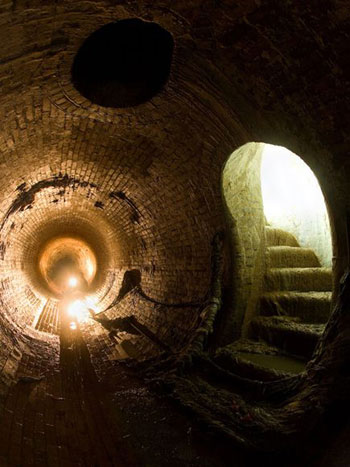
The space is quite wide in the picture is the end of a Sheaf water tunnel in Sheffield, England. The Sheaf River continually appeared and disappeared on the ground in the city of Sheffield before it hit the Don River.

The Westbourne River used to be an important source of drinking water for London, England. But by the end of the 18th century, its water quality was so low that humans could no longer drink. In the early 19th century, the Westbourne River was led into underground pipes to facilitate the development of new districts in London.

In the 19th century, the river Fleet was forced to flow through underground tunnels in the city of London before flowing into the River Thames. In Roman times, it was London's largest and most important river. But during the industrial revolution, most of its water was used for industrial production.

In the 1940s of the 20th century, engineers of the US military had streamlined the Park River to get it to the ground in the city of Hartford, Connecticut. This is the most expensive and monumental project of the US military until the 40s. Today the Park River is 90 to 150cm from the ground.